French Bulldog Socialization Checklist
Your eight-week-old Frenchie is forming opinions about the world right now, and the world he meets is the one you show him. The dangerous myth is that a puppy should stay home until the vaccine series finishes at around 16 weeks. By then, the window when opinions form most easily is mostly closed.
The American Veterinary Society of Animal Behavior says the primary and most important time for puppy socialization is the first three months of life, and that careful early socialization should be the standard of care even before a puppy is fully vaccinated. You can read the AVSAB position statement on puppy socialization in full. The urgency has a reason, and AVSAB states it bluntly: behavioral issues, not infectious diseases, are the number one cause of death for dogs under three years of age, and behavior problems are the number one cause of relinquishment to shelters. Socialization is not bonus enrichment. It is the highest-leverage thing you can do for a young dog’s future.
The why and the timing behind that position live in our French Bulldog Puppy Training Schedule. This french bulldog socialization checklist is the other half of the pair: the what, item by item, around forty exposures in seven groups, each with the right way to do it.
The 30-Second Version: 5 Rules That Run the Whole List
- Short, positive, puppy-led. End each exposure while the puppy is still happy. Let the puppy choose to approach. Never force.
- Distance is the volume knob. Start far. Move closer only when the puppy is calm, curious, and taking treats. Move back at the first sign of worry.
- Pair it with food. Treats for brave behavior. Visitors drop treats instead of reaching out. New sounds play during meals.
- Read the fear signs. Freezing, pulling away, hiding, refusing food, trembling. A puppy that takes a treat from a stranger and then backs away is frightened, not bold. VCA is explicit: never force a puppy to “face his fears.”
- New places at least twice a week. VCA’s guideline is concrete: bring your puppy to new places at least twice weekly, and let the puppy set the pace. Choose exposures that match the adult life your puppy will live: city streets if you live in a city, farm sounds if you live near farms.
How to Use This French Bulldog Socialization Checklist
Print it or screenshot it, and keep it where you plan outings. The only rule that matters for the whole list: tick an item only after your puppy has met it calmly on several occasions in different places. A bearded neighbor on your street and a bearded stranger across town are two different entries in your puppy’s mind.
Track each item with the date and a simple mark. Calm and curious gets a check. Hesitant means add distance and retry another day. Fearful means stop, retreat, and ask your vet or a qualified trainer for a plan. Keep a pencil with the list: a dated check next to “men with beards” tells you more than a memory of “we did people stuff.” Veterinary behaviorist Dr. Sophia Yin’s original checklist uses a five-point scale, from overarousal through avoidance and freezing up to calm, with and without food. A three-mark fridge version carries the same idea: move forward only on calm. If an item keeps scoring fearful across several sessions, park it and talk to your vet or a trainer before pushing further. The list will wait.
Work the list into real life rather than scheduling separate “socialization time.” One item on the morning walk, one at lunch, one after dinner. That rhythm is easier to keep than a weekend marathon, and short sessions are what the puppy learns from anyway.
One more thing before the list starts. This is not a race, and no reputable source sets a headcount for how many people or dogs a puppy must meet. Variety and positivity are the verified targets, not numbers.
Quick Tip: Neutral counts as a win. A puppy that watches a skateboarder roll past from your arms, ears up but body relaxed, has socialized successfully without greeting a soul.
The Checklist, Group by Group
The seven groups below are merged from Dr. Sophia Yin’s veterinary-behavior checklist and the AVSAB-aligned 21-item checklist published by PawTrace, rephrased and regrouped for a Frenchie owner. Every item names the exposure and the right way to do it. Frenchie callouts sit where the breed changes the math.
People: Variety, Not Volume
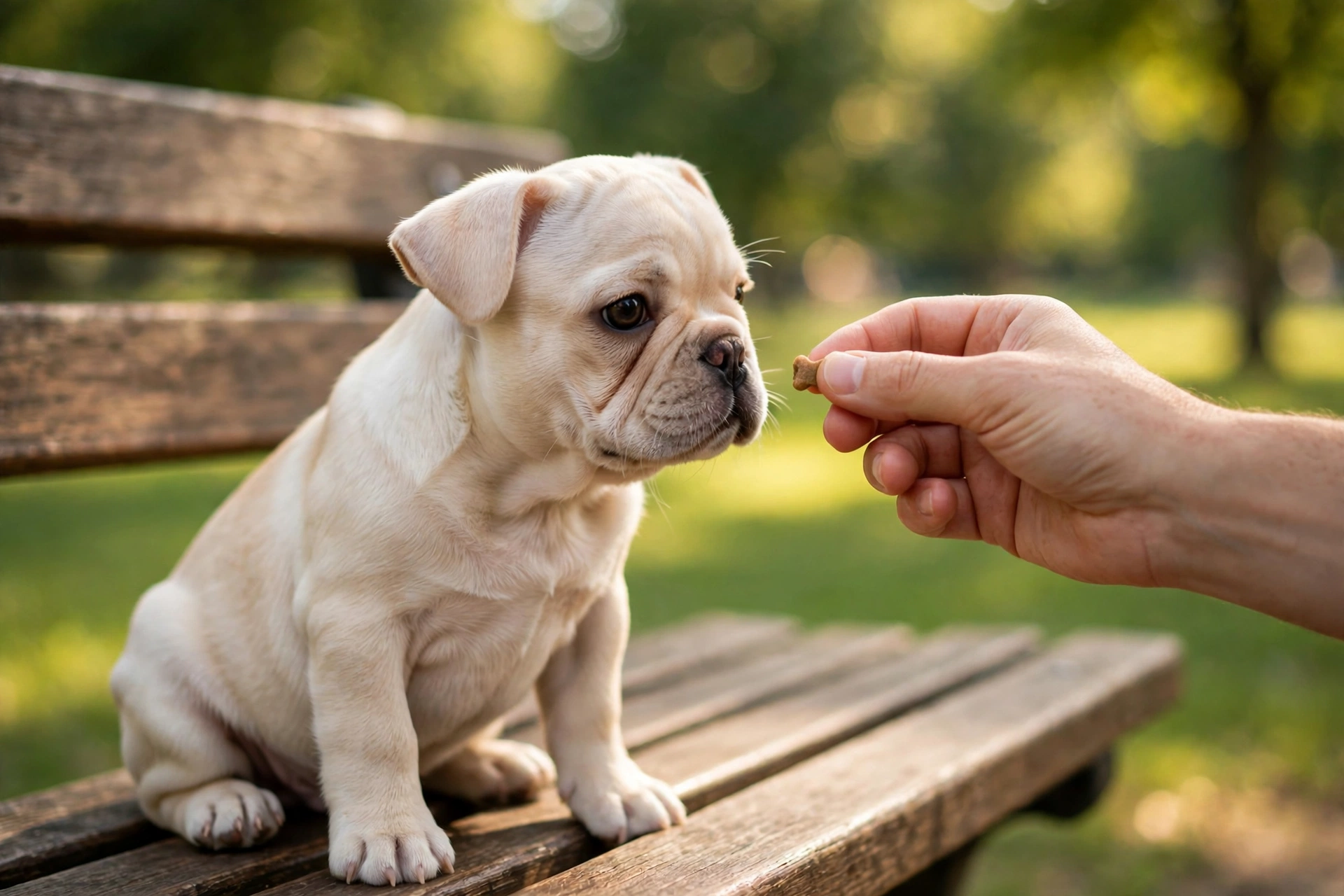
Most owners over-index on strangers and under-index on everything else, so start here and move fast. The aim is variety of ages, voices, silhouettes, and gear. The treat pouch clicks open; the stranger does the feeding, not the grabbing. Stay calm through every meeting. The AKC’s guidance warns that dogs can read our emotions, and a nervous handler makes a nervous puppy.
- Men, including men with beards, hats, hoods, and deep voices. The visitor sits, ignores the puppy, and drops treats. The puppy decides whether to approach.
- Women. Same pattern: sit, ignore, drop treats, let the puppy come to you.
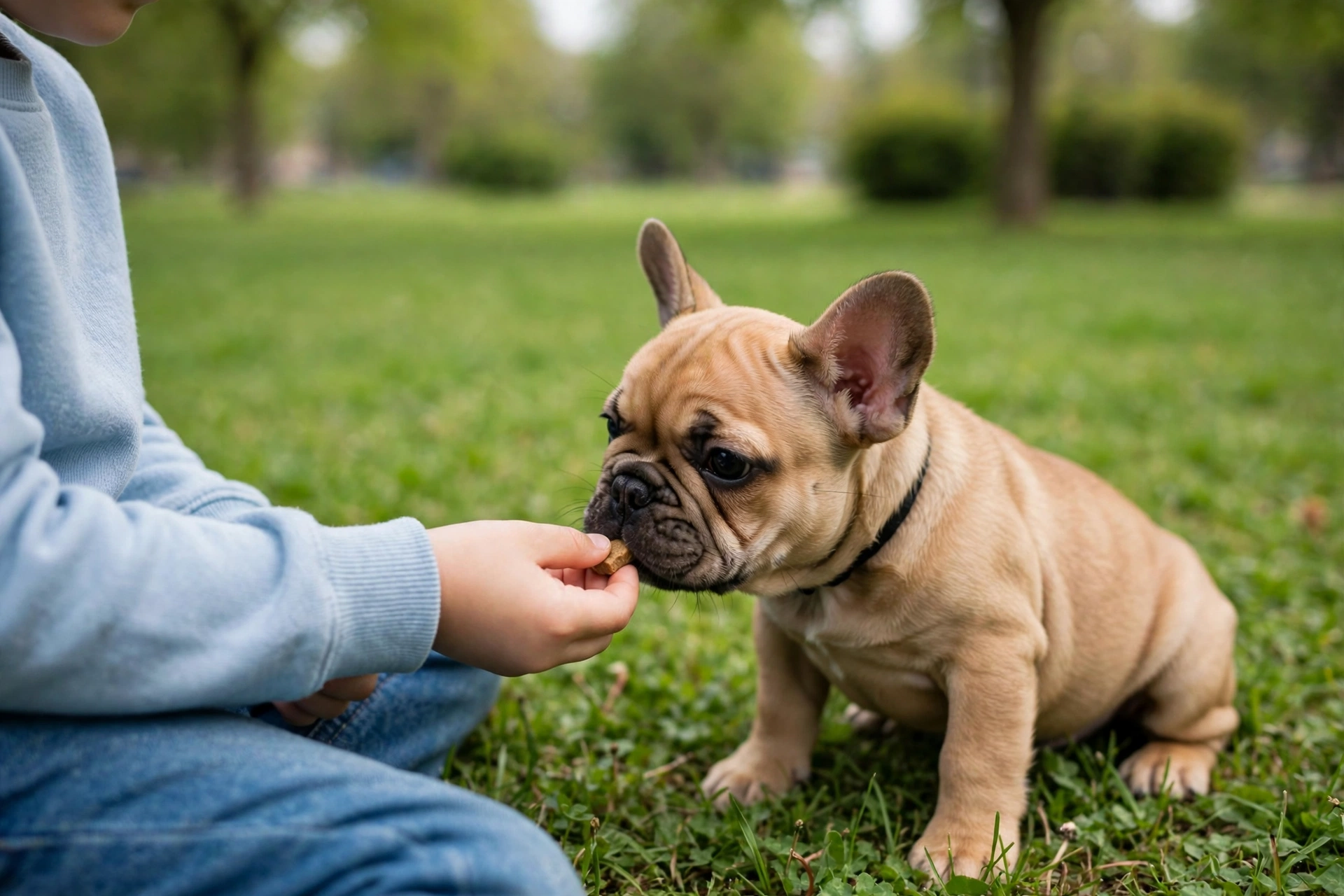
- Children of different ages. Supervised at all times. The child sits on the ground and offers a treat. The puppy is free to walk away.
- Older adults, and people using canes, walkers, or wheelchairs. Start at a distance and reward your puppy for calmly looking at the new shape.
- People in uniforms, hi-vis vests, helmets, sunglasses, or winter coats. Watch from a distance first, then try a step closer on another day.
- Delivery people and door visitors. Pair the doorbell with a treat, then allow a calm greeting at the door.
- People of different ethnicities, tall men, teenagers. Grade the distance: closer than last time only if the puppy was relaxed last time.
- A person on a skateboard or bicycle passing by. Watch from a distance first; treat calm watching.
- Do: Hand treats to strangers so the puppy approaches their hand willingly.
- Don’t: Push your puppy toward a stranger’s hands, or let a crowd of hands descend on a puppy that is backing away.
Frenchie callout: Frenchies tend to be reserved with strangers rather than bold, hesitating at unfamiliar hands and bigger dogs. One Frenchie breeder notes the same, and it lines up with AVSAB’s advice either way. Let the puppy watch before greeting. This is also why the stranger-drops-treats pattern matters more than the greeting itself: the puppy learns new people predict good things, with no pressure to interact. Calm curiosity at a distance is progress.
Handling: The Highest-Value Group for Frenchies
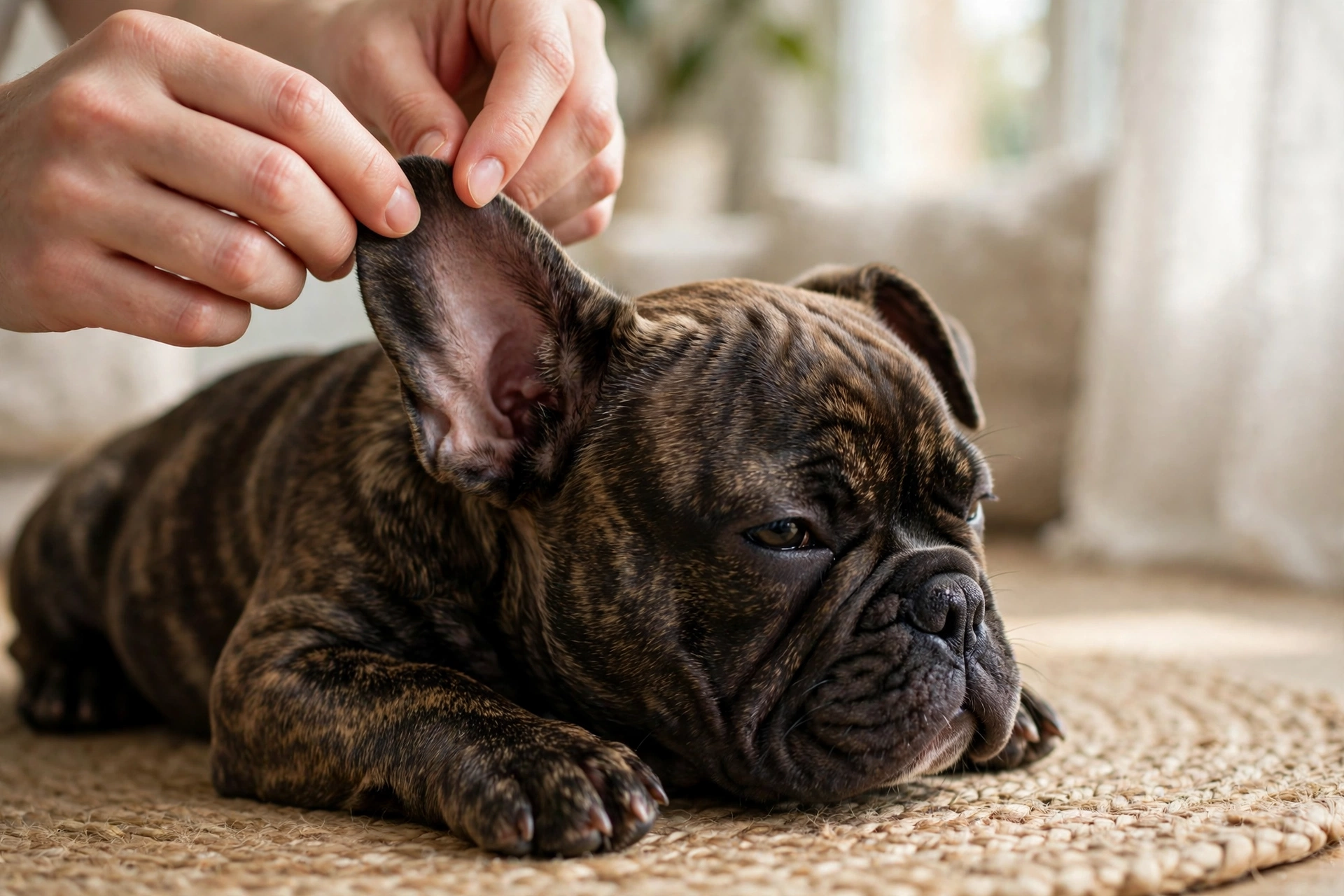
This is the group most owners skip, and for a Frenchie it is the most important one on the list. A French Bulldog gets handled for life: daily face-fold checks and cleaning, regular ear checks, eye drops, tooth brushing, plus vet exams that involve the mouth, ears, and skin. Five calm minutes of ear-touch practice at ten weeks pays off every week for the next decade. Keep each touch to a few seconds, pair every touch with a treat, and stop before the puppy struggles. The warm weight of the puppy in your lap is the setting; the treat after each touch is the lesson. Dr. Sophia Yin’s checklist, the veterinary-behavior standard this group is drawn from, treats every touch below as something a puppy should accept calmly: ears, lips, eyelids, feet, nails, skin, nose, and being held.
- Ears looked at and gently lifted. A few seconds at a time, treat, release. This is the same touch a vet uses to check for infection, and our French Bulldog ear infections guide explains why ears stay on the agenda for life.
- Lips lifted, teeth touched, mouth gently opened. Practice as a vet would, rewarding each step. Tooth brushing starts here; the full method lives in our French Bulldog dental care guide.
- Face and wrinkle areas touched. Wipe the face with a soft towel and pair it with food. Fold cleaning is a weekly job in this breed, covered in our skin fold infections guide.
- Eyelids gently opened, eye area touched carefully. Tiny increments, treat each one. Frenchies are prone to eye trouble; our eye ulcers guide shows what administering those drops will look like.
- Paws held, feet gently squeezed, each foot picked up. Seconds at a time with treats.
- Nail area touched and nails handled. Short sessions, ending before the puppy pulls away.
- Gentle pinch and tap of skin. This mimics the small pinches of a vet exam.
- Nose touched softly. Brief and gentle, treat, done.
- Cradled securely on the back, held in a lap, soft hug, belly rub. A few seconds, paired with treats, released while the puppy is still happy.
- Body wiped down with a towel. Short sessions, paired with food.
- Harness put on and adjusted. Let the puppy sniff it first, treat, brief wear indoors. Cornell’s guidance for brachycephalic breeds is a harness instead of a neck collar, so the puppy should learn this one early.
- A head halter touched around the muzzle. Let the puppy sniff it, treat, brief wear. Some puppies will meet one at the vet.
- Collar grabbed gently, the “gotcha” game. Collar grabs should predict treats, so a stranger’s grab never panics the dog.
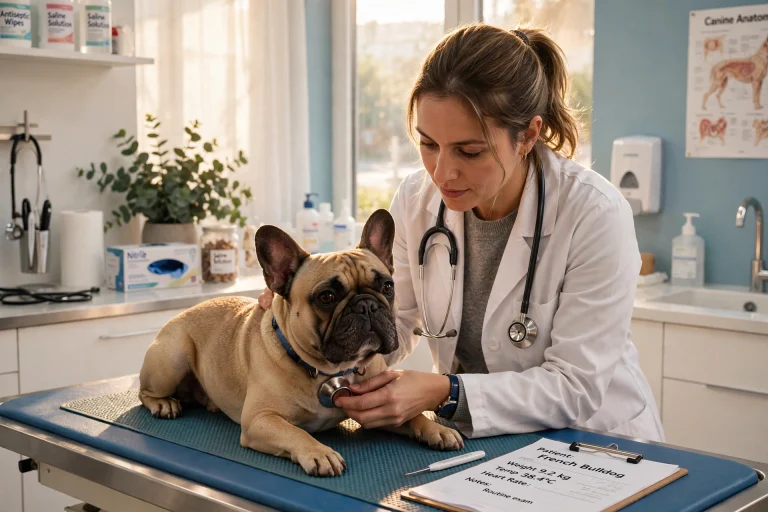
- A happy no-procedure vet visit. Drop in for treats and the scale. Ask the clinic first.
Quick Tip: Practice handling when the puppy is sleepy, not wired. A drowsy puppy that accepts an ear lift remembers the touch; a wild one remembers the wrestling.

Sounds: Distance and Volume Are the Tools
The vacuum hums from the next room while the puppy eats dinner. The thunder recording plays at a whisper and inches up over a week. Distance and volume are the two dials, and you turn them slowly. Puppies hear the world louder than you do, and a sound that startles once can become a sound feared for months. The fix is never to avoid sounds entirely. It is to introduce them at a level the puppy barely notices.
- Vacuum, hair dryer, blender, washing machine, dishwasher. Start in another room or at low volume while the puppy eats. A University of Guelph study found that puppies whose owners skipped classes were more prone to fear of loud sounds like the vacuum and thunder, so this group earns its place. (PawTrace’s write-up of the research)
- Traffic, buses, sirens, garbage trucks, mowers. Sit at a distance from the road and treat the puppy for noticing each noise without flinching.
- Doorbell, knocking, alarms. Pair the sound with a treat every time, until the sound predicts something good.
- Thunder and fireworks. Play recordings quietly during meals and raise the volume over many sessions. July 4th and New Year’s Eve are fixed dates; work backward from them.
- A coffee grinder or similar sudden kitchen noise. VCA uses this exact example for desensitization: start at a low level, raise it gradually over sessions, and never push to a level that frightens.
- Crying babies, children playing, dogs barking, construction. From a distance first, closer only on calm.
Quick Tip: On days too hot for outings, run the sound group at home instead. A carried puppy watching a busy street from the shade counts as exposure too.

Surfaces: Let the Puppy Choose to Step On
Put a treat on the new surface and let the puppy decide when to step on it. The grit of gravel under soft paws, the cold shock of wet tile. Never place the puppy onto the surface yourself.
- Grass, wet and dry, gravel, concrete, tile, wood. Treat on the surface, puppy steps on by choice. The AKC’s socialization guidance names carpet, hardwood, tile, and linoleum as the indoor set worth covering.
- Wet leaves, metal grates, snow or ice, sand. Same pattern, one surface per session.
- Shallow water. A tray with an inch of water, treat for stepping in.
- A wobbly mat or cushion. Reward any step toward it.
- Stairs. A few steps at a time with support. Ask your vet about stairs for your Frenchie specifically; our IVDD guide is worth reading before that conversation.
- Ramps. Reward use. Handy for a breed that should not be jumping onto furniture.
- Do: Let the puppy approach every new surface at its own speed, even if it takes three visits.
- Don’t: Carry the puppy onto the scary surface “to show it it’s fine.” That is flooding, not teaching.
Places and Vehicles: Short, Cool, Carried When Needed
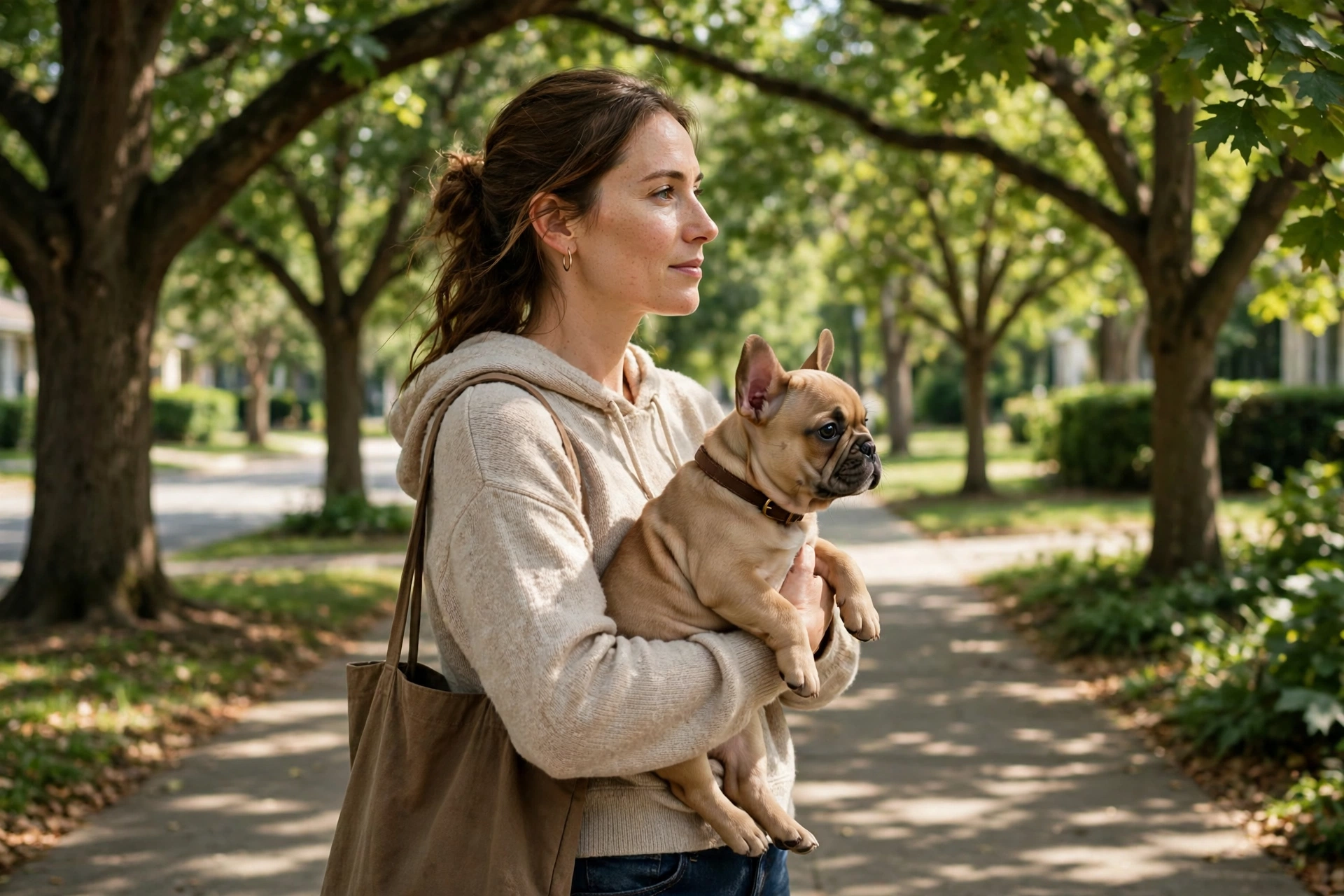
VCA’s socialization guidance sets the cadence for this group: new places at least twice a week. Keep each visit short and end on a calm note. The cool morning air on the sidewalk, the new smell of a lobby, the rumble of an elevator underfoot.
- Car rides. Engine off first, then short trips in a secured crate or harness that end somewhere pleasant.
- A busy sidewalk or different neighborhood streets. Carried or strollered, in the cool part of the day, kept short. Treat calm behavior.
- Elevators, building lobbies, parking lots. Carry or lead through, keep the visit brief.
- Pet-friendly shops, once the vaccination series has started. Weekday mornings, when crowds are thin.
- The sidewalk outside a café, carried. Sit, watch people pass, treat calm watching.
- A friend’s home. A new indoor environment with low disease risk.
Frenchie callout: schedule public outings for cool mornings and evenings, carry or stroller the puppy, and end the outing at the first heavy breathing. Our heat stroke guide covers the warning signs in full.
Quick Tip: In summer, run the public-outings group before 9 a.m. A Frenchie puppy on cool pavement in the morning learns; the same puppy at noon only pants.
Animals: Quality of Company Beats Quantity
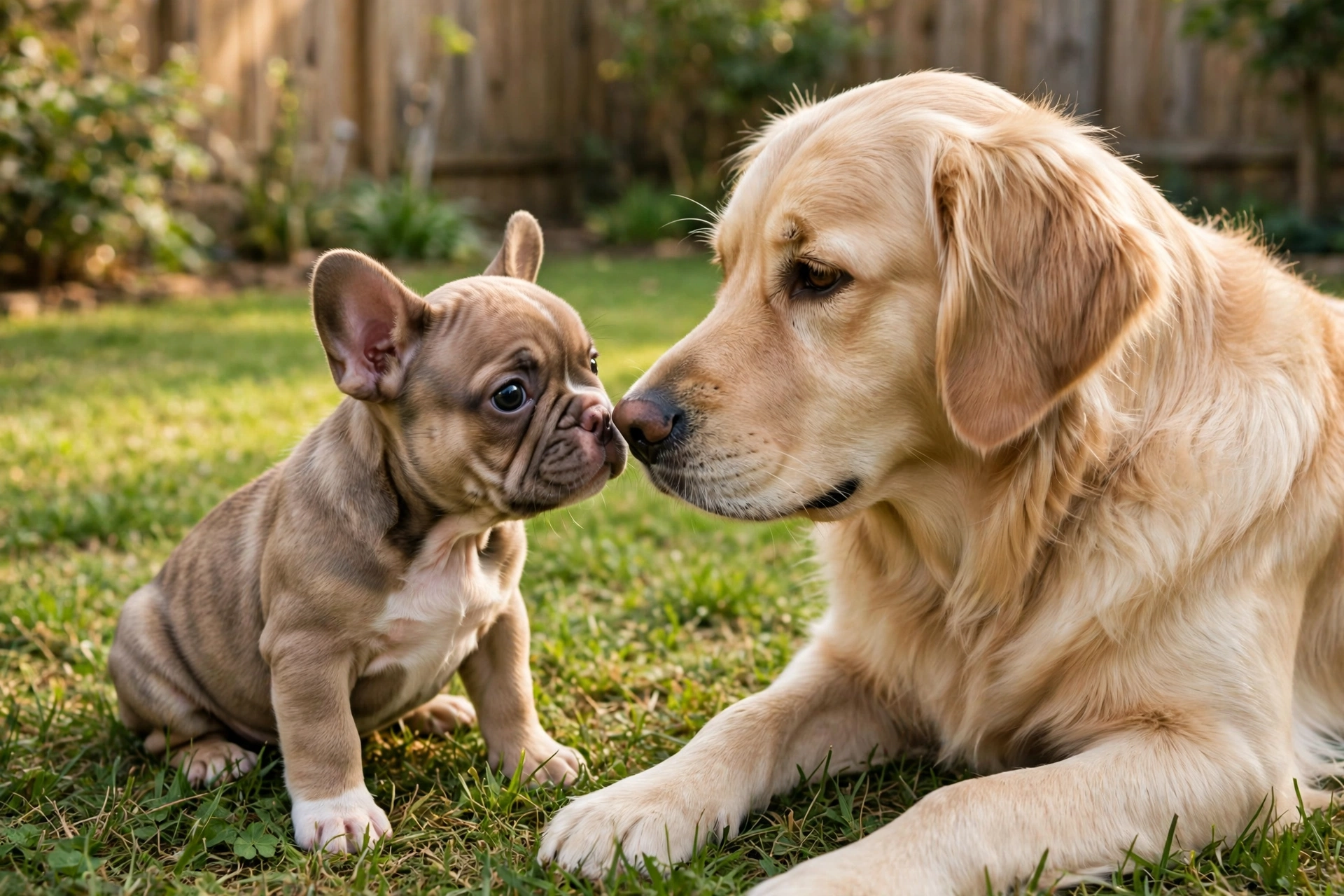
One good dog teaches more than twenty chaotic ones. The thump of a calm dog’s tail, a play bow offered and held instead of launched. Choose the company, not the crowd. VCA warns that a sensitive puppy can be permanently traumatized by an unexpected growl or snap, which is why every meeting on this list is chosen, not left to chance.
- One calm, healthy, fully vaccinated adult dog. A friend’s dog at home is the middle ground. Ask your vet first.
- Well-matched puppies in a well-run class. Look for a vaccine policy, cleanable floors, and small groups. AVSAB’s position allows classes as early as 7 to 8 weeks, with one vaccine set given at least 7 days before the first class.
- Other species at a distance. A calm cat with both animals leashed, farm animals from the fence, pet birds in their cage.
- Dogs of different sizes walking by. At a distance. Keep your leash loose; a tight, tense leash tells the puppy there is something to worry about.
Not on the list yet: dog parks, unknown dogs, and pet-store floors before the full vaccine series. AVSAB, VCA, and AKC all agree here. The disease math is simple: unknown dogs in high-traffic areas carry unknown vaccine histories, and a puppy with an incomplete series has incomplete protection. AKC’s position puts the dog park at 7 to 10 days after the full series, and that timing is AKC’s guidance, stated as such.
Quick Tip: Choose the calm dog, not the fun park. One rough greeting from a big adult dog can set a sensitive puppy back for months.
Everyday Life Skills: The Forgotten List
Nobody posts these, and that is exactly why they get skipped. The creak of the crate door, the jingle of the leash clip, the rattle of keys by the front door. Ordinary life, rehearsed early.
- Being briefly alone in a crate or pen with a chew. Start with seconds. AVSAB notes that brief, positive alone time may help prevent over-attachment, which is why this item matters more than it looks. The full method belongs to our French Bulldog crate training guide; this item is the reminder that alone time is a socialization exposure too.
- Wearing a harness and walking on leash briefly indoors. Treat and keep it short.
- Being handled by different family members. Move the puppy across handlers so comfort is not tied to one person.
- Rain, wind, an opened umbrella, bags blowing in the wind. Low-stakes objects, one at a time.
- A first-week checklist: treat pouch packed, one calm visitor scheduled, one new surface a day, one new sound a day, and the vet’s number saved in your phone.
Frenchie-Specific Socialization Notes
No French Bulldog-specific socialization study exists, so this section says that plainly and builds from veterinary sources instead. Cornell’s veterinary college names the French Bulldog among the breeds most frequently affected by brachycephalic obstructive airway syndrome, notes severity varies and can increase with age, and lists the conservative management rules: keep a healthy weight, avoid excessive heat and humidity, keep activity controlled, minimize stress, and use a harness instead of a neck collar.
Those rules reshape the checklist. Outdoor exposures happen in the cool of the morning or evening, never at midday in summer. Car rides run with the air conditioning on and the trip kept short. Every outing ends at the first sign of heavy breathing, because no puppy learns well while struggling to breathe. Our heat stroke guide covers the warning signs in full, and our BOAS guide explains the condition behind these limits.
The second Frenchie difference is handling, covered above but worth restating: fold cleaning, ear checks, eye drops, and tooth brushing will happen for the rest of this dog’s life. The handling group is not optional enrichment for this breed. It is maintenance training.
The third is that carried outings count double. Pre-vaccine disease safety and heat and breathing limits both point to carrying or strollering the puppy for public exposures rather than marching it down the sidewalk. A carried Frenchie puppy is not a cop-out. It is the right tool for this breed.
A final note on honesty: no French Bulldog-specific socialization study exists. Every breed-specific line here is built from brachycephalic veterinary sources and the site’s own verified health articles, and it is labeled as such. What the research says about puppies in general applies fully to Frenchies.
- Do: Plan public exposures for cool mornings, carry or stroller, end at the first noisy breath.
- Don’t: Walk a Frenchie puppy on hot pavement at midday, or push through an outing while the puppy is panting hard.
Before the Vaccines Are Done: Safe and Not Safe
The full reasoning lives in the puppy training schedule; the short version is two lists.
Safe: carried outings and a puppy stroller with no ground contact in public, clean private spaces, calm fully vaccinated adult dogs you know, and a vet-approved, well-run puppy class on cleanable surfaces.
Not yet: dog parks, pet-store floors, unknown faeces, shared bowls, and unknown or unvaccinated dogs.
Puppy classes deserve a line of their own. AVSAB’s position allows classes as early as 7 to 8 weeks, and VCA’s safety protocol is specific: up-to-date vaccines, puppies in the new home at least 10 days and healthy, sick puppies stay home, and a cleanable location.
Your vet sets the vaccination plan; this checklist works inside it. Ask for the exact schedule rather than guessing from a blog.
If You Got a Late Start
Maybe the breeder kept the puppy longer, maybe life got in the way, maybe you adopted an older puppy. The window runs roughly 3 to 14 weeks and closes by about 16, but learning does not stop there. It gets slower. Merck’s veterinary manual notes dogs stay most receptive to new situations until about 16 to 20 weeks, so the door closes gradually, not all at once. AVSAB recommends continuing socialization through the first year, and the AKC notes older dogs can still be socialized.
Run the same checklist at the dog’s pace: more distance, smaller steps, shorter sessions, the same food pairing. Skip the crowded places entirely until calm is easy in quiet ones. If fear is real and persistent, freezing, fleeing, or shutting down, that is a job for your vet or a qualified animal behaviorist, not a bigger checklist.
Quick Tip: A puppy adopted at 14 weeks with zero outings is behind, not broken. Start at the People group, move at the puppy’s speed, and progress comes slower but it comes.
Keep the List Where You Can See It
This french bulldog socialization checklist works if you use it a little at a time: one new person today, one new sound tomorrow, one new surface at the weekend. Calm exposures, paired with treats, at the puppy’s pace, through the first year. That is the whole method, and it is enough.