French Bulldog Health Problems: The Complete Owner’s Guide
TL;DR
French Bulldog health problems are the price of the flat face. Peer-reviewed VetCompass research found Frenchies carry higher adjusted risk for 20 of 43 studied disorders, and the four you will most likely deal with are breathing trouble, itchy skin and allergies, ear infections, and spine problems. Most of these are manageable when caught early, and keeping your dog lean is the single biggest lever you own. This guide gives you the honest tour, with links to our six deep-dives: BOAS, the surgery decision, snoring, skin fold infections, allergies, and ear infections.
The Vet Bill Nobody Warned You About
Nobody mentioned the vet bills at the breeder’s house. You fell for the bat ears and the snorting laugh, signed the papers, and brought home a clown in a compact body. Then came the snoring that rattled the bedroom door, the yeasty smell rising from the face wrinkles, and the $400 vet visit that ended with the words “we should grade his breathing.” If any of that sounds familiar, you are not unlucky. You are a French Bulldog owner, and this is the honest tour of what that means. Read it before your next vet visit, not after.
The Root Cause of Most French Bulldog Health Problems
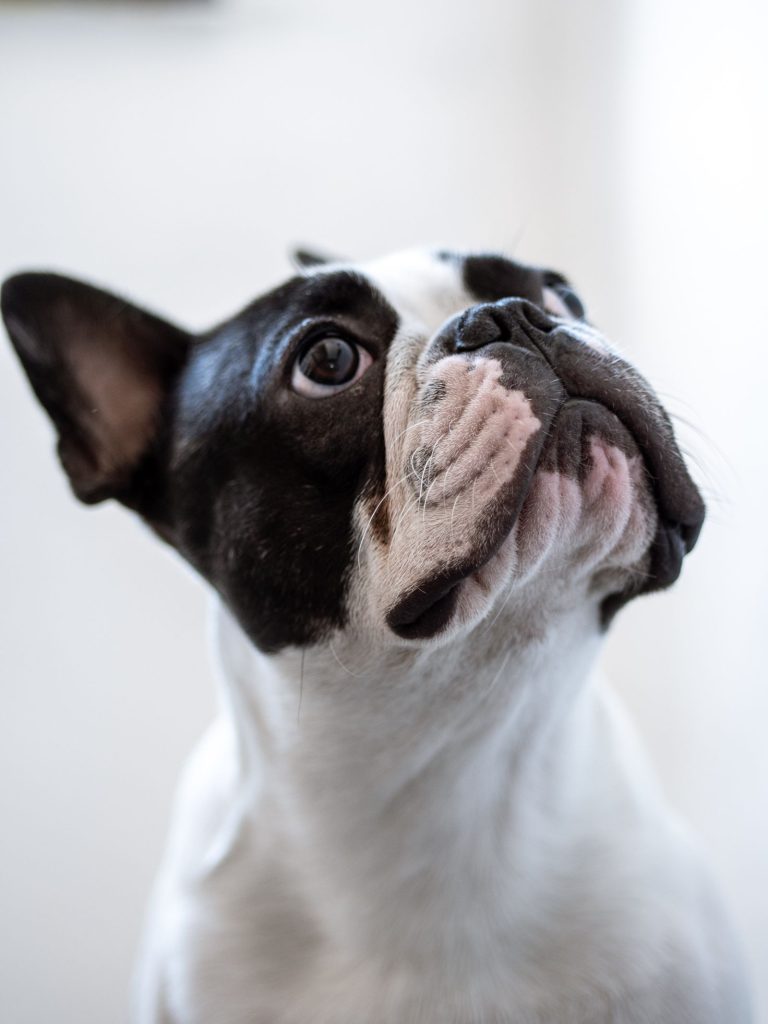
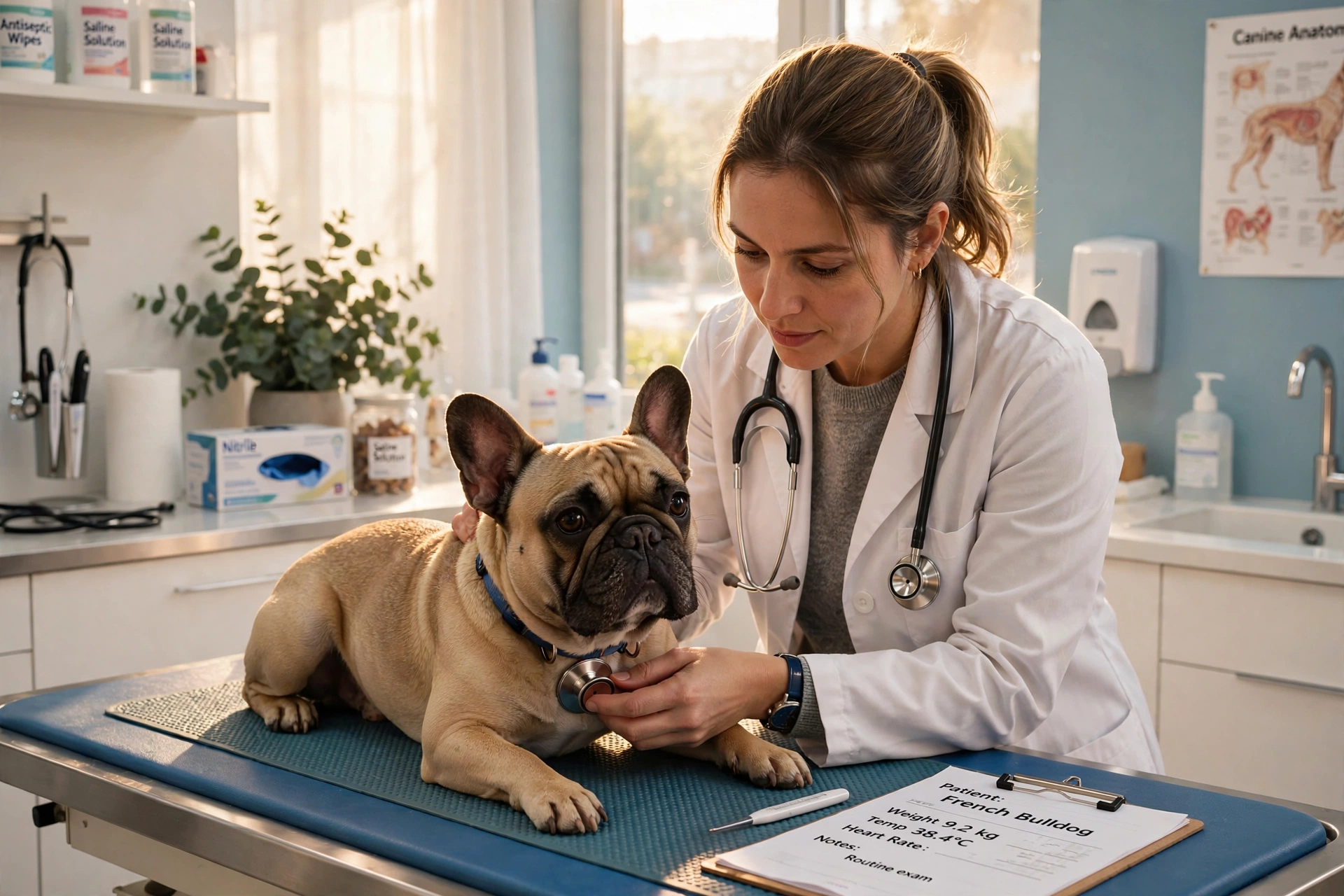
Nearly everything on the Frenchie health list traces back to two breeding decisions. The first was the flat face. Breeding the skull shorter never shortened the soft tissue inside it, so the same amount of palate, tongue, and throat now crowds into far less space. That crowding sits behind the breathing trouble, the snoring, the narrow ear canals, the skin folds, and the shallow eye sockets. The second was the compact, heavy-fronted body built on chondrodystrophic cartilage, the same trait behind the screw tail. That is why the spine is the breed’s other weak point.
The numbers back this up. A landmark VetCompass study of UK vet records (O’Neill et al., 2021) compared French Bulldogs against other dogs and found increased adjusted risk for 20 of 43 specific disorders. The top five read like a Frenchie owner’s diary: narrowed nostrils at 42 times the odds, BOAS at 31 times, ear discharge at 14 times, skin fold infections at 11 times, and difficult births at 9 times (PubMed).
Popularity has not erased the anatomy. The French Bulldog has been the AKC’s most registered breed in America four years running, 2022 through 2025. More owners are simply learning the same lessons, one vet visit at a time.
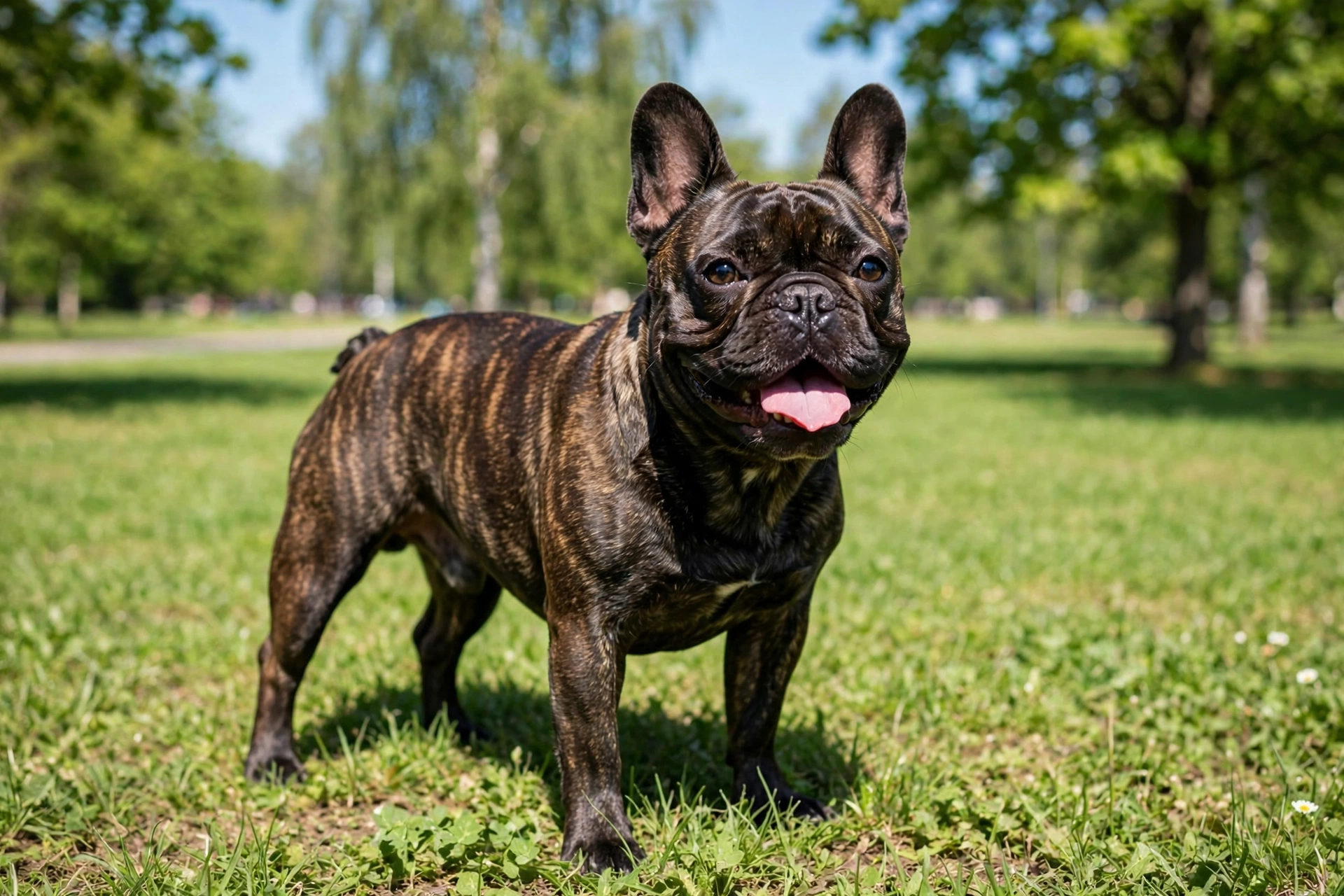
Quick tip: When a vet names a new issue, ask which of the two root causes sits behind it: the flat face or the compact body. The answer tells you how worried to be and what to watch next.
Breathing Problems (BOAS): Start Here
If you learn one thing about this breed, make it this: breathing is the headline issue. BOAS, short for brachycephalic obstructive airway syndrome, is the cluster of airway abnormalities the flat face creates: pinched nostrils, an overlong soft palate, throat pouches pulled inside out by years of straining, and a windpipe narrower than it should be. Vets grade it 0 to 3 with the Cambridge/Kennel Club Respiratory Function Grading Scheme, a three-minute trot test given from 12 months of age and repeated every two years. In the US it runs through the OFA, typically $60 to $70 at breed-club clinics plus a $15 registration fee.
A 2026 Kennel Club study of 1,917 tested French Bulldogs found 15.6% clinically affected, grades 2 to 3 (PLOS ONE). Read that number with its caveats. The dogs were UK Kennel Club registered and tested voluntarily, and the wider published literature spans 3.5% to over 60%. What is not in doubt: most owners miss it. Around 58 to 60% of owners of affected dogs never recognize the problem, because the snoring got normalized somewhere along the way.
The decision framework is simpler than it feels in the exam room. Grades 2 and 3 mean a serious surgery discussion with your vet. Grades 0 and 1 mean monitoring, strict weight control, and re-testing every two years. Surgery usually combines nostril widening with soft palate trimming under one anesthesia, costs $1,500 to $5,000 in the US in 2026, and most dogs are back to normal life in two to three weeks, with full healing by six weeks. The first 48 hours need the closest watch. The anesthesia numbers are less frightening than the rumors: a 2025 study of 55,019 dog anesthetics found crude mortality of 0.82% in flat-faced breeds versus 0.65% in others, a gap that disappeared once researchers accounted for how sick the patients already were (Animals).
Snoring is the early warning system. Soft, rhythmic snoring in deep sleep is typical for the breed. Snoring while awake is abnormal and needs a vet visit. Snoring that is new or suddenly much louder deserves one too. Our deep-dives cover the full BOAS guide, how to decide about surgery, and what the snoring means.
Do this, not that:
– Do get the breathing grade before deciding anything. Do not decide on snoring volume alone. Some loud snorers grade 1, and some quiet dogs grade 2.
– Do film your dog breathing at rest, after a short walk, and asleep. Do not try to describe the sounds from memory at the appointment.
– Do treat weight loss as the first intervention. Overweight dogs carry roughly 1.8 times the odds of BOAS. Do not let “he’s always breathed like this” end the conversation.
The Itch Triangle: Skin, Allergies, and Ears
Frenchies itch, and the three problems feed each other. Learn the triangle and you will stop treating each flare as a separate mystery.
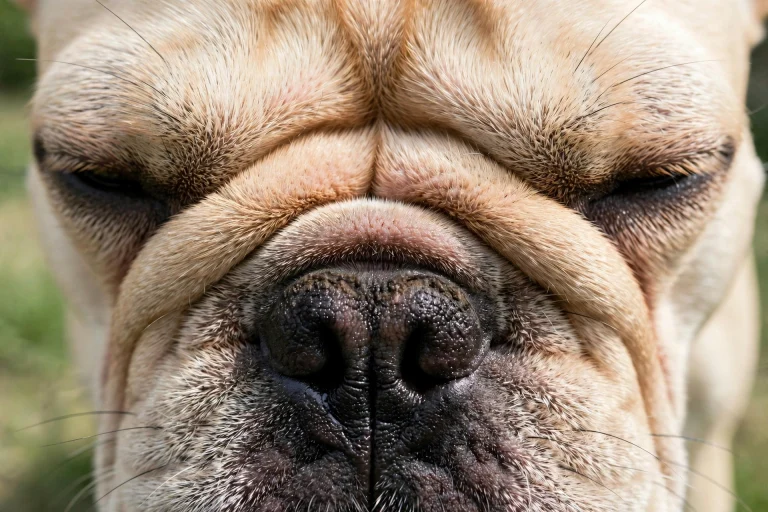
Skin folds. The wrinkles are the most visible issue. Skin fold dermatitis, which vets also call intertrigo, happens when friction plus trapped moisture lets bacteria and yeast overgrow. Frenchies carry 11 times the adjusted odds (PubMed). The hotspots are the nose rope, the tail pocket under a screw tail, the lip folds, the armpits and groin, and between the toes. Veterinary dermatology literature puts chlorhexidine-based antimicrobial wipes, used once or twice daily, as first-line treatment, and the AKC classifies fold infections as surface pyoderma, the shallowest and most treatable category of skin infection.
Allergies. The engine underneath many skin and ear problems. Frenchies carry nearly 8 times the odds of allergic skin disorders and 7 times the odds of food hypersensitivity. The most common food triggers in confirmed cases are beef, dairy, chicken, wheat, and lamb, in that order. The only reliable diagnosis is a strict 8 to 12 week elimination diet followed by a food challenge. Blood and saliva tests cannot diagnose food allergy in dogs. For environmental allergies, modern options include Apoquel tablets at roughly $60 to $150 a month, Cytopoint injections at roughly $50 to $150 per shot lasting 4 to 8 weeks, and immunotherapy, which takes 6 to 12 months but helps roughly half to three-quarters of dogs.
Ears. The bat ears look dramatic and act like funnels, scooping debris toward narrow canals that cannot clear themselves. Ear discharge runs at 14 times the odds, and ear infections were the single most common disorder in the VetCompass French Bulldog population at 14%. Allergies sit behind much of it: VCA reports allergies are involved in up to 43% of ear infection cases, and ear infections strike 65 to 80% of dogs with food allergies (VCA Hospitals). Only a microscope swab at the vet, called cytology, can tell yeast from bacteria from mites, and the treatments differ completely.
Our deep-dives walk through cleaning and treating skin folds, telling food allergies from environmental ones, and treating ear infections.

Checklist: the weekly itch patrol
– Lift every fold and look: pale pink and dry is good, red or smelly is not
– Sniff each ear: no smell is good, sweet or foul means act
– Note any paw licking, face rubbing, or head shaking since last week
– Clean folds on schedule, not when they start to smell
Spine and Back Problems (IVDD)
This is the condition that scares neurologists most in this breed. Intervertebral disc disease means a spinal disc bulges or ruptures and presses on the spinal cord, causing pain, weakness, or paralysis. In a study of 43,517 US dogs, French Bulldogs had the highest adjusted IVDD odds of any purebred: 21 times (JAVMA, 2025). First episodes strike young dogs and favor the neck.
The screw tail is the visible clue. Hemivertebrae, the wedge-shaped half-vertebrae behind that tail, show up in 93.5% of neurologically normal French Bulldogs. Most are incidental and never cause trouble. But dogs with hemivertebrae carry 4.2 times the odds of IVDD, so the anatomy is a loaded gun even when it has not fired.
Watch for yelping when touched, reluctance to jump or climb stairs, a hunched back, wobbliness or knuckling of the paws, and any incontinence. Diagnosis runs from a neuro exam to X-rays to MRI, the gold standard, which typically costs $1,500 to $6,000 or more with anesthesia. Mild cases get strict crate rest for 4 to 6 weeks plus medication. Dogs that cannot walk, or that fail conservative care, need surgery such as a hemilaminectomy, with all-in costs commonly $5,000 to $14,000. And this is a lifelong condition: over half of surgically treated French Bulldogs in one study had a recurrence, at a median of 12 months, with dogs whose first episode hit at 3 years or younger at highest risk (PMC).
Prevention is unglamorous and effective. Keep the dog lean, since overweight dogs carried 1.67 times the IVDD odds. Use a harness instead of a collar. Add ramps to the couch, the bed, and the car. Limit repeated jumping. A full deep-dive is planned at IVDD in French Bulldogs.
Checklist: a spine-friendly house
– Ramps to the couch, bed, and car
– Harness on walks, never a collar pulling on the neck
– No repeated jumping on and off furniture
– Lean weight, checked monthly with the rib test
Eyes: Cherry Eye and Corneal Ulcers
The same shallow eye sockets that give Frenchies their expression leave the eyes exposed.
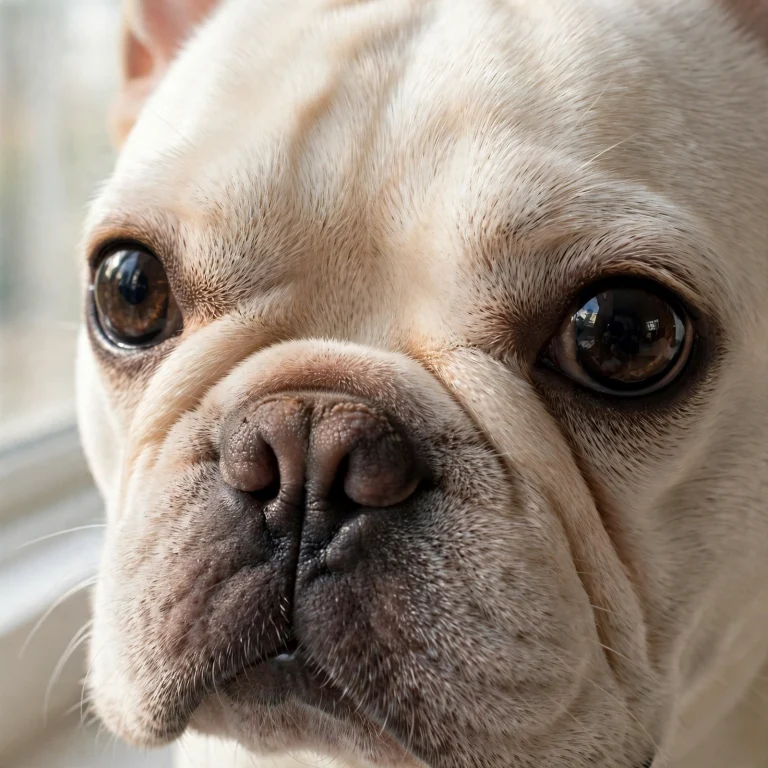
Cherry eye is the prolapsed tear gland of the third eyelid, the pink lump at the inner corner of the eye. Frenchies carry 8 times the odds versus crossbreeds, in the largest cherry-eye study ever run at over 900,000 dogs, and the average diagnosis lands around 6 months of age, with most cases before age two (PMC). The gland produces up to half of the watery tear film, so the correct treatment is surgical repositioning, never removal, which risks lifelong dry eye. Expect re-prolapse in roughly 5 to 20% of cases. Surgery typically runs $500 to $1,500 per eye.
Corneal ulcers are the sneakier threat. An ulcer is an open sore on the clear corneal surface, and Frenchies carry what researchers call an ultra-predisposition at over 4 times the odds. The mechanism is measurable: dogs with a craniofacial ratio under 0.5 face 20 times the ulcer odds, and the Frenchie average sits around 0.18. The nasal skin folds, wide eyelids, and incomplete blinking all add exposure. The warning sign is sudden squinting or holding one eye shut, often with pawing, tearing, or a cloudy cornea. Vets diagnose with a fluorescein stain, an orange dye that glows green on damaged tissue, typically $20 to $60. Superficial ulcers heal in 3 to 10 days with topical antibiotics, atropine drops, and an E-collar. Deep or melting ulcers need graft surgery at $1,000 to $3,000 or more, and an eye can be lost in hours, so a rapidly worsening cloudy eye is a same-day emergency.
A full eye-health deep-dive is planned at cherry eye in French Bulldogs.
Quick tip: Any brachycephalic dog with a suddenly, severely painful eye swollen shut needs same-day evaluation. Do not wait to see if it improves overnight.
Heat Stroke: The Summer Killer
If breathing is the chronic headline, heat is the acute one. The shortened muzzle slashes the nasal surface dogs use for evaporative cooling, and the extra effort of breathing through a crowded airway generates more heat than panting removes. The result is ineffectual panting: the harder the dog pants, the hotter it gets.
French Bulldogs carry 6 times the odds of heat-related illness compared with Labradors (RVC VetCompass). In one emergency-care study, English and French Bulldogs together made up nearly 37% of all heat-illness cases, and the fatality rate ran 21 to 27%. Overweight dogs face about 1.5 times the risk.
Learn the escalation. Heavy panting that will not ease, thick drool, and bright red gums come first. Then staggering, vomiting or diarrhea, pale or bluish gums, collapse, and seizures. First aid: move to shade or air conditioning, aim a fan at the dog, wet the coat continuously with cool water, never ice water, and drive to an emergency vet immediately even if the dog perks up. Organ damage including kidney failure and clotting disorders can appear hours later.
Prevention is mostly scheduling. Walk only in the early morning or late evening. Never leave the dog in a parked car: the interior can rise 20 degrees in 10 minutes. Keep the dog lean and water always available. And use the field rule: temperature in Fahrenheit plus humidity over about 100 means high risk. Our planned deep-dive: French Bulldog heat stroke.
Do this, not that:
– Do cool with continuous cool water and a fan on the drive to the vet. Do not use ice water, which constricts blood vessels and traps heat inside.
– Do go to the emergency vet even if the dog looks better. Do not assume recovery means no damage.
– Do plan summer walks around the temperature plus humidity rule. Do not trust a “quick” midday walk in July.
Hips, Teeth, and Weight
Three quieter problems that compound everything above.
Hips. The bulldog family ranks among the worst breeds for hip dysplasia, the inherited ball-and-socket malformation that leads to looseness, pain, and arthritis. In one study of over a million radiographs, up to 77.7% of (English) Bulldogs were affected. No French-Bulldog-specific prevalence figure could be verified from a primary source, so treat any precise percentage you see online with suspicion. What is verified: Frenchies with hemivertebrae carry 3.9 times the odds of hip dysplasia. Watch for bunny-hopping, reluctance to climb stairs or jump, hind-leg lameness, and thinning thigh muscles. Diagnosis needs sedated radiographs, through OFA at 2 years or PennHIP from 16 weeks. Mild cases get weight control, medication, and rehab. Surgical options include femoral head ostectomy at $1,200 to $2,500 per hip, triple or double pelvic osteotomy at $3,000 to $6,000, and total hip replacement at $3,500 to $7,000 or more per hip.
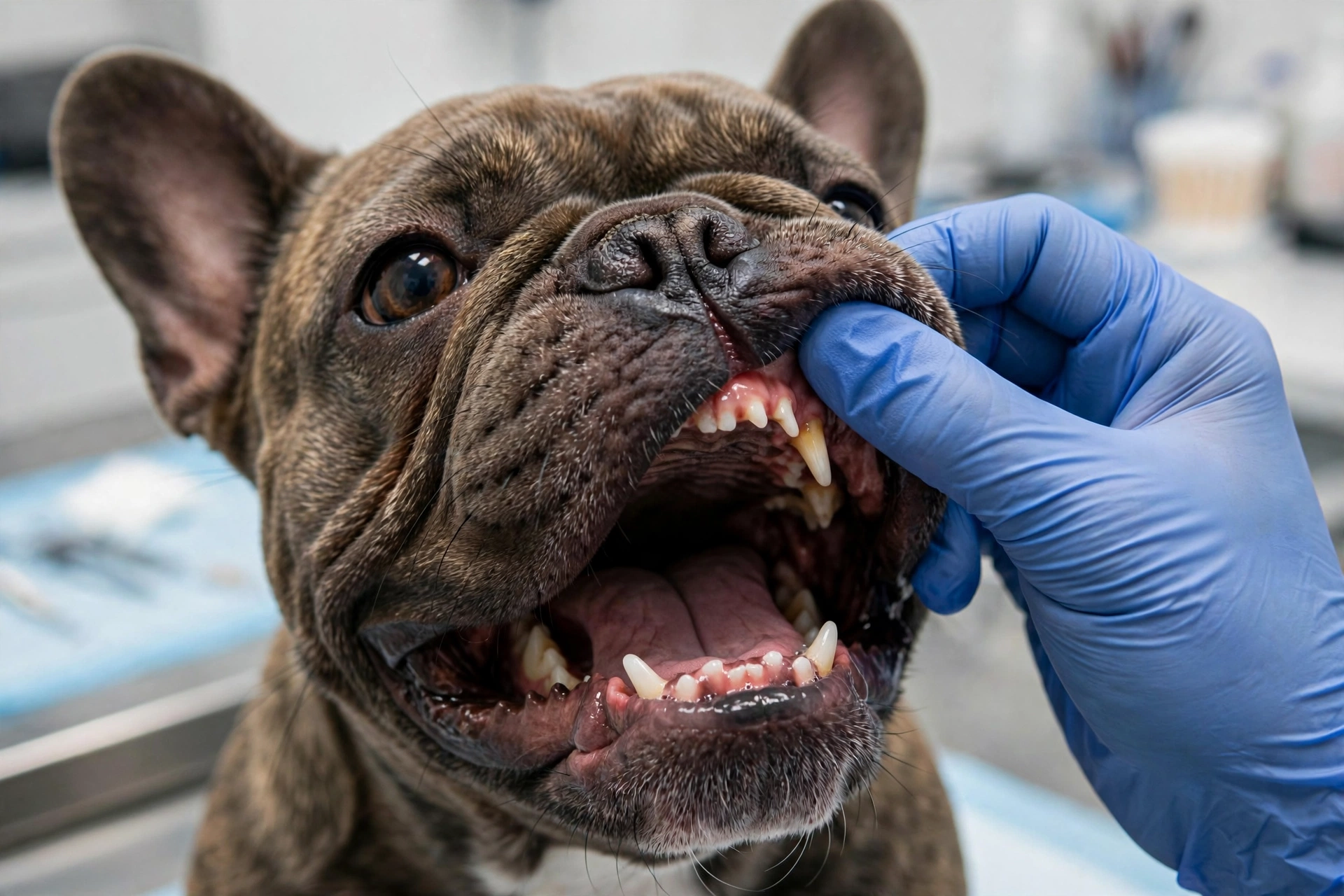
Teeth. Forty-two adult teeth in a drastically shortened jaw means crowding, rotation, retained baby teeth, and teeth that meet the palate wrong. Here is the strange part: UK VetCompass primary-care data shows Frenchies with low recorded periodontal disease, just over 2% prevalence. The researchers caution this is likely an artefact of a young population plus vets avoiding dental work over anesthesia worries in the breed. True estimates run 44 to 100% when dogs are properly diagnosed under anesthesia (dvm360). Brushing is, in the words of brachycephalic specialists, an absolute must, because chews cannot reach misaligned surfaces. Plaque hardens into tartar in about two days. A routine cleaning under anesthesia runs $300 to $700, or $500 to $1,200 with X-rays, and simple extractions add $30 to $150 per tooth.
Weight. Obesity is the amplifier for nearly every condition in this guide. Around 59% of US dogs are overweight or obese, and only 37% of owners describe their own dog as above ideal weight, so most owners are grading on a curve. Frenchies sit among the highest average body condition scores of any breed studied, and half to two-thirds score overweight. The BOAS connection is direct: each step up the 9-point body condition scale tracks with higher BOAS grade, and the average score in BOAS-affected Frenchies was 5.79 against an ideal of 4 to 5. Overweight dogs also face about 1.5 times the heat-illness risk and 1.67 times the IVDD odds. On the other side of the ledger, lean dogs lived about 1.8 years longer than overweight ones in a landmark lifetime study.

Quick tip: Run the rib check monthly. You should feel the ribs easily under a thin layer of fat, see a waist from above, and see a belly tuck from the side. If you cannot feel the ribs, the diet starts today, not Monday.
What It Costs, and Why Insurance Matters
Frenchie health has a price tag, and the honest move is to look at it before you need to pay it. Full BOAS surgery runs $1,500 to $5,000 in the US in 2026. IVDD surgery commonly lands between $5,000 and $14,000 all in. Cherry eye surgery is $500 to $1,500 per eye. A simple corneal ulcer costs $300 to $1,000 to treat medically, and $1,000 to $3,000 or more surgically. A routine dental cleaning under anesthesia is $300 to $700. Allergy management is the slow drip: Apoquel at $60 to $150 every month, year after year.
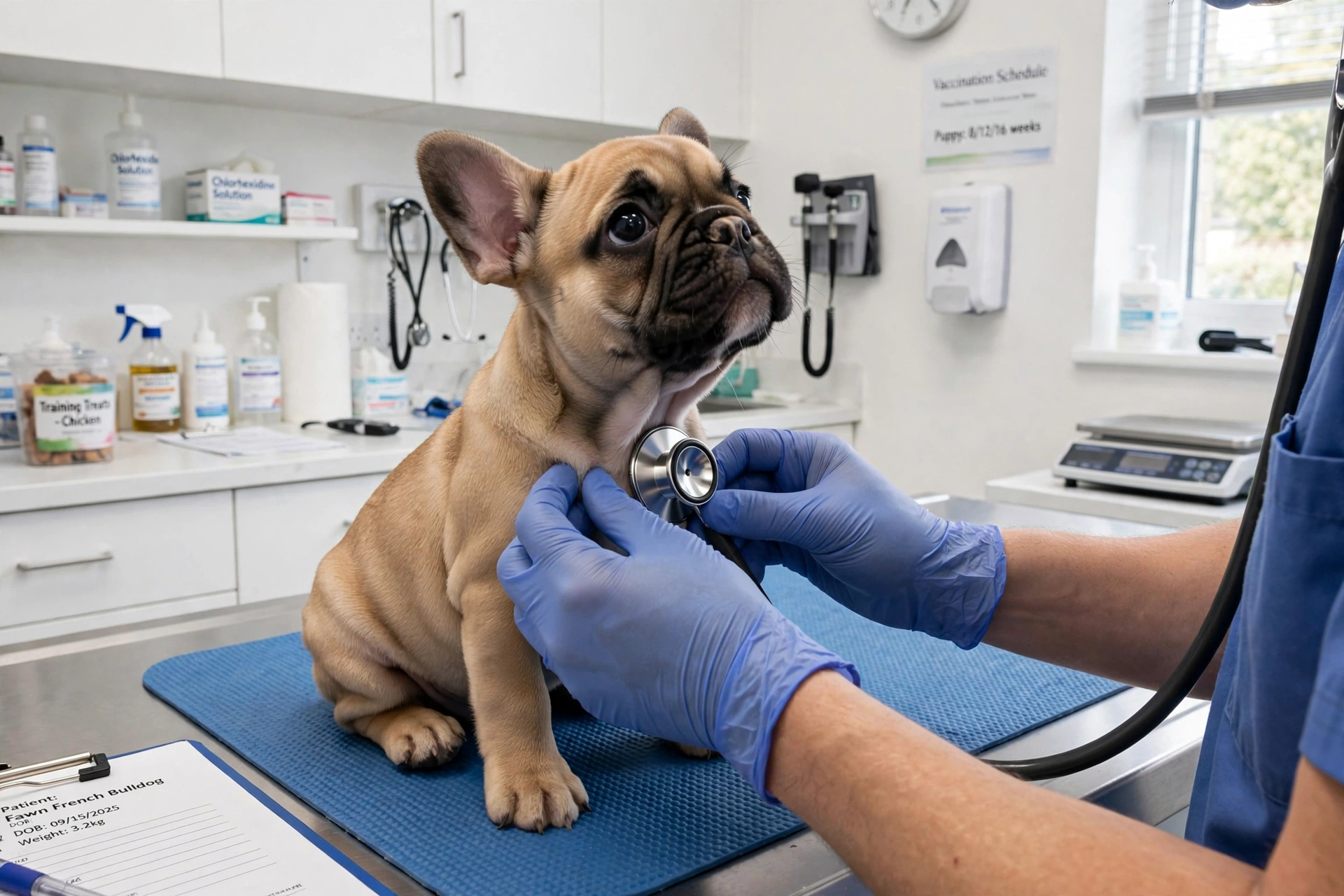
Against that, pet insurance for a young Frenchie typically costs $60 to $95 a month, or $720 to $1,140 a year, for a plan with 80% reimbursement, a $500 deductible, and a $10,000 annual limit. Puppies enrolled at 8 to 16 weeks run $35 to $55 a month. State your plan assumptions when comparing, because premiums swing hard by state, age, deductible, and reimbursement level.
The critical rule is about timing, not price. Pre-existing conditions are permanently excluded once documented in vet records, and for Frenchies “documented” can mean a vet once wrote “snoring” in the notes. Hereditary conditions are generally covered only if you enrolled before any symptom was recorded. Enroll puppies at 8 weeks, before any vet has documented a sound. One named exception: Nationwide treats BOAS as congenital and does not cover the surgery. Standard waiting periods run 1 to 5 days for accidents, 14 to 15 days for illness, and 6 to 12 months for orthopedic conditions including IVDD and hip dysplasia.
Quick tip: One IVDD surgery at $8,000 buys roughly seven years of $95-a-month premiums. Run that math before you decide insurance is expensive.
Emergency Red Flags: Go Now, Don’t Wait
Most Frenchie health management happens on a schedule. These do not wait for one.
- Overheating: unrelenting panting, bright red or pale gums, thick drool, staggering, vomiting, collapse, seizures. Start cooling with cool water and a fan, and drive.
- Spine: sudden inability to walk or stand, dragging hind legs, loss of bladder or bowel control, no reaction to a firm toe pinch.
- Eyes: rapidly worsening cloudiness, yellow, green, or grey matter on the cornea, a bulging inner layer, any perforation, sudden vision loss with severe pain.
- Breathing: blue or grey gums, fainting, pauses in breathing or gasping during sleep.
- Mouth: facial or muzzle swelling, uncontrolled oral bleeding, sudden inability to eat or drink.
- Ears: a suddenly swollen, puffy ear flap is an aural hematoma. It needs a vet within a day or two. Never try to drain it yourself.
- Allergic reaction: sudden facial swelling or breathing difficulty. Emergency, not a next-week appointment.
Checklist: the emergency run bag
– Your vet’s number and the nearest 24-hour emergency clinic, saved in your phone
– A towel and a bottle of water in the car for cooling
– These red flags bookmarked on your phone, not buried in a drawer
Frequently Asked Questions
Do all French Bulldogs get sick? No. The VetCompass data shows higher risk, not certainty: the median Frenchie had one recorded disorder per year, and many live full, comfortable lives with attentive management. The breed is high-maintenance, not broken. What the odds mean is that you should plan for vet care the way you plan for food: as a certainty in the budget, not a surprise.
What is the single most important health test for a Frenchie? The RFGS breathing grade. It is a three-minute trot test, available from 12 months of age through the OFA, usually $60 to $70 at breed-club clinics plus a $15 registration fee, repeated every two years. No other single test tells you more about your dog’s future comfort.
Is pet insurance worth it for a French Bulldog? For most owners, yes, and the math is simple. Typical premiums of $60 to $95 a month are dwarfed by a single $5,000 to $14,000 IVDD surgery or a $1,500 to $5,000 BOAS operation. The catch is timing: enroll at 8 weeks, before anything is documented, and mind the 6 to 12 month orthopedic waiting periods.
How long do French Bulldogs live? The AKC gives 10 to 12 years as general breed guidance (AKC). You may see a widely shared figure of 4.5 years from a 2022 UK life-table study. That number is real but misleading on its own: the UK French Bulldog population at the time was extremely young, which skewed deaths young. Treat it as a welfare signal about the breed’s health burden, not as your dog’s prognosis.
Can these health problems be prevented? Not entirely, but the trajectory is movable. Weight control is the biggest lever: it lowers BOAS severity, heat risk, IVDD odds, and joint strain all at once. Add heat discipline in summer, ramps instead of jumps, weekly fold and ear checks, daily tooth brushing, and a breathing grade every two years, and you have covered most of what is coverable.
When should I call the vet versus wait and watch? Call promptly for anything on the emergency list above. Book a regular visit for new or suddenly louder snoring, a squinting or cloudy eye, a smelly skin fold, recurring ear infections, or itching that does not quit. When in doubt, the vet visit is cheaper than the emergency visit.
Final Word
French Bulldog health problems can look like a long list, and this guide did not shorten it. But look at what the list actually asks of you: keep the dog lean, keep it cool, check the folds and ears weekly, brush the teeth, grade the breathing every two years, and get insurance before you need it. None of that requires a veterinary degree. It requires routine.
Handle the small things on schedule and the big things stay rare. Bookmark this guide next to the deep-dives, share it with the next starry-eyed person at the dog park, and give your snoring buddy an extra treat tonight.