French Bulldog Allergies: Food vs. Environmental Signs
TL;DR
French bulldog allergies come in two main types, and telling them apart is the whole game. Food allergies cause year-round itching, often with digestive signs like soft stools or gas. Environmental allergies (atopy) cause itchy paws, face, and ears, often worse in spring and fall. The only reliable food-allergy test is a strict 8 to 12 week elimination diet. Environmental allergies are managed, not cured, with a mix of home care and vet treatments like Apoquel, Cytopoint, or immunotherapy.
The 2 A.M. Licking
You know the sound. It is 2 a.m., the house is dark, and your Frenchie is licking his paws like they owe him money. Again. You have tried switching foods twice, bought the expensive shampoo, and the vet mentioned the word “allergies” with the tone of someone about to hand you a very long to-do list.
Here is the question that decides everything that follows. Is it the food, or is it the environment? Get this wrong and you will spend three months on an elimination diet that was never going to work, or you will keep swapping kibbles while pollen does the real damage. This guide will help you read the patterns, run the right test, and stop guessing.
Why Frenchies Are Allergy Magnets
Some breeds win the genetic lottery. French Bulldogs won the genetic scratch-off ticket that pays out in vet bills. Bulldogs sit squarely on every veterinary dermatologist’s list of atopy-prone breeds, alongside Labradors, Westies, and Shar-Peis. Veterinary dermatology groups estimate that 10 to 15% of all dogs develop atopic dermatitis, and brachycephalic breeds like the Frenchie run hotter than average.
It usually starts young. Most dogs show their first signs between 6 months and 3 years of age. A puppy chewing its feet at 10 weeks probably has something else going on. The same behavior at 18 months is worth a proper workup.
Frenchies also collect overlapping problems. The same dog can have allergies, skin fold irritation, and breathing issues at once, which is why sorting out which symptom belongs to which condition matters so much. If your Frenchie also snores like a freight train, that is a separate breed issue worth understanding. Our BOAS guide covers the breathing side.

Quick tip: Start a one-line-a-day itch diary now, before the vet visit. Date, itch level from 0 to 10, and anything new (food change, park visit, pollen heavy day). Two weeks of this tells a vet more than any description.
French Bulldog Allergies: Food vs. Environmental at a Glance
This is the core of the article, so let us lay it out plainly. The two types overlap a lot, which is exactly why owners get stuck. But they leave different fingerprints.
| Clue | Food allergy | Environmental allergy (atopy) |
|---|---|---|
| Timing | Year-round, no real breaks | Often seasonal at first, worse spring and fall; can become year-round |
| Itch locations | Face, paws, ears, belly | Paws, face, ears, armpits, groin |
| Digestive signs | Common: soft stools, gas, vomiting, frequent poops | Rare |
| Ear infections | Recurring, stubborn | Recurring, often seasonal |
| Response to antihistamines | Poor | Modest help for some dogs |
| How it is diagnosed | Strict elimination diet, then food challenge | Clinical diagnosis, then skin or blood testing for immunotherapy planning |
The single most useful differentiator is the gut. Skin symptoms plus digestive symptoms, happening together all year, point toward food. Itchy skin alone, flaring with the seasons, points toward the environment. A Frenchie with chronic itching plus loose stools has a stronger food-allergy signal than one with skin signs alone.
Do this, not that:
– Do track whether the itch follows seasons before changing foods. Do not start an elimination diet during peak pollen season and expect a clear answer.
– Do rule out fleas first with year-round prevention. Do not assume indoor dogs cannot have flea allergy. One bite can trigger weeks of itching.
– Do photograph the worst spots weekly. Do not rely on memory. Skin changes slowly and memory lies.
Food Allergies: Signs and the Usual Suspects
True food allergy is an immune reaction, almost always to a protein. This is worth saying clearly because the internet has convinced many owners that grains are the villain. The data says otherwise. A widely cited review of 297 dogs with confirmed food reactions (Mueller et al., 2016) found the top triggers were beef at 34%, dairy at 17%, chicken at 15%, wheat at 13%, and lamb at 5%. Notice what tops the list. The everyday proteins dogs eat most often, not the exotic ingredients.
That pattern makes sense once you know how food allergies develop. A dog has to be exposed to a protein repeatedly before the immune system decides to overreact to it. This is why a dog can eat the same chicken-based kibble happily for two years and then start itching. The favorite food becomes the problem, which feels like a betrayal and confuses a lot of owners.
What food allergy looks like in a Frenchie:
- Itching that never takes a season off. Paws, ears, face, belly, armpits.
- Recurring ear infections that clear with treatment and come right back.
- Red, inflamed skin, sometimes with a yeasty smell.
- Digestive signs riding along: soft stools, gas, intermittent vomiting, or simply pooping more often than seems right.
- Hot spots that heal and return in the same areas.
Here is the trap. Environmental allergies can look almost identical on the skin. The VCA’s food allergy guide is blunt about this: symptoms alone cannot confirm a food allergy, because atopy, parasites, and infections mimic it. That is why the elimination diet exists, and why it is the only test that counts. More on that below.

Quick tip: Before you blame the food, check the treat jar. Treats, dental chews, flavored medications, and table scraps all contain the same proteins as kibble. A dog can be “on a new diet” while still eating the old allergen three times a day in treat form.
Environmental Allergies (Atopy): Signs and Triggers
Atopy is the most common allergy diagnosis in itchy dogs, and Frenchies are prime candidates. The immune system overreacts to ordinary things in the air and the house. The main culprits, per VCA’s atopy guide, are tree pollens like cedar, ash, and oak, grass pollens, weed pollens such as ragweed, molds, mildew, and house dust mites.
Dogs do not get hay fever the way people do. They get itchy skin. The classic atopy pattern is face rubbing, paw licking and chewing, and scratching at the armpits and groin. Ears get inflamed. The belly turns pink. Secondary bacterial or yeast infections move in on the damaged skin, which makes the itching worse, which damages the skin more. Breaking that cycle is half the battle.
The seasonal clue matters. Many dogs start with a clear spring or fall pattern. Ragweed season hits, the paws turn red, and by winter everything calms down. Over the years the pattern often stretches until it looks year-round. That progression is typical of atopy, not proof of a food problem. Dust mites and molds, meanwhile, cause year-round signs that mimic food allergy closely. This is where testing earns its keep.
One more thing owners miss. Because allergens are absorbed through the skin, the skin barrier itself is part of the disease. Frenchies with atopy tend to have a weaker barrier, which lets more allergens in, which drives more inflammation. Anything that repairs the barrier, from the right bathing routine to omega fatty acid support discussed with your vet, is working on the root, not just the itch.
Checklist: the atopy pattern
– Itch ramps up in spring, fall, or both
– Paws are the main event: licking, chewing, brownish staining between toes
– Face rubbing on furniture and carpet
– Pink belly, red armpits, inflamed ears
– Flare-ups calm in deep winter, then return
– Flea prevention is current, so fleas are unlikely
The Elimination Diet: How It Actually Works
This is the gold standard for diagnosing food allergy, and there is no shortcut around it. No blood panel, saliva swab, or hair test can diagnose food allergy in dogs. Systematic reviews have found those tests perform inconsistently and cannot reliably confirm or exclude a food reaction. Veterinary dermatology groups are explicit: the elimination diet followed by a controlled challenge is the reference standard. Everything else is a guess with a receipt.
The rules are strict because they have to be. The trial runs 8 to 12 weeks for skin signs. Some dogs show improvement around week 5, but skin takes the full course to settle. During the trial, the dog eats one thing: a prescription hydrolyzed-protein diet or a novel-protein diet your vet selects. Hydrolyzed means the proteins are broken into pieces too small for the immune system to recognize. Novel means a protein the dog has never eaten, like rabbit, venison, or kangaroo paired with a new carbohydrate.
Nothing else passes the dog’s lips. No treats. No dental chews. No flavored toothpaste. No table scraps. No broth or toppers. No flavored heartworm or flea preventives without checking with your vet first. No sneaking food to the other dog. One contaminated week can reset the whole clock, which is how an 8-week trial becomes a 5-month trial.

Then comes the part most owners skip: the challenge. If the dog improves on the trial diet, you reintroduce one old ingredient at a time and watch for 7 to 14 days. If the itching returns, you have found a trigger. If nothing changes on either diet, there is probably no food allergy, and the investigation moves to environmental causes. Improvement without a challenge proves nothing. Dogs get better for unrelated reasons all the time, from the seasons changing to a skin infection finally clearing.
Do this, not that:
– Do pick the trial diet with your vet, not the pet store aisle. Over-the-counter “limited ingredient” foods have repeatedly been found to contain unlisted proteins.
– Do keep the symptom diary going through the whole trial. Weekly photos of ears, paws, and belly beat memory every time.
– Do warn the whole household. Do not let well-meaning family members slip the dog treats. One cousin with cheese can sink two months of work.
– Do finish the challenge phase. Do not stop at “he seems better” and declare victory over chicken forever.
Managing Environmental Allergies at Home
Environmental allergies cannot be cured, but the allergen load can be cut dramatically. Think of it as turning down the volume. Every bit of exposure you remove is itch your dog does not have to feel, and less work for any medication to do.
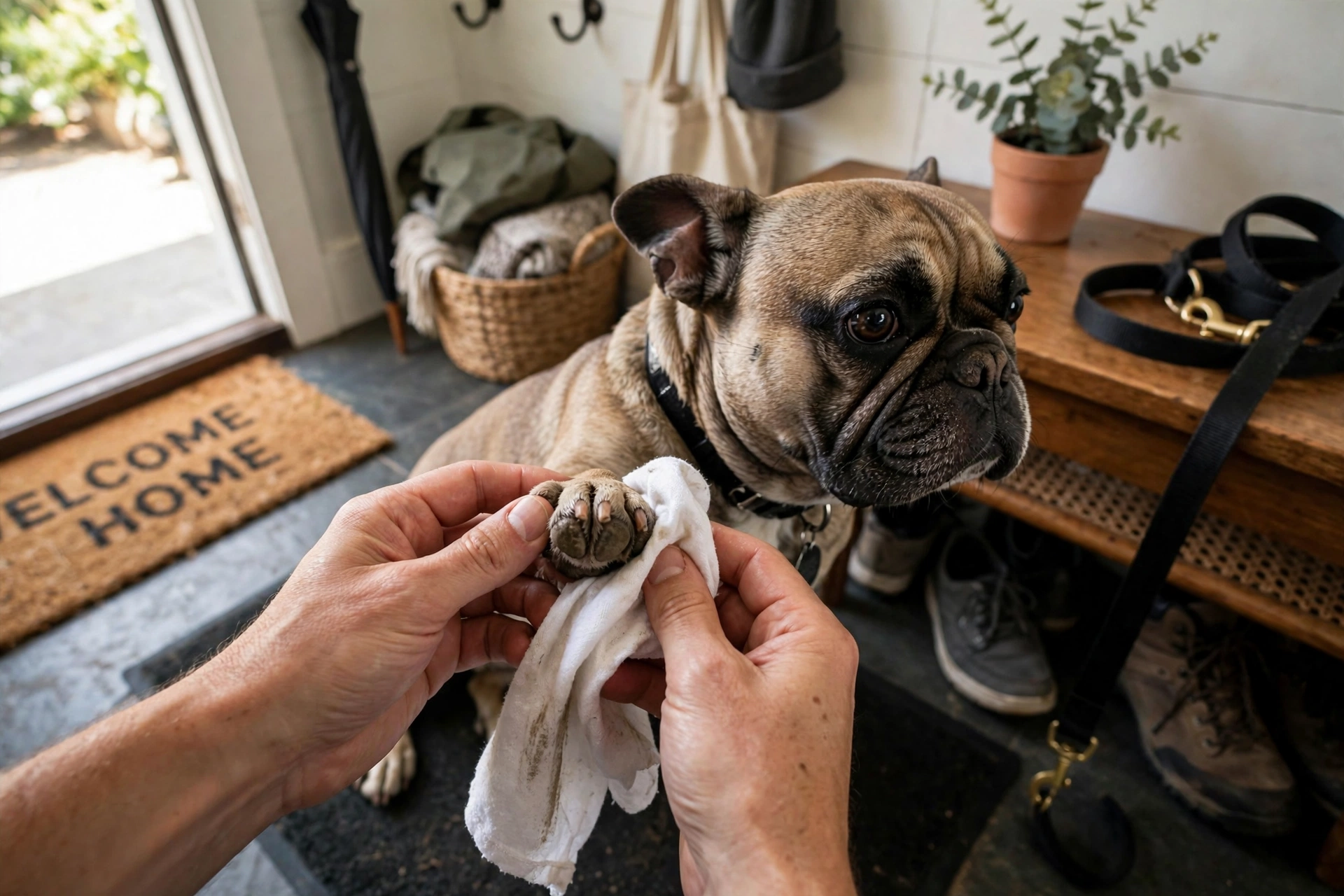
Paw wiping is the highest-value habit. Paws collect pollen, dust, and mold spores on every walk and deliver them straight to the mouth when the dog licks. A damp cloth or a bowl of lukewarm water by the door, every single time you come inside, takes thirty seconds. In pollen season, some owners add a quick belly wipe too, since the sparsely furred belly picks up plenty.
Bathe with purpose. Regular bathing with a gentle hypoallergenic or vet-recommended medicated shampoo physically removes allergens from the coat and skin. Research summarized by veterinary dermatologists notes that because allergens are absorbed through the skin, frequent bathing reduces the allergen load the dog takes in. Lukewarm water, not hot. Rinse thoroughly, since shampoo residue itches on its own. How often depends on the dog and the season, so ask your vet for a number rather than guessing.
Fix the indoor air. Dust mites live in bedding, carpets, and upholstery. Wash the dog’s bedding weekly in hot water. Vacuum with a HEPA-filter machine. Consider an air purifier in the room where the dog sleeps. Keep humidity moderate, since dust mites and molds both thrive in damp air.
Mind the yard. Grass pollen is airborne, so there is no keeping a dog off grass entirely. But closely cut grass with no seeding heads sheds less pollen, and wiping down after yard time still helps. During peak pollen days, walk early in the morning or after rain, when counts are lower.

Quick tip: Rinse, don’t just wipe, after the dog park or a long grassy walk. A 60-second lukewarm rinse of paws and belly removes far more pollen than a dry cloth, and most Frenchies tolerate it better than a full bath.
Vet Treatments Worth Discussing
Home management has limits. When the itch breaks through, modern veterinary dermatology has better tools than the old steroid-or-nothing days. Nothing here is a prescription. These are the conversations to have with your vet, with honest numbers attached.
Apoquel (oclacitinib) is a daily oral tablet that blocks the itch signal at the immune-system level. It starts relieving itch within 4 to 12 hours, which makes it the go-to for fast relief. Cost runs roughly $60 to $150 a month depending on the dog’s size, and it is a every-day-for-life commitment for chronic cases. Because it partially suppresses the immune response, vets weigh that in young dogs and monitor with regular checkups.
Cytopoint (lokivetmab) is an injection that neutralizes IL-31, one of the main itch proteins, without suppressing the immune system broadly. That safety profile is its big selling point. One shot lasts 4 to 8 weeks, starts working within a day or so, and costs roughly $50 to $150 per injection for a Frenchie-sized dog, plus whatever the clinic charges for the visit. For a small dog whose relief stretches to 8 weeks, it can cost less per month than daily Apoquel. For a dog that needs it every 4 weeks, the math flips. A vet-written comparison puts it well: the best medication is the one the dog actually receives on schedule. Pill-hating dogs do better on the shot. Vet-visit-hating owners do better with the pill.
Immunotherapy (allergy shots or drops) is the only treatment that tries to retrain the immune system rather than suppress the itch. After testing identifies the triggers, a custom serum is made and given as injections or under-the-tongue drops over months. It takes 6 to 12 months of consistent treatment before meaningful improvement shows, and roughly half to three-quarters of dogs respond well. It is slow, it is not cheap, and for the dogs it helps, it is the closest thing to a long-term answer environmental allergies have.
Steroids and antihistamines still have their place. Corticosteroids crush inflammation fast and are cheap, which makes them useful for sudden severe flare-ups. Long-term use brings the familiar baggage: increased thirst and urination, weight gain, higher infection risk. Antihistamines like cetirizine help only a minority of truly allergic dogs, but they are cheap, safe, and worth trying for mild seasonal itch before moving up the ladder.
Checklist: questions for the vet visit
– Is this pattern more food or environmental, in your judgment?
– Should we do an elimination diet, and which trial diet do you recommend?
– Is my dog a candidate for Cytopoint or Apoquel right now?
– Would allergy testing and immunotherapy make sense at this stage?
– What bathing routine and products do you want us on?
– How do we handle flare-ups between visits?
How Vets Diagnose French Bulldog Allergies
Diagnosis is a process of elimination in the literal sense. The vet’s job is to rule things out in order: fleas and mites first (skin scrapes), then bacterial and yeast infections (cytology), then food (elimination diet), then environmental (clinical pattern plus testing). Skipping steps is how dogs end up on the wrong treatment for a year.
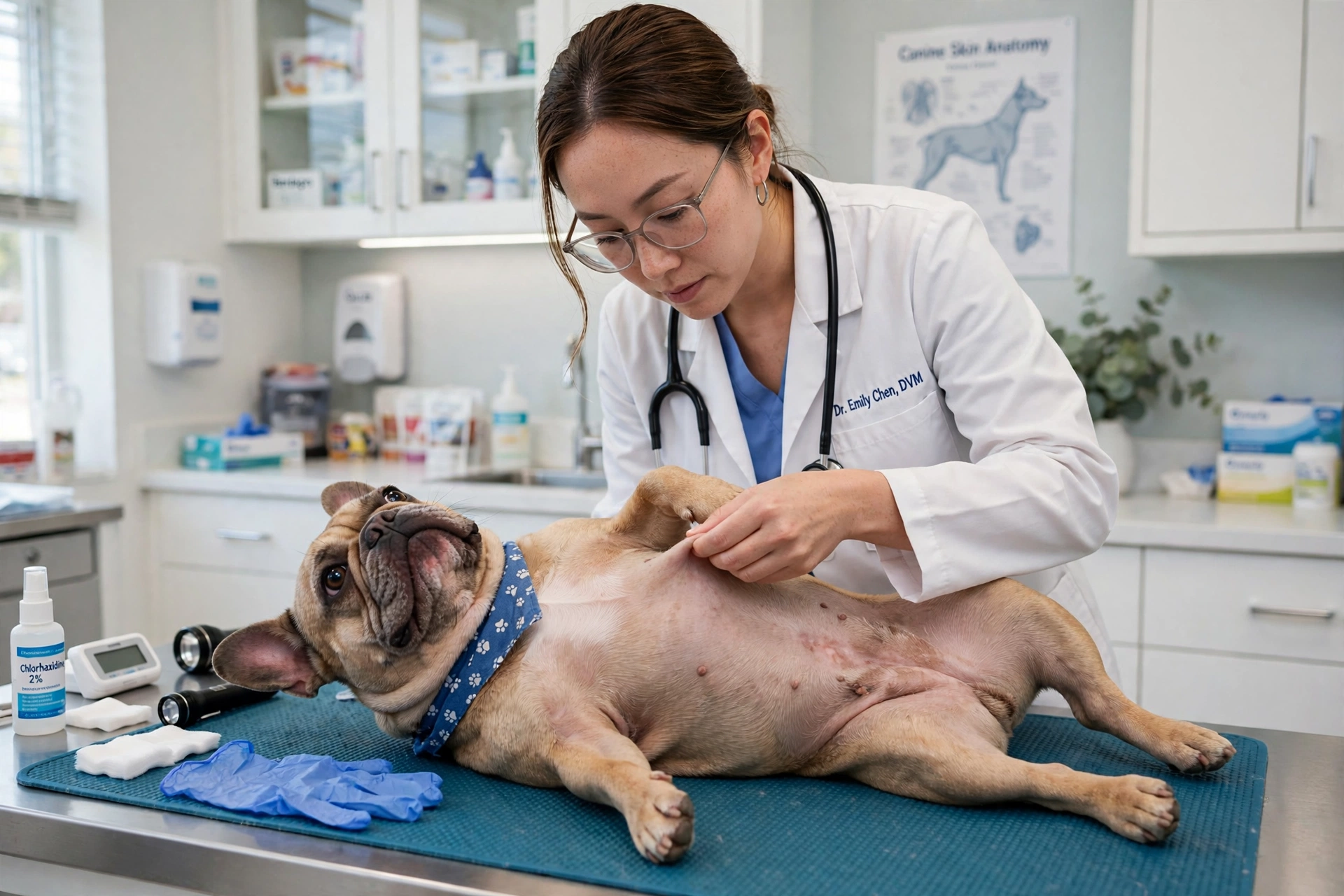
For environmental allergies, intradermal skin testing is the gold standard. A veterinary dermatologist injects tiny amounts of common allergens under the skin, usually with the dog lightly sedated and a small patch shaved, and reads the reactions in 15 to 30 minutes. It tests the organ that is actually diseased, the skin, which is why dermatologists trust it most.
Blood testing is the convenient alternative. Your regular vet draws a sample and sends it to a lab, no sedation or shaving needed, results in 1 to 3 weeks. The trade-off is accuracy. Blood tests measure antibodies, and dogs can carry antibodies to things that do not actually make them itch, so false positives are common. The results still need a vet to interpret them against the dog’s real-world pattern.
For food allergies, neither test works. This bears repeating because clinics still sell food allergy blood panels. The studies are consistent: serum IgE and IgG tests for food antigens perform poorly and cannot reliably confirm or exclude food allergy in dogs. The elimination diet is the test.
So when is testing worth the money? When you are considering immunotherapy, because the serum has to be built from something. When the pattern is unclear after the basics are ruled out. And when you have spent enough on trial-and-error that a precise answer would be cheaper than another year of guessing. Testing to “find out what my dog is allergic to” out of curiosity, with no plan to act on it, is an expensive way to get a list.
Quick tip: If your vet suggests allergy testing, ask what decision the results will change. “To build an immunotherapy serum” is a good answer. “Just to see” is a reason to wait.
When to Call the Vet
Most allergy management happens at home, but some things should not wait. Call your vet promptly if you see raw, oozing, or foul-smelling skin, sudden swelling of the face or muzzle, open sores the dog will not leave alone, or an ear that is painful, bleeding, or producing dark discharge. Breathing difficulty alongside a suspected allergic reaction is an emergency, not a next-week appointment.
Also book a visit when the pattern changes. A dog whose seasonal itch suddenly becomes year-round, or whose well-controlled allergies flare despite treatment, may have picked up a secondary infection or a new trigger. Frenchies often juggle multiple breed issues at once, so mention everything at the appointment, even the snoring. If the breathing sounds rough too, our BOAS guide explains what vets listen for.
Quick tip: Take photos of flare-ups at their worst, not just at the appointment when things look calmer. Vets diagnose from the worst days, and a phone full of dated photos is the next best thing to being there.
Frequently Asked Questions
Can French Bulldogs suddenly develop allergies out of nowhere? It feels sudden, but the groundwork builds quietly. Food allergies need repeated exposure before the immune system reacts, so a dog can eat the same food for years and then start itching. Environmental allergies often start with one mild season and worsen each year. What looks like an overnight change is usually a threshold finally being crossed.
Is chicken bad for French Bulldogs? Chicken is not poison. It is simply one of the most common proteins in dog food, which makes it one of the most common allergens, about 15% of confirmed food reactions in one large review. Most Frenchies eat chicken fine their whole lives. Only switch away from it as part of a vet-guided elimination trial, not on suspicion alone.
How long does an elimination diet really take? Plan on 8 to 12 weeks of strict feeding for skin signs, sometimes longer if there was a bad infection at the start. Gut signs may settle sooner. Then add 1 to 2 weeks per ingredient for the challenge phase. Anyone promising a diagnosis in two weeks is selling something.
Will my Frenchie’s allergies ever go away? Food allergies are managed by avoidance, and some dogs do well for years once triggers are identified. Environmental allergies are lifelong but controllable. Many dogs cycle through good and bad seasons. The goal is a comfortable dog, not a cured one.
Can I give my Frenchie Benadryl for itching? Ask your vet first, every time. Plain diphenhydramine is what vets sometimes suggest for mild cases, but combination products containing decongestants or xylitol can be dangerous, and dosing depends on the dog. Never start it on internet advice alone.
Are grain-free diets better for allergic Frenchies? Rarely the fix people hope for. The top confirmed triggers are animal proteins like beef, dairy, and chicken, not grains. Switching to grain-free without a diagnosis usually just changes the protein lineup while keeping the real trigger. Discuss any diet change with your vet before buying the expensive bag.
Final Word
French bulldog allergies are a puzzle, but a solvable one. The owners who get the best results watch the patterns, run the elimination diet properly instead of halfway, and treat the environment as seriously as the food bowl. It takes patience. Skin heals slowly, and the right answer rarely arrives in a week.
Start the itch diary tonight. Wipe the paws at the door tomorrow. Bring your notes, photos, and questions to the vet. A dog who sleeps through the night without chewing his feet is worth all of the detective work. Bookmark this guide and share it with the next Frenchie owner you meet. They will thank you at 2 a.m.