French Bulldog Skin Fold Infections: Cleaning, Treatment & Prevention
TL;DR
French bulldog skin fold infection (vets call it skin fold dermatitis or intertrigo) happens when moisture, friction, and microbes get trapped in your Frenchie’s wrinkles. Healthy folds are clean, dry, and nearly odor-free. Infected folds are red, smelly, and often ooze brown or yellow gunk. Daily wiping plus thorough drying prevents most cases. Active infections need a vet visit for a quick microscope test and targeted topical treatment. The nose rope and the tail pocket are the two spots owners miss most.
The Smell Test Never Lies
Your Frenchie’s face smells like a gym bag left in a hot car. You love that dog more than your couch, your car, and most of your relatives, but the smell hits you every time he climbs into your lap. Here is the thing nobody tells new Frenchie owners. That smell is not just how bulldogs smell. It is bacteria and yeast thriving in a warm, damp wrinkle, and it means a fold needs attention.
This is the practical manual I wish someone had handed me on day one. What healthy folds look and smell like, the exact cleaning routine that prevents most infections, what vets actually prescribe when a fold is infected, and how to tell a routine flare from a same-day emergency.
French Bulldog Skin Fold Infection: What It Actually Is
The veterinary name is skin fold dermatitis, or intertrigo. The mechanism is simple. Wherever two skin surfaces press together with no airflow, friction plus trapped moisture creates a warm incubator. Normal skin microbes multiply out of control, their waste products inflame the skin, and the inflamed skin weeps more moisture. The cycle feeds itself.
A veterinary dermatologist writing in Today’s Veterinary Practice identifies the usual culprits as Staphylococcus and Streptococcus bacteria plus Malassezia yeast, often all at once. That mixed population is why fold infections smell the way they do. Bacterial infections tend toward sour or rotten. Yeast leans musty, like old bread or corn chips.
Frenchies are built for this problem. The same selective breeding that gave them the flat face also gave them the nose rope, the lip folds, and in many dogs a screw tail with a pocket underneath. VCA Animal Hospitals notes that the deep fold around a corkscrew tail is predisposed to recurrent skin infections, sometimes severe enough to affect quality of life. That flat face causes breathing trouble too, which our BOAS guide covers in depth.
Quick tip: Learn the word “intertrigo.” If you ever need to describe the problem to a vet quickly, that one word tells them exactly what is going on.
Healthy Folds vs. Infected Folds: How to Tell
You do not need a veterinary degree for the first assessment. Your eyes and nose are the diagnostic tools here.
| Healthy fold | Infected fold |
|---|---|
| Skin inside is pale pink, dry to the touch | Red, angry-looking skin, sometimes raw |
| No smell, or faint ordinary dog smell | Sour, musty, or rotten odor you notice across the room |
| Dog doesn’t react when you touch it | Dog flinches, pulls away, or snaps |
| Wipe comes back mostly clean | Brown, yellow, or green gunk on the wipe |
| Hair intact inside the fold | Hair loss, crusting, or scabby edges |
The smell deserves emphasis because owners normalize it. A healthy Frenchie fold has almost no odor. If you can smell the folds without putting your nose in them, something is growing in there.
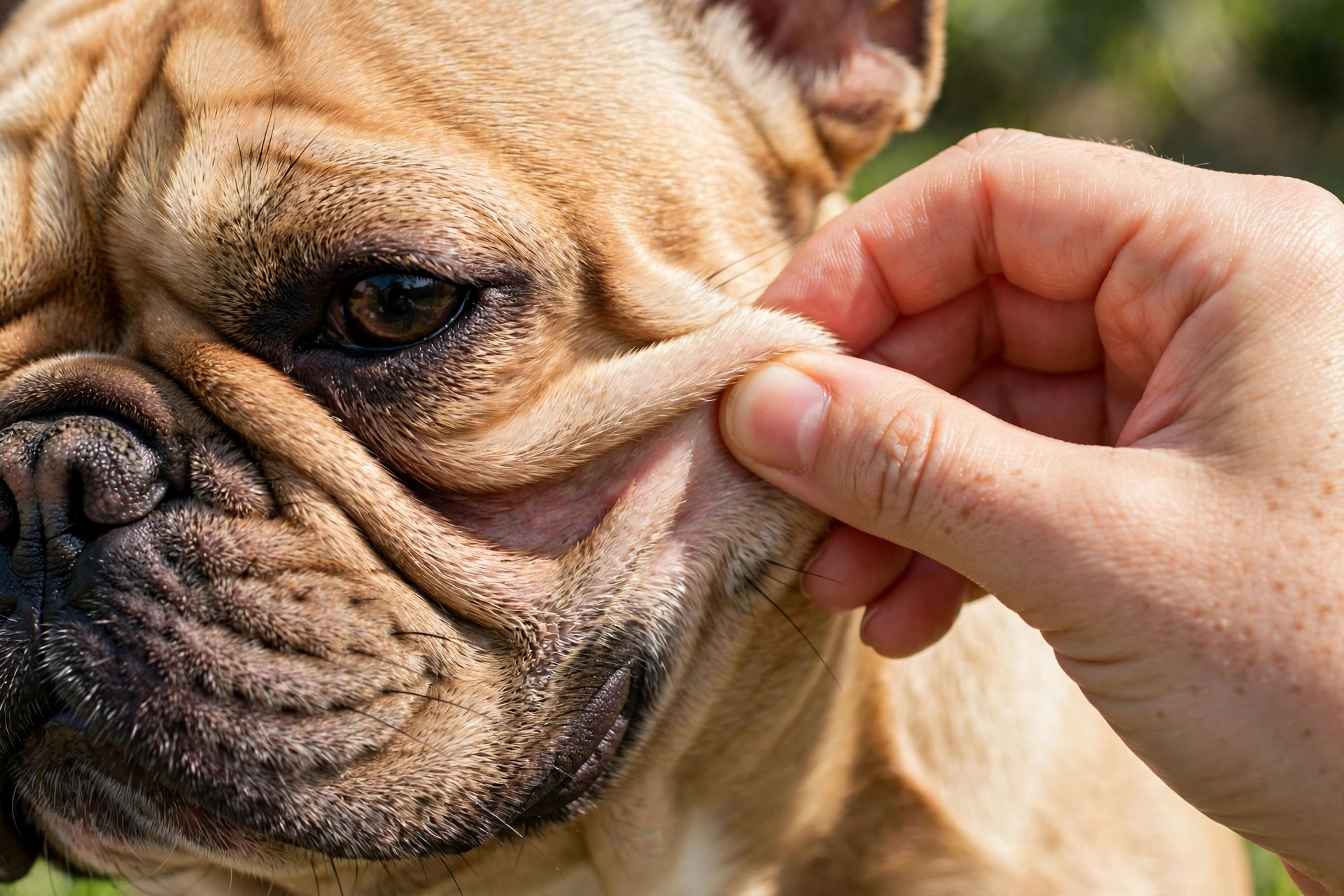
Quick tip: Check folds in daylight, not under warm indoor bulbs. Redness hides under yellow light. A quick fold check during the morning potty trip takes twenty seconds.
The Fold Map: Where Frenchies Get Them
Not all wrinkles are equal. These are the hotspots, ranked by how often they cause trouble.
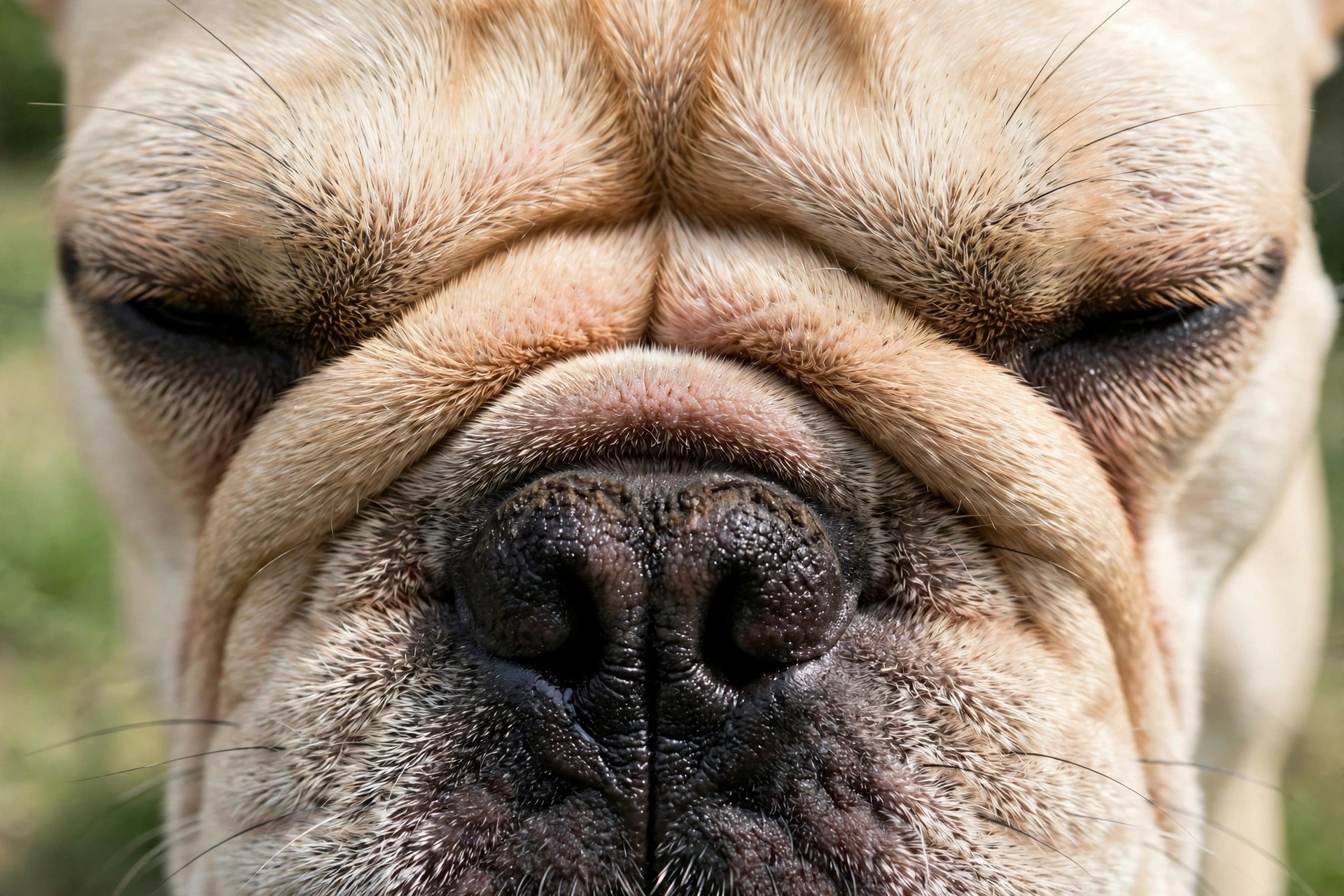
1. The nose rope. The deep horizontal wrinkle across the top of the muzzle. Tears, saliva, and food all drain into it. The most commonly infected fold on the Frenchie face.
2. The tail pocket. The crease under a screw or ingrown tail. Many owners don’t know it exists until it smells. Fecal matter can collect here, which makes it the highest-risk fold on the body. VCA flags recurrent tail fold infection, scooting, and tail chewing as classic signs.
3. Lip folds. The jowly corners of the mouth. Drool plus food debris, especially in enthusiastic eaters.
4. Armpits and groin. Skin-on-skin friction zones, worse in overweight dogs. Extra weight deepens every fold on the body, which is one more reason lean matters.
5. Between the toes. Paw licking plus trapped moisture. Often flares alongside allergies.
If you have never found your dog’s tail pocket, do it today, not when it smells. Lift the tail gently and look at the skin right where the tail meets the body. A pocket feels like a small crease or dip, sometimes barely a fingertip deep, sometimes deep enough to hide a cotton pad. Screw tails curl tight against the body and almost always have one. Even a short straight tail can have a shallow fold worth checking monthly.
Do this, not that:
– Do learn whether your Frenchie has a tail pocket (lift the tail gently and look). Do not assume a tiny tail means no pocket.
– Do check the nose rope every day. Do not wait for the smell to remind you.
The Cleaning Routine: Step by Step
This is the core of the whole article. Done right, it prevents the large majority of fold infections. Done wrong, or skipped, it all but guarantees them.
What you need (the kit):
- Unscented, alcohol-free pet wipes, or cotton pads
- A chlorhexidine-based wipe or diluted chlorhexidine solution (your vet can recommend one)
- Soft dry cloths or gauze squares
- A small flashlight for deep folds
- Treats
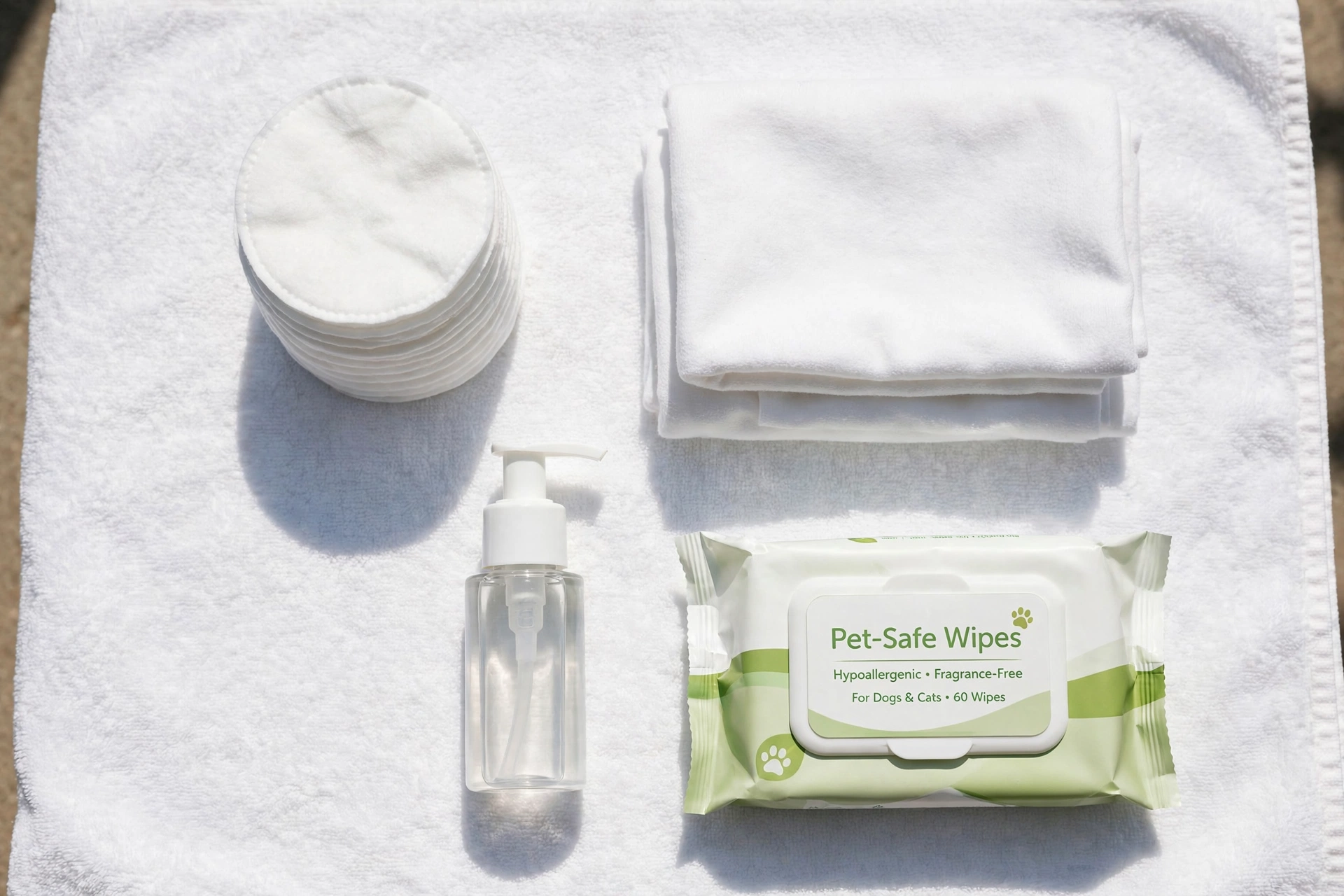
The routine:
- Get everything within reach first. A squirming Frenchie mid-clean is unmanageable if you are digging through cabinets.
- Open the fold gently with one hand. No pulling or stretching. You are creating access, not performing surgery.
- Wipe from the deepest point outward. One smooth pass, then refold the wipe or take a fresh pad. Keep going until the wipe comes back clean. Two or three passes is normal for a dirty fold.
- Use a fresh wipe per fold. Moving gunk from the nose rope to the lip fold just relocates the problem.
- Dry completely. This is the step everyone skips and the one that matters most. Press a dry cloth or gauze into the fold until it comes away dry. A fold left damp after cleaning is barely better than a fold never cleaned.
- Reward. A treat after every fold turns a wrestling match into a ritual your dog tolerates.
How often: Every day for the nose rope and any fold with a history of infection. Every other day minimum for the rest. Tail pockets get cleaned two to three times a week when healthy, daily at the first sign of redness or odor. Always clean and dry every fold after a bath. Bath water sits in folds for hours.
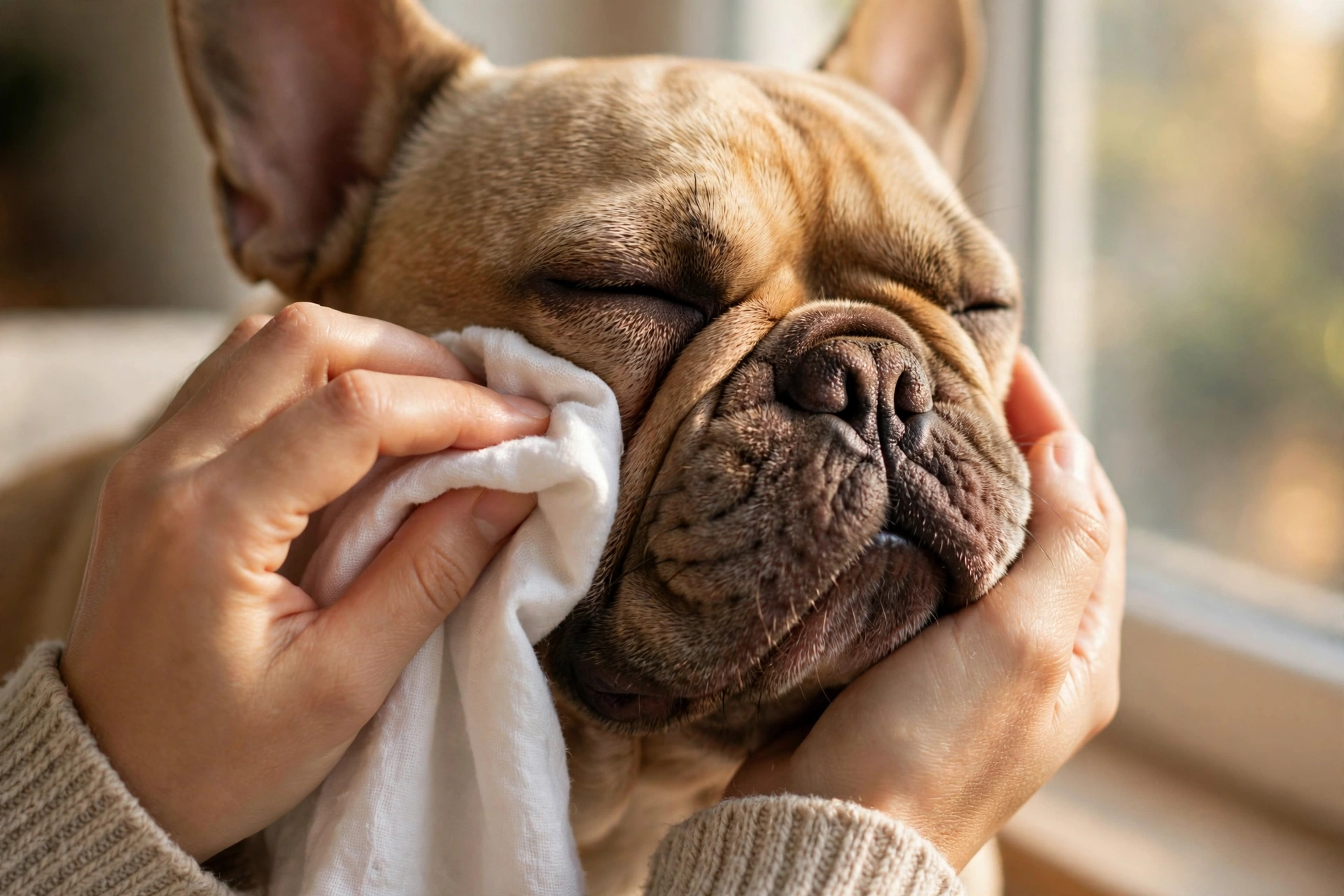
What never goes in a fold: hydrogen peroxide, rubbing alcohol, scented baby wipes, tea tree oil, or anything undiluted. Alcohol and peroxide damage the skin barrier and make the next infection worse. If a product would sting your own broken skin, it does not belong in your dog’s folds.
Choosing products: You do not need a shelf of specialty gear. Look for wipes labeled for dogs with chlorhexidine as the active ingredient, fragrance-free and alcohol-free. For folds with a yeast history, your vet may suggest a wipe that also contains miconazole. Avoid anything with heavy perfume, essential oils, or witch hazel. When a product lists more botanicals than actives, put it back.
Quick tip: Pair fold cleaning with something you already do daily, like the evening potty trip. Habits that piggyback survive. Habits that need their own calendar slot die.
When Cleaning Isn’t Enough: What the Vet Does
Home care handles prevention and the mildest irritation. Once a fold is truly infected, you need a diagnosis, because bacteria and yeast need different drugs and guessing wastes weeks.
What happens at the visit: The vet examines the fold and usually runs cytology, pressing a slide or tape to the skin and checking it under the microscope. That ten-minute test shows whether the problem is bacterial, yeast, or both, and how deep it goes. No bloodwork needed for a straightforward case.
What vets prescribe, per the veterinary dermatology literature:
- Antimicrobial wipes with chlorhexidine plus an antifungal (miconazole or ketoconazole), used once or twice daily on the fold. This is first-line treatment for most fold infections, according to Today’s Veterinary Practice.
- Mupirocin ointment for heavy bacterial overgrowth, applied up to twice daily after cleaning.
- Oral antibiotics are reserved for deep infections with draining tracts or bloody discharge. With resistant Staphylococcus spreading, vets increasingly run a culture and sensitivity test before prescribing systemics.
- Short courses of anti-inflammatories to calm severe inflammation while the antimicrobials work.
- Surgery for folds that will not stay clear. Removing the problematic fold tissue, such as tail fold resection for a screw tail, can end the cycle permanently in chronic cases.
The AKC classifies fold infections as surface pyoderma, the shallowest and most treatable category of skin infection. Caught early, most clear within one to two weeks of consistent topical treatment.
For dogs that clear up but flare again within weeks, vets sometimes prescribe a maintenance rhythm rather than another full course. Veterinary dermatologists describe proactive therapy: low-dose antimicrobial wipe-downs two or three times a week on the previously affected fold, aimed at the invisible inflammation that precedes the next flare. It is the difference between firefighting and fire prevention, and it suits chronic fold dogs well.
Quick tip: Ask your vet to show you the cytology slide. Seeing the bacteria or yeast with your own eyes makes the twice-daily wipe routine feel a lot less optional.
Emergency vs. Routine: When to Call the Vet
Not every red fold needs a midnight ER trip. This is the triage framework.
| Routine vet visit (this week) | Same-day / urgent |
|---|---|
| Mild redness, no odor | Yellow or green pus |
| Musty smell, wipe shows brown gunk | Swelling, heat, or bleeding |
| Slight itchiness, dog rubs face on carpet | Dog cries or snaps when the fold is touched |
| No improvement after 5 days of home cleaning | Redness spreading beyond the fold |
| Same fold flaring repeatedly | Lethargy, fever, or loss of appetite |
That last row matters. A fold infection plus a dog that feels sick can mean the infection has gone deeper than the surface. Do not wait that one out.
Also book a visit if the same fold keeps flaring every few weeks despite good home care. Recurrence is information. It can mean resistant organisms, an underlying allergy driving the whole thing, or anatomy like a very deep tail pocket that needs a surgical conversation.
Checklist before the vet visit:
– Note when you first saw redness or smelled odor
– List every product you have put in the fold
– Bring your cleaning routine: frequency and products
– Mention any itching, paw licking, or ear trouble (allergy clues)
Prevention: Habits That Keep Folds Healthy
Treatment fixes the current infection. Prevention decides whether you see the vet three times a year or never.
Clean on schedule, not on smell. By the time a fold smells, microbes are already entrenched. Daily nose-rope wipes and every-other-day everything else is the baseline for a Frenchie.
Dry like you mean it. I am repeating this because it is the single most skipped step in fold care. Damp folds grow things. Dry folds do not.
Keep the weight down. Obesity deepens every fold and adds new ones. Veterinary dermatologists list weight control alongside fold hygiene as a cornerstone of management. If you cannot feel the ribs, the folds are worse than they need to be.
Treat the allergies underneath. Recurrent fold infections, itchy paws, and ear infections arriving together usually share one driver: allergies. If folds keep flaring despite perfect hygiene, ask your vet about an allergy workup rather than fighting each flare as a separate war.
Dry folds after water. Baths, swimming, rain, drool-heavy chew sessions. Water finds folds. A two-minute dry-down after each one prevents the 2 a.m. smell discovery.
Consider a barrier balm. For folds that stay mildly irritated despite cleaning, a thin layer of vet-approved barrier balm or coconut oil after drying can reduce friction and moisture between cleanings. Ask your vet which product suits your dog’s skin.
Do this, not that:
– Do make fold checks part of the daily routine. Do not rely on noticing a smell.
– Do keep your Frenchie lean. Do not let “he’s just stocky” excuse deepening folds.
– Do ask about allergies when infections recur. Do not just refill the wipes forever.
Start Early: Fold Care for Puppies
Everything in this guide gets easier if it starts at eight weeks. A puppy that grows up with fold handling treats it like nail trims or ear rubs: mildly boring, over quickly. An adult dog meeting a cotton pad for the first time during a painful infection learns that fold touching means pain, and you spend months rebuilding trust.
Keep puppy sessions short. One fold, one wipe, one treat, done. Touch the tail pocket area casually during cuddle time so it is not a surprise later. If the breeder already wiped folds, ask what product they used and keep the same one for continuity. The goal at this age is not sterilization. It is building a dog that holds still.
Quick tip: Handle your puppy’s folds the way you handle their paws: a little bit, every day, with food involved. Adult compliance is built in puppyhood.
Frequently Asked Questions
Can I use baby wipes on my Frenchie’s folds? Only unscented, alcohol-free ones, and pet-specific wipes are a safer default. Many baby wipes contain fragrance or preservatives that irritate fold skin. When in doubt, a cotton pad dampened with water plus thorough drying beats a questionable wipe.
How often should I clean French Bulldog wrinkles? Daily for the nose rope and any fold with a history of trouble. Every other day minimum for the rest. Tail pockets get cleaned two to three times a week when healthy, daily at the first sign of redness or odor.
What does an infected skin fold smell like? Bacterial infections smell sour or rotten. Yeast smells musty, like old bread or corn chips. A healthy fold has almost no odor. If you can smell it without putting your nose in it, clean it today and watch it closely.
Will my Frenchie always have fold problems? Not necessarily. Many dogs go years between flares with consistent hygiene. But the anatomy does not change, so maintenance is lifelong. Dogs with very deep folds or screw tails are more likely to need ongoing management or, in stubborn cases, surgical correction.
Can skin fold infections spread to other dogs or people? The condition itself is not contagious. It is an overgrowth of the dog’s own normal skin microbes inside a trapped fold, so wash your hands after cleaning an oozing fold, and keep other pets from licking it.
Is coconut oil safe for skin folds? Generally yes, as a barrier after cleaning and drying, and many owners use it. It is not a treatment for active infection, though. If the fold is red, smelly, or oozing, skip the home remedies and see the vet for proper topicals.
Final Word
French bulldog skin fold infection sounds alarming, but it is one of the most manageable problems your Frenchie will ever have. The entire prevention program fits in five minutes a day: open each fold, wipe until clean, dry until dry. Most infections never start when that routine holds. And when one breaks through anyway, early vet care with the right topical clears it in a week or two.
Bookmark this guide and tape the cleaning routine inside a cabinet door until it is habit. Your nose will tell you it is working. And if the same fold keeps flaring no matter what you do, bring that pattern to your vet, because recurrence is the clue that solves the bigger puzzle.