French Bulldog Crate Training Guide
Your Frenchie puppy is asleep on your lap, snoring softly, and the crate in the corner looks like the last place on earth either of you wants to be. That first night is coming, though, and so are the 2 a.m. whines and the chewed skirting boards. Done the right way, french bulldog crate training gives your puppy a safe bedroom of its own, speeds up house-training, and keeps a curious little chewer out of trouble when you cannot watch it. Done the wrong way, rushed or used as punishment, it teaches a dog to dread the very place meant to comfort it. This guide covers the whole job for a Frenchie: crate size, a slow introduction, crate games, night crying, time limits by age, and the breathing and heat rule that matters more for this breed than for almost any other.
A crate is not a cage in the punishment sense. Dogs are den animals by instinct, and a properly introduced crate becomes the spot a dog walks into on its own when the house gets noisy or it wants a nap. The American Kennel Club (AKC) is clear on the two rules that frame everything here: never use the crate as punishment, and build the training up gradually, at the dog’s pace. The AKC puts the honest timeline in one sentence, saying crate training can take as little as a day or as long as several months. If you are new to Frenchies generally, see the site’s Owner’s Guide and the Training hub.
Is Crate Training Cruel?
Short answer: no, not when it is used the way this guide describes. A crate becomes cruel only through misuse. Hours on end with no break, a door slammed on a terrified puppy, or banishment to the crate after every misdeed will teach a dog that the crate is a prison. A crate used for naps, overnight sleep, and short safe stretches, with the door left open the rest of the time, teaches the opposite. The dog learns the crate is where good things happen: meals, chews, quiet, and sleep.
Some dogs should not be crated at all. A dog that panics in confinement or has separation anxiety needs a different plan and professional help, not a tougher crate routine. Mild protest noise is a training problem. Panic is a welfare problem.
Quick tip: If your puppy walks into the crate on its own to nap during the day, the training is working. That voluntary choice is the whole goal.
French Bulldog Crate Training: Choosing the Right Crate
Start with the dog, not the label on the box. The AKC breed standard caps a French Bulldog at 28 pounds and 11 to 13 inches at the shoulder, and most healthy adults land between 16 and 28 pounds. Weight alone still misleads, because Frenchies are compact, muscular, and heavy-boned for their size, with a broad, deep chest and a large square head. A crate picked purely from a weight band can be too low for that head or too short across the chest.
The test that settles it comes from the AKC: the crate must be large enough for the dog to stand up, lie down, and turn around comfortably, and no larger during house-training, or the puppy may soil one end and sleep in the other. Measure length from nose to tail base and height from floor to ear tip, then add 2 to 4 inches to each figure. The ears must not brush the top.
Honest sources disagree on the number. An AKC breed-size chart points to a 24-inch crate. A breed guide working from PetMD weight bands argues for 30 inches, saying a Frenchie’s square head and wide torso make it the better default. General breed guides split the difference: 24 inches for a petite female under 20 pounds, 30 inches for a standard adult, and 36 inches only for an oversized or mixed dog. One low-authority guide calls 36 inches typically ideal. That claim fails the stand, turn, and lie-down test for an 11 to 13 inch tall dog.
Buy a 24-inch crate for a small female and a 30-inch crate for most adult Frenchies, and let your own dog’s measurements break the tie. The 30-inch size is the safer default for a broad-chested male. A 36-inch crate is oversized for a standard Frenchie and works against house-training.
What about a puppy that will grow?
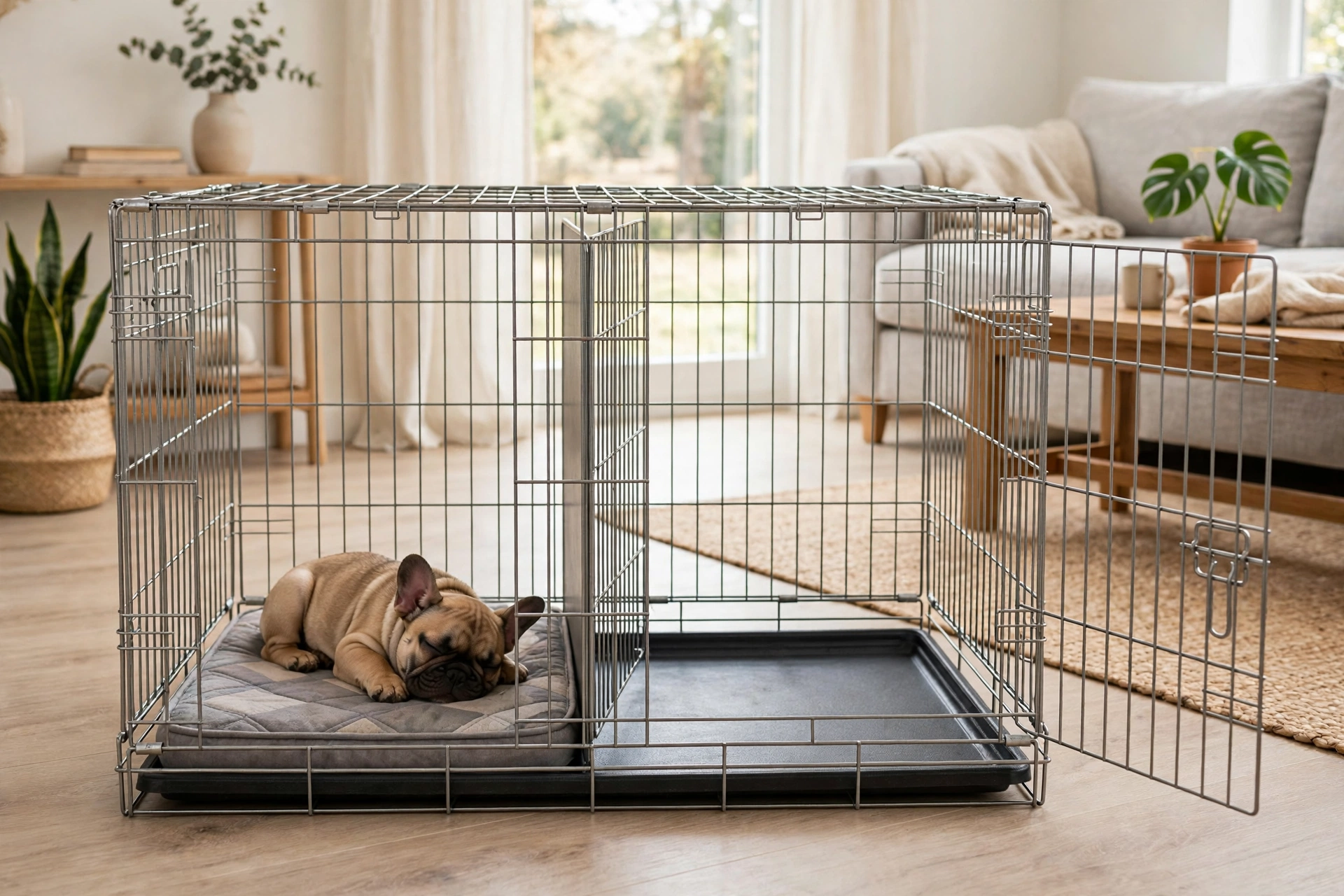
Buy the adult-size crate and section off part of it with a divider. The puppy gets only enough room to stand, turn, and lie down, and you slide the divider out as it grows.
Which type of crate?
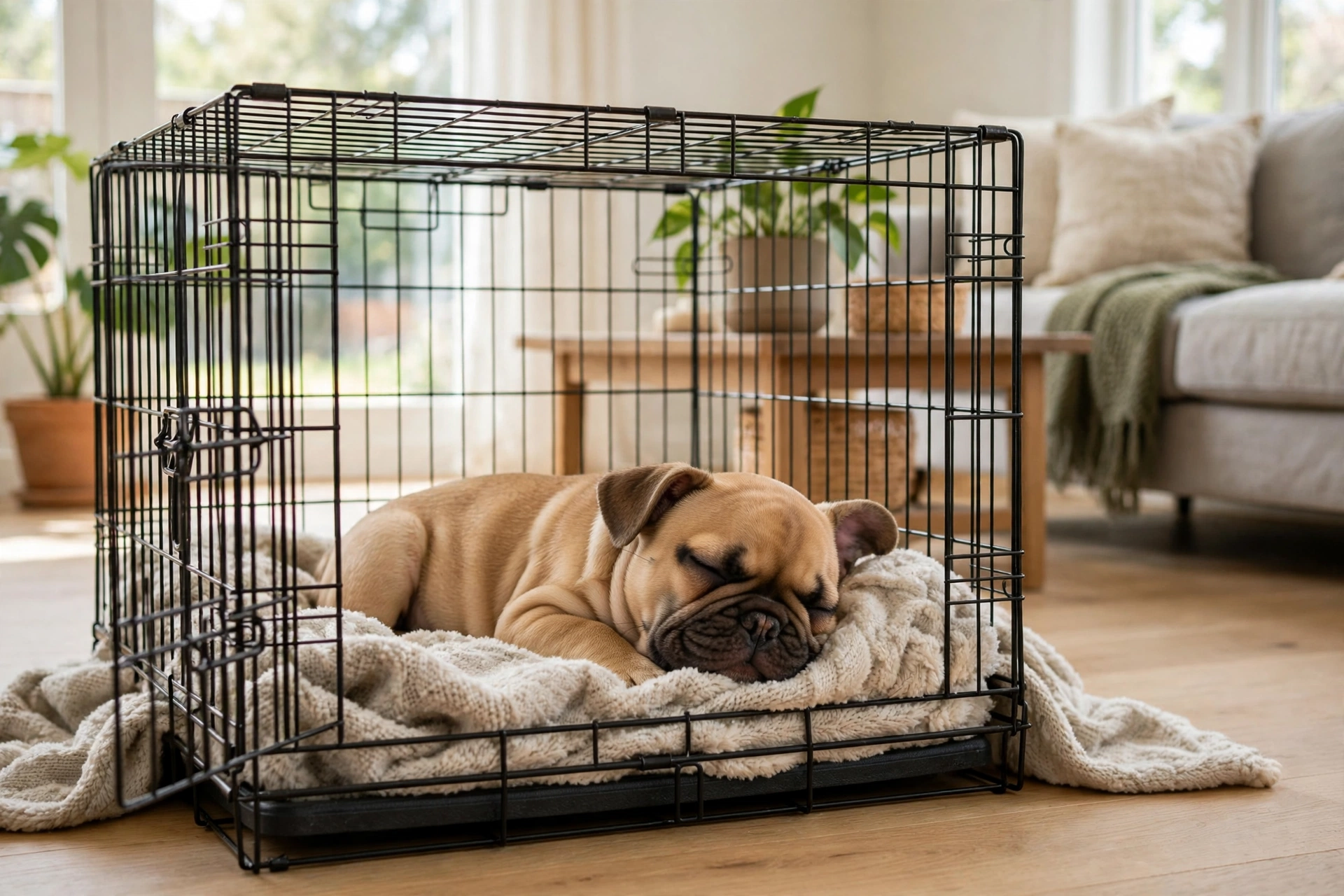
- Wire crate: the best default for a Frenchie at home. Air flows through all four sides, most come with a divider, they fold flat, and you can see and hear panting straight away. Some dogs chew the bars.
- Plastic or airline-style crate: best for car travel and vet visits, not for all-day indoor use for a Frenchie. Ventilation is limited to slots and the door, and in a warm room it traps body heat. If you use one indoors, keep it cool and well ventilated, and never cover it.
- Soft-sided crate: travel and portable use only. Light and collapsible, but a chewing puppy or an anxious dog can damage it.
- Furniture-style or wooden crate: attractive, but usually the worst airflow of all.
No source was found ranking crate types for brachycephalic dogs specifically. The wire-first recommendation rests on the airflow and heat evidence below.
Setting Up the Crate
Location comes first. Put the crate where the family spends time, not isolated in a garage or laundry room. A puppy that can hear, smell, and see its people settles faster. At night, the crate goes in or near the bedroom for the first weeks, so you hear restlessness that signals a toilet need.
- Washable, chew-safe bedding that can survive accidents and teething. A supportive mat suits a Frenchie’s joints, but bedding is comfort, not medicine, and no bedding prevents joint or spine problems.
- The door tied or secured fully open when the crate is not in use, so the dog can wander in and out freely.
- A water bowl nearby rather than inside, where a puppy will tip it.
- The collar removed every time the dog goes in. The AKC warns that collars can catch on bars and become a strangulation risk, so this rule has no exceptions.
- A safe chew or food-stuffed toy only if you know your dog will not destroy or swallow it unsupervised. If unsure, ask your vet first.
Introducing the Crate, Step by Step
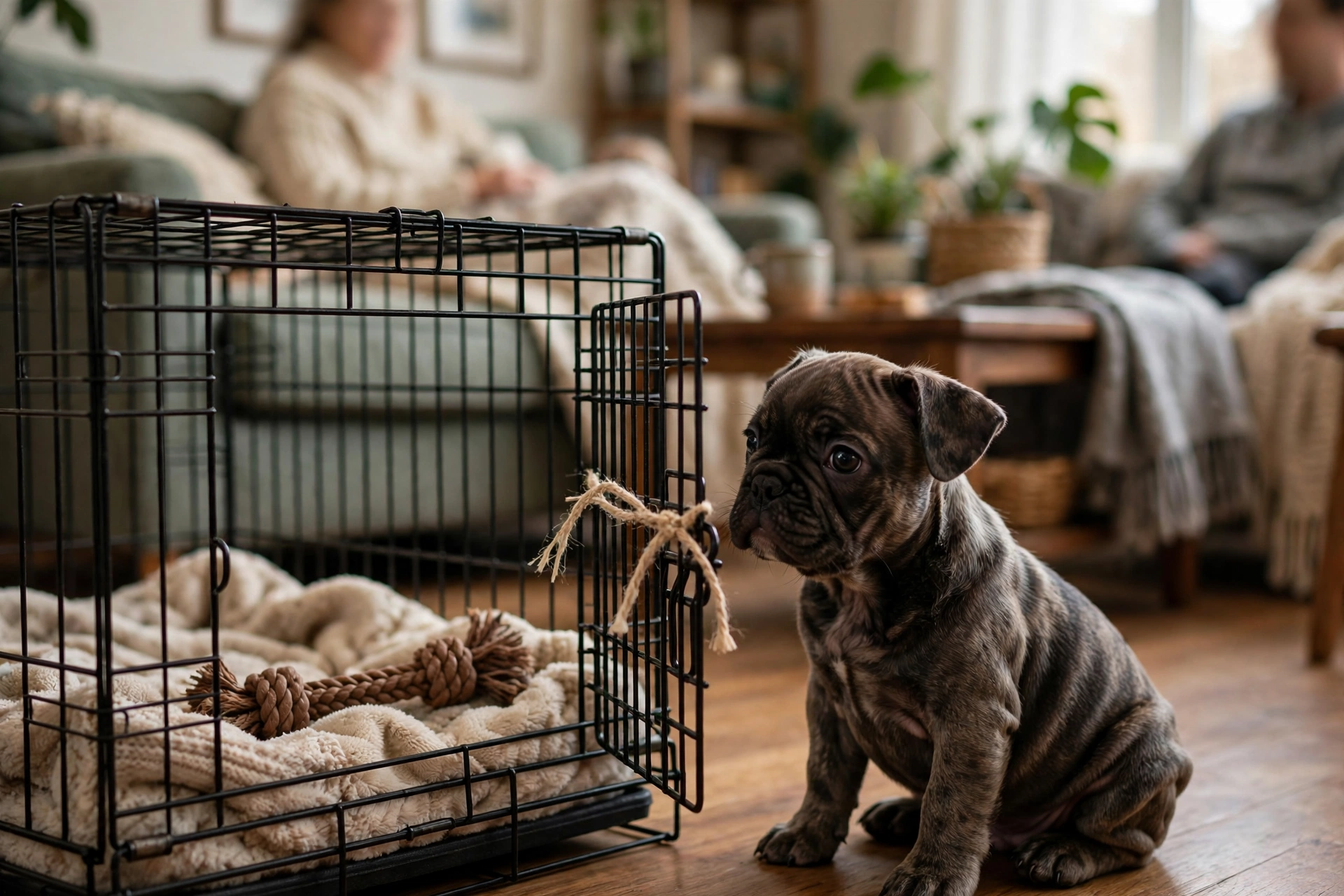
Crate training can start as early as 8 weeks old. The sequence below adapts the AKC’s six-step method. The pace is the dog’s, not yours. If a step produces stress, whining, barking, frantic digging, pacing, or trembling, go back to the previous step until the dog is relaxed again.
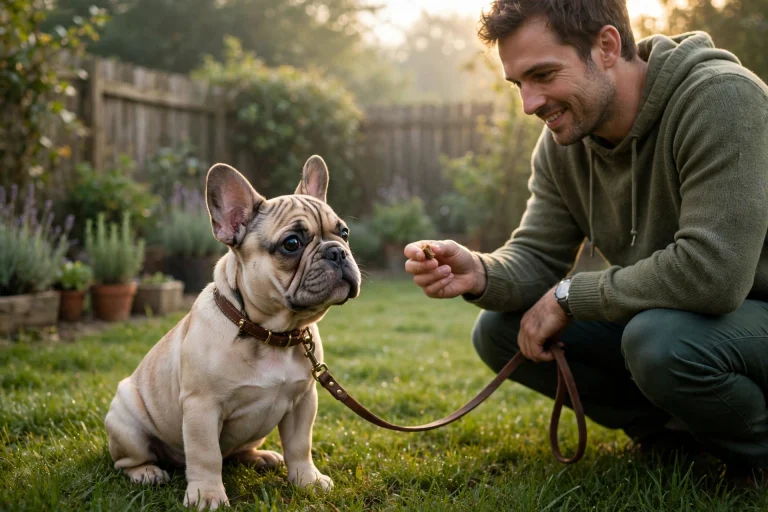
- Make the crate furniture first. Door tied fully open. Scatter treats and toys around the outside. Feed meals near the entrance. Play beside it. Praise every approach. Do not lure the dog inside yet. The crate needs to become boring, safe background furniture before it becomes a bedroom.
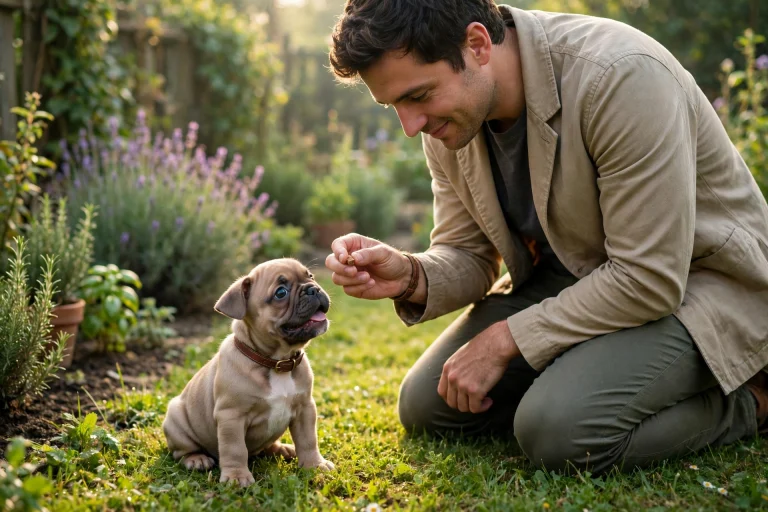
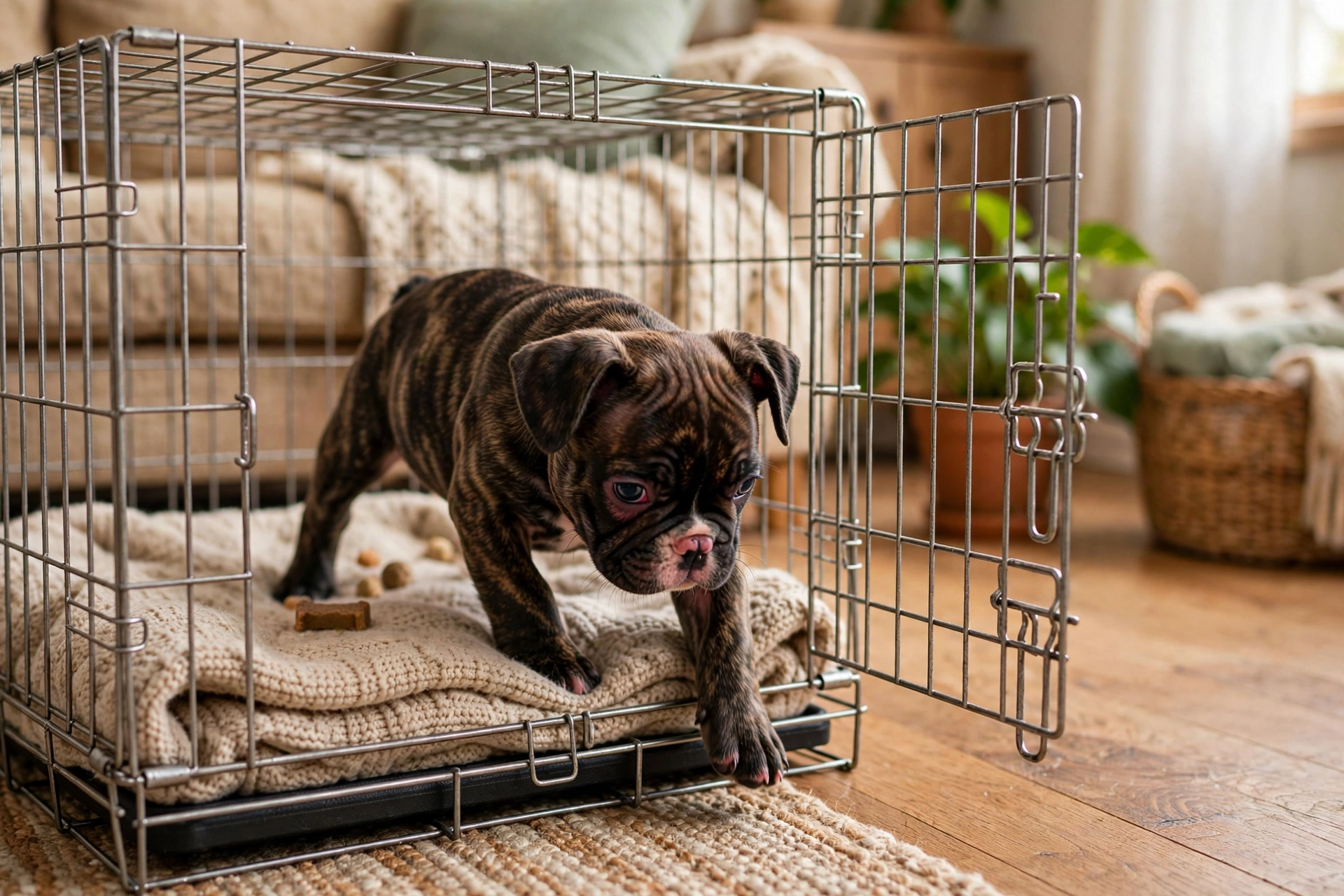
- Lure the dog inside, door still open. Toss treats progressively farther back. Move the food bowl from the doorway inward over successive meals. Mark the moment the dog steps in, then toss another reward inside. Never push or force the dog in.
- Close the door an inch at a time. Only once the dog enters enthusiastically. Swing the door an inch or two toward closed, then secure it open again. Build up to closing it fully, treating the instant it shuts, then opening again immediately. Do not latch until the dog is happy to see the door swing shut. If the latch clank worries the dog, pair it with high-value food.
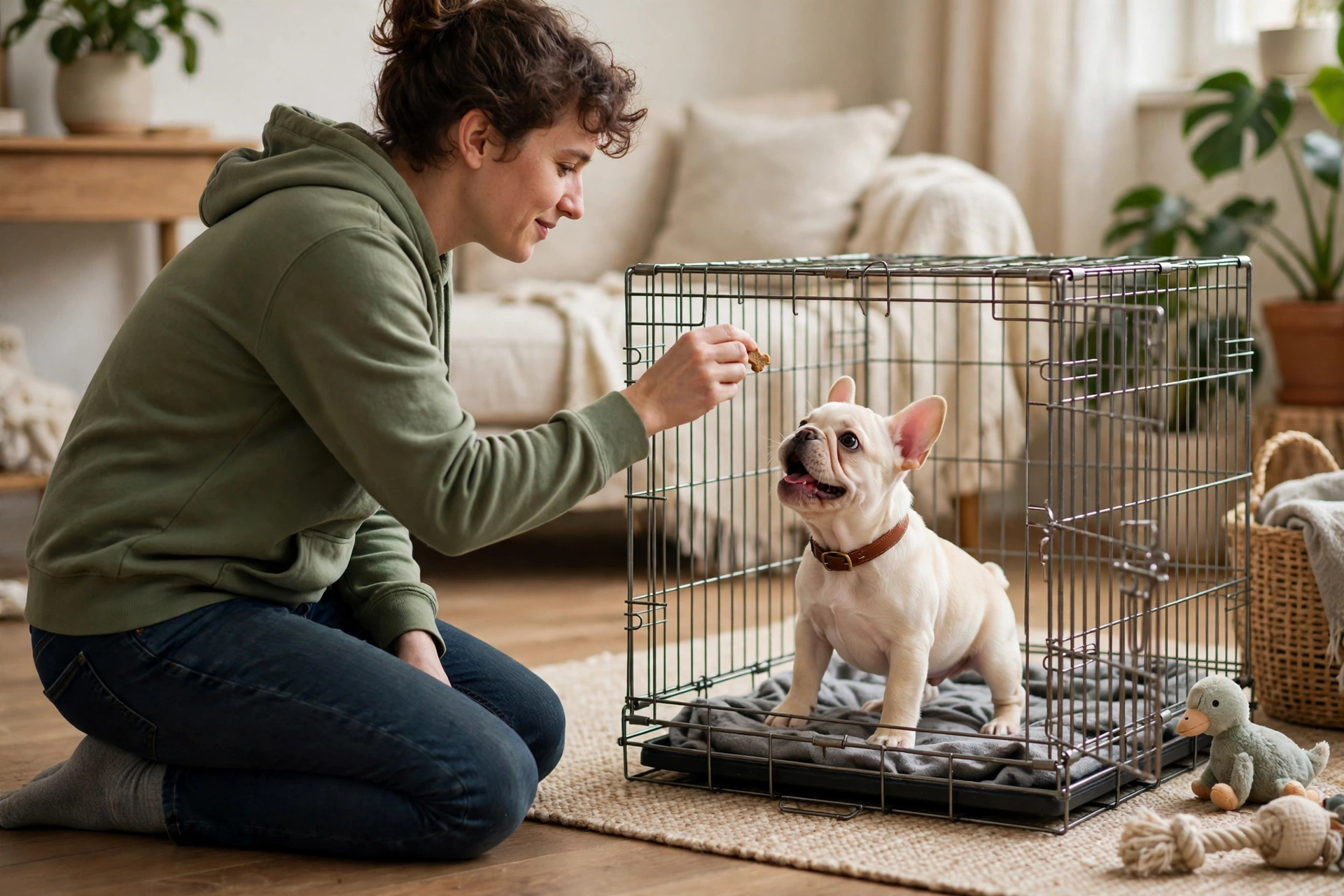
- Build duration in seconds, then distance, never both at once. Start with a few seconds behind the closed door, rewarding through the bars the whole time. The AKC puts it well: time inside should be treat-party time, and as soon as the dog leaves, the rewards should stop. Then add distance. One step back for one second, return, reward, release. Build to leaving the room.
- Fade the lure and use a cue. Give the cue word, such as “crate” or “kennel up”, just before the dog is about to enter. Keep rewarding entry intermittently for life.
- Keep it a happy place permanently. Leave surprise treats or a food-stuffed toy inside for the dog to find. Leave the door open when the crate is not in use, so the dog can choose it.
Keep sessions short and fun, and end while the dog is still relaxed.
Crate Games That Make the Crate Fun
Games turn the crate from a place the dog tolerates into a place the dog rushes toward. The best-known crate games come from trainer Susan Garrett’s “Crate Games” programme, and since her material is a paid programme, the games below are presented in generic form from secondary summaries, not quoted as her method.
- Treat toss in and out. Toss a treat into the crate. The dog goes in and eats it. Release with a cue such as “Okay”. Repeat. Then add your cue word just before the dog is about to enter. Ten quick reps do more than ten minutes of coaxing.
- Meals in the crate. Feed every meal inside the crate with the door open at first, then closed for the last few mouthfuls. A dog that eats in its crate twice a day builds a powerful association without a single formal training session.
- The sit-and-wait door game. The dog sits in the crate while you open the door a crack. If the dog breaks the sit, the door closes again, calmly, without scolding. Quiet waiting is what re-opens the door. This is a self-control game, not a punishment.
Daytime Crating Versus Overnight Crating
Daytime and overnight crating follow different rules. During the day, the dog is awake and filling its bladder at full speed. At night, metabolism and bladder filling slow down, and a sleeping puppy can hold on far longer. That is why the overnight figures below are longer than the daytime figures, and why neither set is a daily target.
A daytime pattern that works for many owners looks like this. The puppy goes out first thing, plays and trains, eats, goes out again, then naps in the crate within the age limits below. Out again the moment it wakes, because waking and toileting go together in puppies. Then free time with you, another outing, and another crate nap. The crate is one part of the day’s rhythm, not the place the dog lives between your work shifts.
Overnight, the bedroom-first plan applies. The crate sits in or near your bedroom for the first weeks. You hear the puppy stir, take it out on a calm, boring trip, and put it straight back. Later, move the crate to its permanent spot a few feet at a time, over days, not across the house in one night.
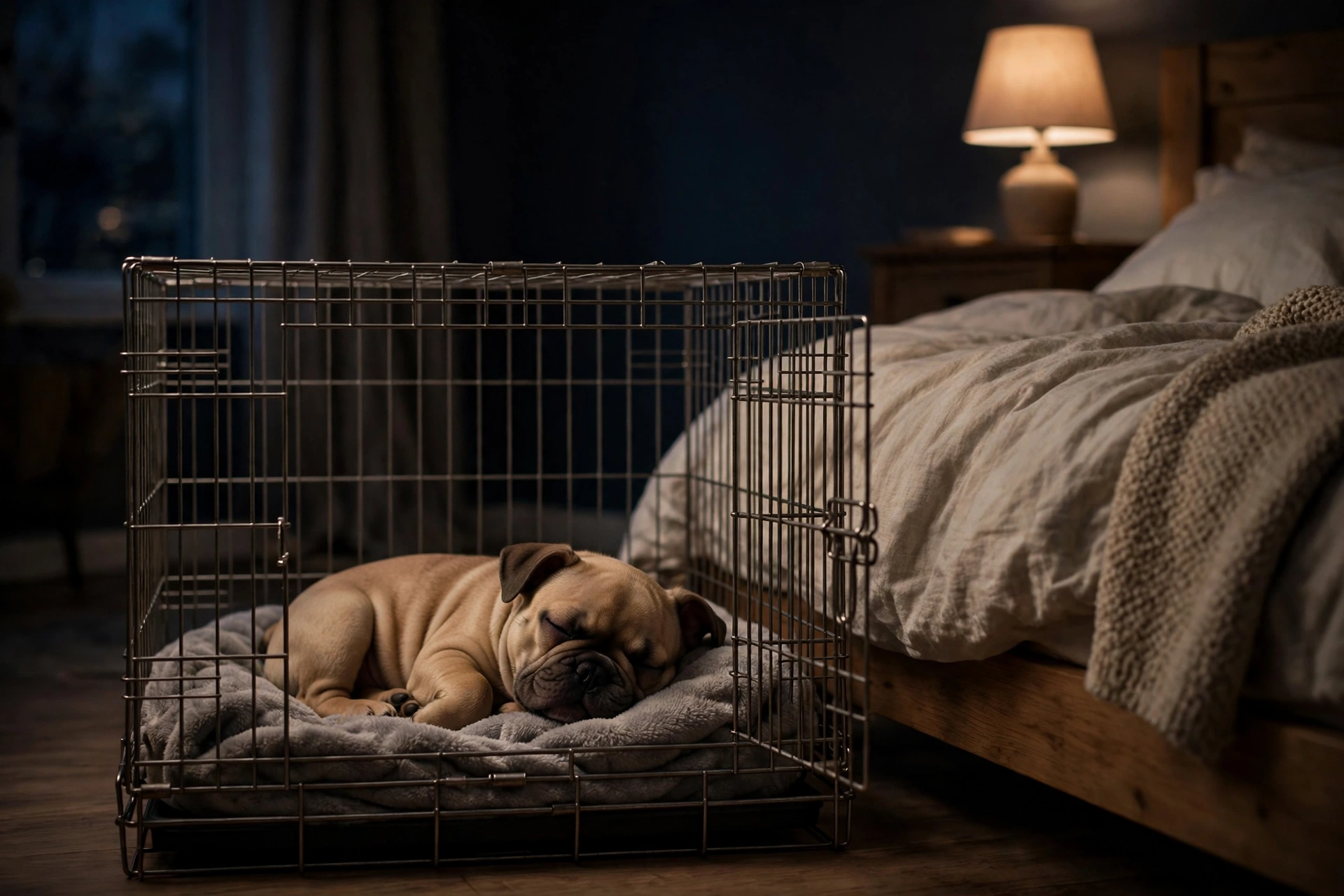
One rule overrides every schedule in this article. Never crate all day and all night. If the dog is crated while you work, it must not then be crated all night too. A full workday without a midday break is too long in a small crate. The alternatives are a dog walker, daycare, or an exercise pen or gated room. The AKC’s line is blunt: it should not be all day, every day, even for a house-trained adult.
Night Crying: Toilet, Protest, or Panic
Expect at least a few days of nighttime crying, and a disrupted first couple of weeks. That is normal, and it passes faster when the response matches the cause. There are three main causes, and each needs a different answer.
Toilet need is the most common cause in young puppies. Bladder control is immature, and a puppy that wakes and whines at night most likely needs to go out. The AKC makes an explicit exception to its wait-for-quiet rule here: let a crated puppy out when it whines or fusses overnight. Keep the trip calm and boring. On the lead, outside, no play, then straight back into the crate. A night trip that turns into a party teaches the puppy to wake you for fun.
Settling or protest noise is the second cause. The puppy is not in distress, but it has not learned to settle alone, or it has learned that noise brings release. Here the AKC rule applies in full: never release a dog from the crate while it is whining, because that teaches crying is the ticket to escape. Wait for a few seconds of quiet, then reward inside the crate and open the door. Whining in daytime training usually means you moved too fast.
Genuine distress or panic is the third cause, and it is different in kind. Frantic, escalating, high-pitched crying that does not subside, panting, drooling, escape attempts, and any risk of self-injury mean stop. The AKC is direct: if the dog seems panicked or will not stop crying, it might have separation anxiety. Stop crate training immediately and seek a professional trainer or behaviour consultant. Never ignore panicked crying for 30 minutes or more.
For a Frenchie, add a breathing check to every bout of night crying. Heavy panting at night may be heat or airway distress, not just anxiety. If panting is loud or laboured, or the gums look blue or grey, treat it as urgent.
| Do | Don’t |
|---|---|
| Wait for a brief pause before opening for a non-toilet release | Open the door mid-whine, which teaches demand crying |
| Keep night toilet trips calm, dark, and boring | Turn a night trip into play or cuddles on the sofa |
| Move back a training step when whining appears | Punish whining, which adds fear to frustration |
| Stop and get professional help for panic | Ignore escalating panic in the hope it burns itself out |
French Bulldog Crate Training: How Long Is Reasonable?
Every figure here is a daytime maximum, not a target. Two versions of the puppy rule circulate. The headline rule is age in months plus one hour: a two-month-old tolerates three hours at most, and a three-month-old about four hours. A stricter hour-per-month variant also circulates, and a conservative staged table from a Humane Society handout gives shorter stretches: up to one hour at 8 to 10 weeks, up to two hours at 11 to 12 weeks, and up to three hours at 13 to 16 weeks.
This guide recommends the conservative end for a Frenchie puppy’s first weeks. The age-plus-one figure is the absolute ceiling, not the daily plan. Treat it the way you would a speed limit: legal, but not the speed you drive in the rain.
| Age | Daytime maximum, single stretch | Overnight |
|---|---|---|
| 8 to 10 weeks | 30 to 60 minutes, up to 3 hours absolute ceiling | 2 to 3 hour stretches, expect 1 to 2 toilet trips |
| 11 to 14 weeks | 2 to 3 hours, up to 4 hours ceiling | 3 to 4 hour stretches, typically 1 night trip |
| 4 to 5 months | 3 to 4 hours | 4 to 6 hours, many puppies approaching a full night with one trip |
| 6 to 12 months | 4 to 5 hours | 6 to 8 hours once reliably sleeping through |
| Adult, 1 year and over | 4 to 5 hours prudent daytime cap | 6 to 8 hours of sleep |
| Senior | Shorter than adult, more frequent toilet needs, individual | Shorter stretches, vet guidance if incontinence appears |
Adult daytime guidance is genuinely disputed. Humane World for Animals says adult dogs should not be left in a crate for more than 4 to 5 hours during the day, and a trainer source gives the same figure. Zoom Room gives 6 to 8 hours as an upper limit, explicitly not a daily target. This guide sides with the prudent end: 4 to 5 hours as the daytime cap, never 6 to 8 as a routine. Overnight, adults can typically sleep 6 to 8 hours, with the caveat that this is sleep, not daytime confinement.
Three rules override the table. No dog or puppy should be in a crate longer than 10 hours total even with breaks. A full workday without a midday break is too long, so arrange a walker, daycare, or a pen. In warm weather, shorten daytime crating further and check room temperature and airflow first. That last rule applies the heat evidence in the next section, not a separately sourced duration rule.
The Frenchie Safety Rule: Breathing, Heat, and Airflow
This is the section that makes crate training a Frenchie different from crate training any other dog. A Frenchie’s airway is narrowed at several points: narrowed nostrils, an elongated soft palate, a narrowed windpipe, and everted laryngeal saccules, the folds of tissue just inside the voice box. Dogs cool themselves mainly by panting. A compromised airway means panting is inefficient, so heat builds up, the tongue and throat can swell, and airflow worsens further. A crate that restricts airflow or traps heat is therefore dangerous for a Frenchie, not just uncomfortable.
The numbers behind that warning come from two different studies that must not be blended into one figure. A Royal Veterinary College VetCompass study of more than 900,000 UK dogs found French Bulldogs about six times more likely than Labrador Retrievers to develop heatstroke, and one in seven dogs with heatstroke died. A later emergency-clinic study found brachycephalic breeds had 4.21 times the heatstroke risk of dogs with a natural skull length, and French and English Bulldogs made up about 37 percent of emergency cases. The figures differ because the studies used different populations. For the fuller picture on breathing problems, read the site’s BOAS guide, and for heatstroke in general, the Heat Stroke guide. Owners weighing breathing worries more broadly may also find the Health Problems guide useful.
The crate rules that follow
Ventilation first. A wire crate, or a crate ventilated on multiple sides, is the default indoor crate for a Frenchie. Avoid solid-sided crates for routine indoor crating in warm weather.
Room temperature and airflow matter as much as crate type. Crate in a cool, air-conditioned or well-ventilated room, never in a sun-facing room, a conservatory, a garage, or anywhere that warms up during the day. If the room feels warm to you, it is too warm to crate a Frenchie in for long. No room-temperature threshold for crating was found in this guide’s research, so this article does not invent one.
No heavy cover in warm weather. This is where general crate advice and Frenchie safety conflict, and Frenchie safety wins. General guides often suggest covering the crate to mimic a den. For a Frenchie, a heavy blanket reduces airflow and traps body heat. In warm weather, leave the crate uncovered, or use only a light, breathable cover on part of it, and remove it entirely if the dog is panting. No study was found measuring temperature inside covered versus uncovered crates, so this article claims the mechanism, reduced airflow trapping heat, rather than a measured difference.
Never crate in a car. A parked car’s interior can rise almost 20 degrees Fahrenheit in just 10 minutes, according to the American Veterinary Medical Association, and cracking the windows makes no meaningful difference. A crated Frenchie in a car faces a double risk: restricted airflow plus rapidly rising temperature. Even five minutes is not safe in warm weather. A travel crate in a moving, air-conditioned car is different, and only that is acceptable.
Watch for panting and distress, and act on it. Panting that does not settle after a few minutes in a cool place, loud or laboured breathing, thick drool, bright-red or dark gums, wobbliness, vomiting, or collapse mean stop crating at once. Move the dog to a cool area, cool it with cool water, not ice-cold water, fan for evaporation, offer small amounts of water if alert, and get veterinary help immediately, even if the dog looks recovered. Blue or grey gums or collapse are an emergency.

Shorter, supervised crating in heat. On hot or humid days, keep crating to the shortest necessary stretch, check the dog frequently, and prefer a gated cool room or exercise pen with airflow over a closed crate. Weight and age amplify the risk: above-average weight and age over two years increased heatstroke risk in the Royal Veterinary College study. Do not crate a Frenchie straight after exertion in warm weather until its breathing has fully settled.
Common Mistakes
- Too big a crate. The spare corner becomes a toilet. Use the divider.
- Too fast. Latching the door on day one teaches fear that takes weeks to undo.
- Crate as punishment. Sending the dog to the crate after every scolding poisons the one place meant to feel safe.
- All-day crating. A crate is a bedroom, not a daycare. Without a midday break, even an adult is asked too much.
- Covering the crate in summer. A heavy blanket cuts the airflow the dog’s breathing depends on.
- Collar left on. A collar can catch on bars. Take it off every time.
- Unsafe chews left unsupervised. A chew that splinters can choke a dog nobody is watching.
Troubleshooting and Frequently Asked Questions
My puppy soils the crate. Check the two usual causes first: too much space, or too long a stretch. Move the divider in and shorten the interval. A puppy that was clean and suddenly starts soiling needs a vet check.
My dog hates the crate. Go back to the beginning, and mean it. Door open, treats scattered around the outside, meals near the entrance, no door closing for a week.
When can I stop crating? When the adult dog is trustworthy loose in the house, and the crate door can stay open. Many owners keep the crate for life as an open-door bed.
When to Call Your Vet or a Behaviourist
Call a professional promptly if you see panic in the crate, persistent distress that does not improve when you slow down, breathing signs such as loud or laboured breathing, blue or grey gums, or collapse, or a sudden change in soiling or behaviour. This guide is general safety and training information, not a substitute for veterinary advice. The AKC’s step-by-step crate training guide is a useful authoritative companion, and a certified behaviour consultant is the right call when crate distress looks like separation anxiety rather than ordinary protest.
Conclusion
French bulldog crate training rewards patience the way few dog jobs do. A puppy that once howled at a wire box will, a few weeks from now, pad across the room after dinner and settle itself onto its mat without being asked, and that small voluntary walk is the entire point. Keep the stretches short, the door open when it can be, the room cool, and the collar off. Watch the breathing on warm days, and treat any sign of panic as a reason to slow down and get help. Your Frenchie’s crate should end up as the calmest corner of your house. Save this guide for the first night, when you will want the night-crying checklist close at hand.