French Bulldog Heat Stroke: Why They’re at Risk & How to Keep Them Safe
TL;DR
French Bulldog heat stroke is not a freak accident. Research from the Royal Veterinary College puts Frenchies at 6 times the odds of heat-related illness compared with Labradors, largely because their flat faces make panting, a dog’s main cooling system, far less effective. The biggest trigger is not hot cars but ordinary exercise: nearly three quarters of cases in a large UK study happened after walks, play, or other activity. If it happens, the rule is cool first, transport second. Start cooling right away with whatever water is cooler than the dog, stop active cooling at 103°F, and get to a vet even if your Frenchie seems to bounce back, because organ damage can show up 12 to 48 hours later.
The Walk That Turned
Saturday afternoon, 82 degrees and humid. You take your Frenchie around the block, fifteen minutes, the usual route. Halfway home he sits down on the sidewalk and refuses to move. His tongue hangs to his chin, his breathing sounds like a freight train, and a thick rope of drool swings off his jowls. You figure he is being stubborn. Frenchies are stubborn.
That sit-down on the sidewalk is the scenario vets describe again and again. Heat stroke in this breed rarely starts with a dramatic mistake. It starts with a normal walk on a warm day, an owner who reads the early signs as attitude, and a cooling system that was already running at its limit before the walk began. This is an illustrative scenario, not a real case, but emergency vets will tell you it plays out all summer long.
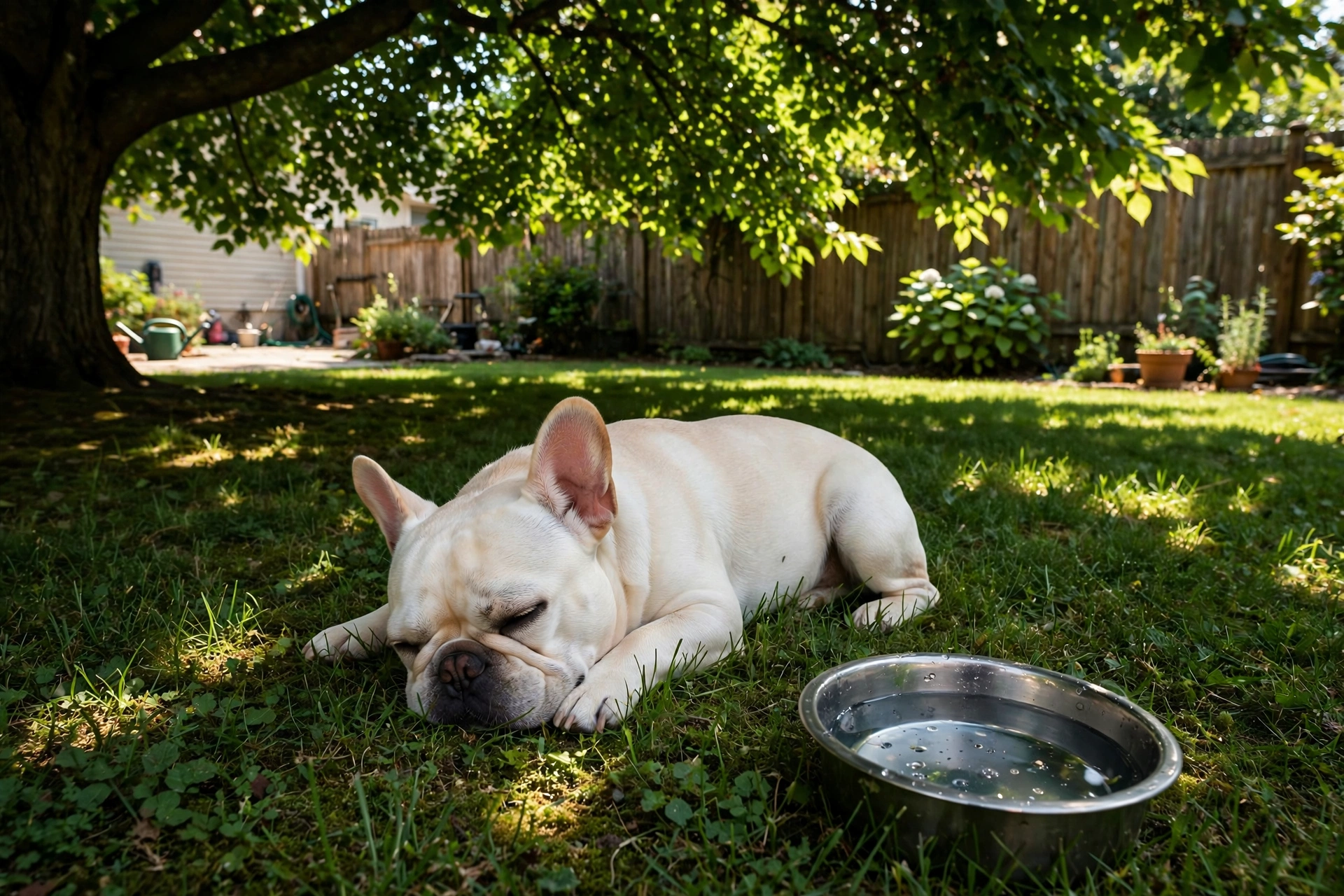
Quick tip: The moment your Frenchie plants himself on a warm day and will not continue, the walk is over. Get him to shade or into air conditioning. “Stubborn” in heat is a warning sign, not a personality trait.
Why French Bulldogs Overheat Faster Than Other Dogs
A dog cools itself almost entirely by panting. Rapid air movement over the moist tongue, mouth, and nasal passages drives evaporative cooling, and the cooled blood from the tongue circulates back through the body. It is a simple radiator, and in most dogs it works well.
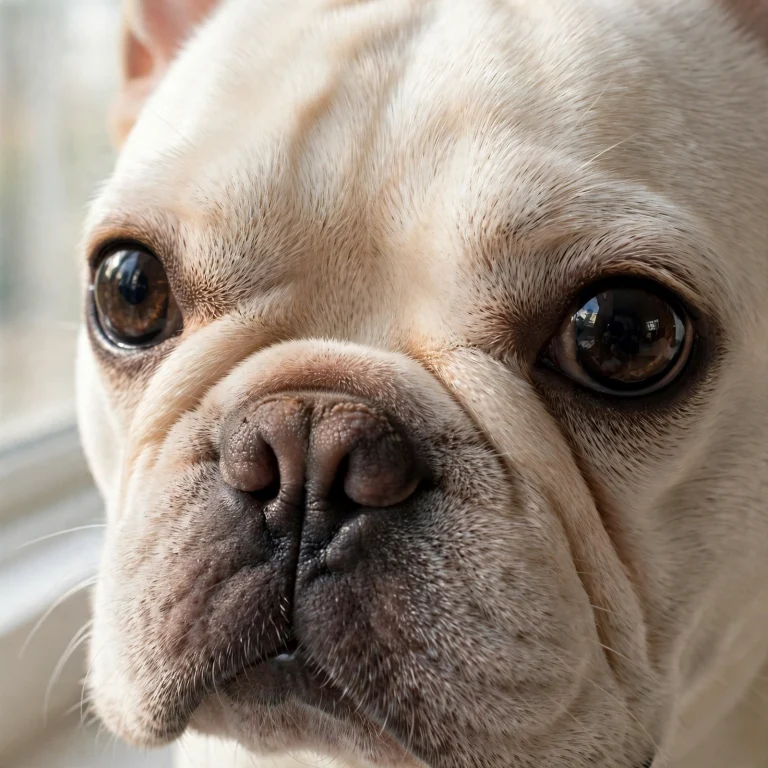
In a French Bulldog, every part of that radiator is compromised. The nostrils are narrowed slits instead of open ovals. The soft palate runs long for the space and drapes toward the airway. The windpipe is narrower than it should be. And here is the cruel part: the harder the dog pants, the more the airway tissues swell, and the swelling narrows the airway further. So the dog pants harder still. That loop generates its own heat on top of everything else, while the short muzzle has lost the nasal evaporative cooling that long-nosed dogs get for free. Our BOAS guide walks through these airway abnormalities in full, because the same anatomy that makes your Frenchie snore is the anatomy that fails in heat.
Emergency vets at Tufts put it bluntly: brachycephalic dogs have trouble cooling down by panting due to the structure of their airways, which makes them more prone to heat stroke and even breathing crises from excessive panting.
Most owners miss how compromised that airway already is. A UK pet charity found 75 percent of flat-faced-dog owners consider snoring, snorting, and noisy breathing normal. In heat, that “normal” breathing is a dog already running hot before the temperature climbs.
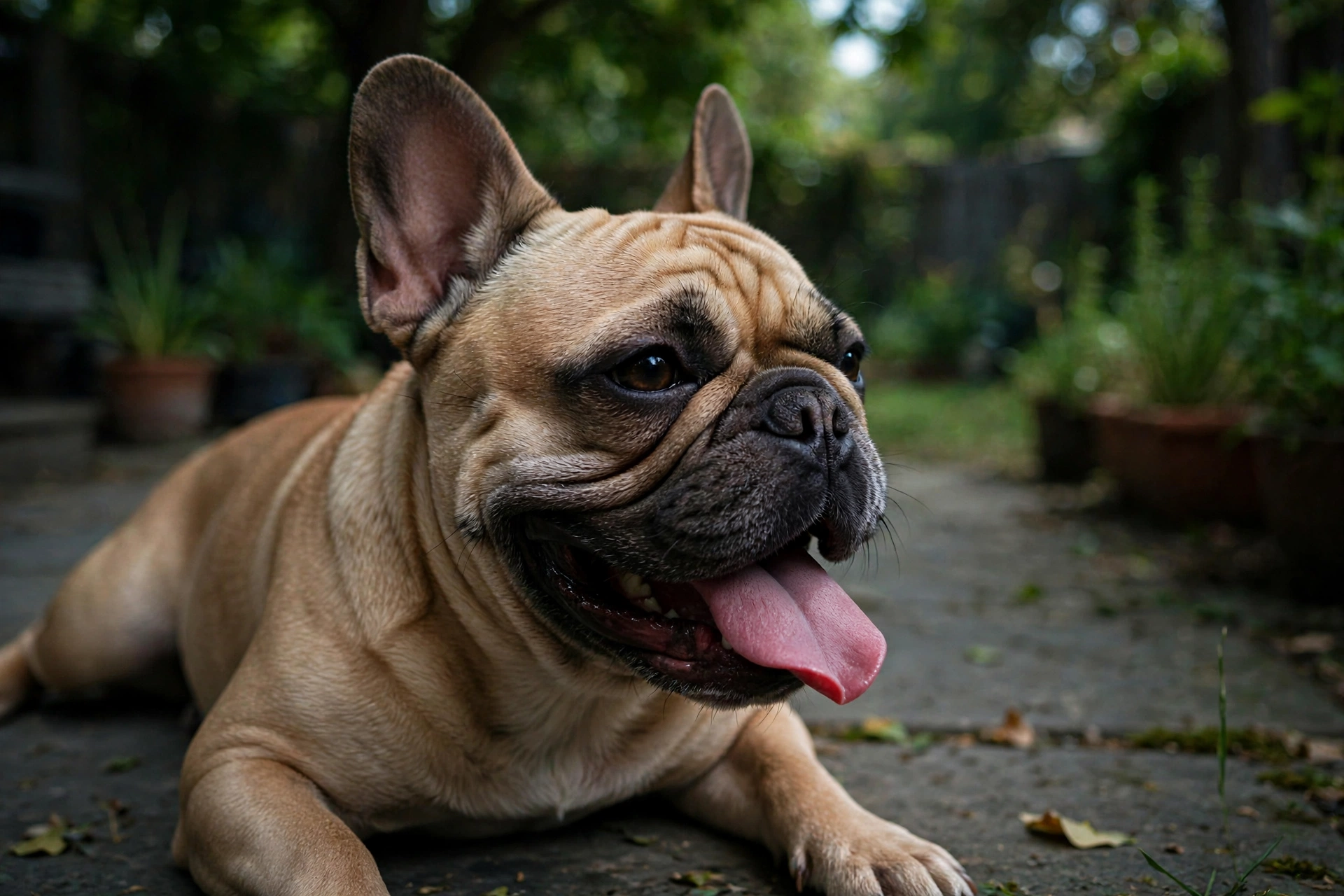
Quick tip: Look at your Frenchie’s nostrils in good light. Slits instead of open ovals mean a tighter airway, and dogs with tighter airways overheat sooner. Know which one you have before summer arrives.
French Bulldog Heat Stroke: The Numbers Behind the Risk
Research from the Royal Veterinary College’s VetCompass program tracked more than 900,000 UK dogs under primary veterinary care. French Bulldogs came out at 6 times the odds of heat-related illness compared with Labrador Retrievers. That is a relative risk, not a share of dogs affected, but it is the headline number every Frenchie owner should know. Flat-faced breeds as a group ran at 2.1 times the odds of normal-skulled dogs.
The emergency-room picture is starker. In the summer of 2022, Vets Now emergency clinics saw 384 heatstroke cases, and French Bulldogs and English Bulldogs made up nearly 37 percent of them, more than a third. In that severe end of the spectrum, flat-faced breeds carried 4.2 times the risk of natural-skull breeds like Labradors, Border Collies, and German Shepherds. Two different datasets, same direction: the flatter the face, the worse the odds.
The trigger data upends the usual story. Exercise caused 74.2 percent of heat-illness events. Hot cars caused 5.2 percent. Heatstroke from exercise was just as likely to kill as heatstroke from a car, and because it struck roughly ten times as many dogs, it caused eight times as many deaths overall. The classic scenario is not a dog left in a vehicle. It is a dog that went for a walk.
The outcomes sharpen the point. About 1 in 7 dogs treated for heatstroke died. But dogs caught at the early signs, labored breathing or lethargy, survived 98 percent of the time. Once a dog lost consciousness, it was 37 times more likely to die. The lead researcher, Emily Hall, put it plainly: once dogs reach that severe stage, it is really a coin toss whether they survive.
A few more risk multipliers from the same research. Dogs above the average weight for their breed ran about 1.4 to 1.5 times the risk. Dogs aged 12 and up ran 1.7 times the risk. And in Britain’s record-hot summer of 2022, dogs faced five times the normal risk of heat illness.
One honest caveat. The big numbers come from UK dogs in 2016 and 2022. The relative risks travel well to the US. The absolute incidence will look different in Texas or Florida than it did in England.
6x the odds of heat-related illness vs. Labradors (RVC VetCompass, 900,000+ dogs)
37% of emergency heatstroke cases were French and English Bulldogs (Vets Now, summer 2022)
74% of cases were triggered by exercise, not cars
98% survived when caught at the early signs, but unconscious dogs were 37x more likely to die
1 in 7 dogs treated for heatstroke died
Early Signs vs. Late Signs
Heatstroke moves in stages, and the stages look different. Learn them on a cool day so you can read them on a hot one.
| Early warning | Escalating | Emergency |
|---|---|---|
| Frantic panting that does not settle with rest | Vomiting or diarrhea | Collapse, cannot stand |
| Thick, ropy drool | Stumbling, wobbling, disorientation | Seizures |
| Bright red gums and tongue | Gums turning dark red or purple | Bloody vomit or bloody diarrhea |
| Restlessness, cannot get comfortable | Body temperature above 104°F | Gums pale, blue, or grey |
| Glassy eyes and sudden lethargy | Rapid decline within minutes | Loss of consciousness |
The temperature numbers behind the table: a normal dog runs 101 to 102.5°F. Above 104°F is the danger zone. Above 106°F, organ failure can begin within minutes. You do not need to memorize those figures mid-crisis. You need to recognize the left column and act on it, because the middle column can arrive fast in a Frenchie.
Quick tip: Learn your dog’s normal gum color and resting breathing rate now, on an ordinary day. In a crisis you will not be guessing what “normal” looked like.
The Emergency Protocol: Cool First, Transport Second
The Royal Veterinary College’s 2023 guidance gives owners four words: cool first, transport second. Start cooling immediately and call the vet while you cool. Do not load an overheating dog into a warm car to “rush to the vet” while doing nothing. Research on cooling methods found cold-water immersion the most effective approach with no damaging effects observed, which overturns the old “tepid water only” advice for good.
- Move the dog out of the heat. Shade, air conditioning, the coolest spot available. Stop all activity right now.
- Start active cooling with the fastest method you have. For a young, healthy, conscious dog, the best option is cold-water immersion: a tub, trough, or pond, keeping the head above water. For an older, unwell, or unconscious dog, pour water over the body and create air movement instead, which protects the airway. Use whatever water is available as long as it is cooler than the dog. Focus on the belly, armpits, groin, and paws, where large blood vessels run close to the surface, and make sure the water reaches the skin, not just the top of the coat.
- Add airflow. A fan, a breeze, car AC with the windows down. Moving air speeds evaporation, and evaporation is what actually pulls heat off the body.
- Offer small amounts of cool water if your dog is conscious and willing to drink. Never force water, especially if the dog has collapsed. Forced water can go down the wrong way.
- Monitor the temperature if you have a rectal thermometer. Stop active cooling at about 103°F. The temperature keeps falling after you stop, and overshooting causes hypothermia. Dry the dog and keep watching.
- Get to a vet immediately, even if your dog looks recovered. Damage to the kidneys, liver, and blood clotting can take 12 to 48 hours to show. The AKC’s heatstroke guide stresses the same point: the crisis is not over when the panting stops.
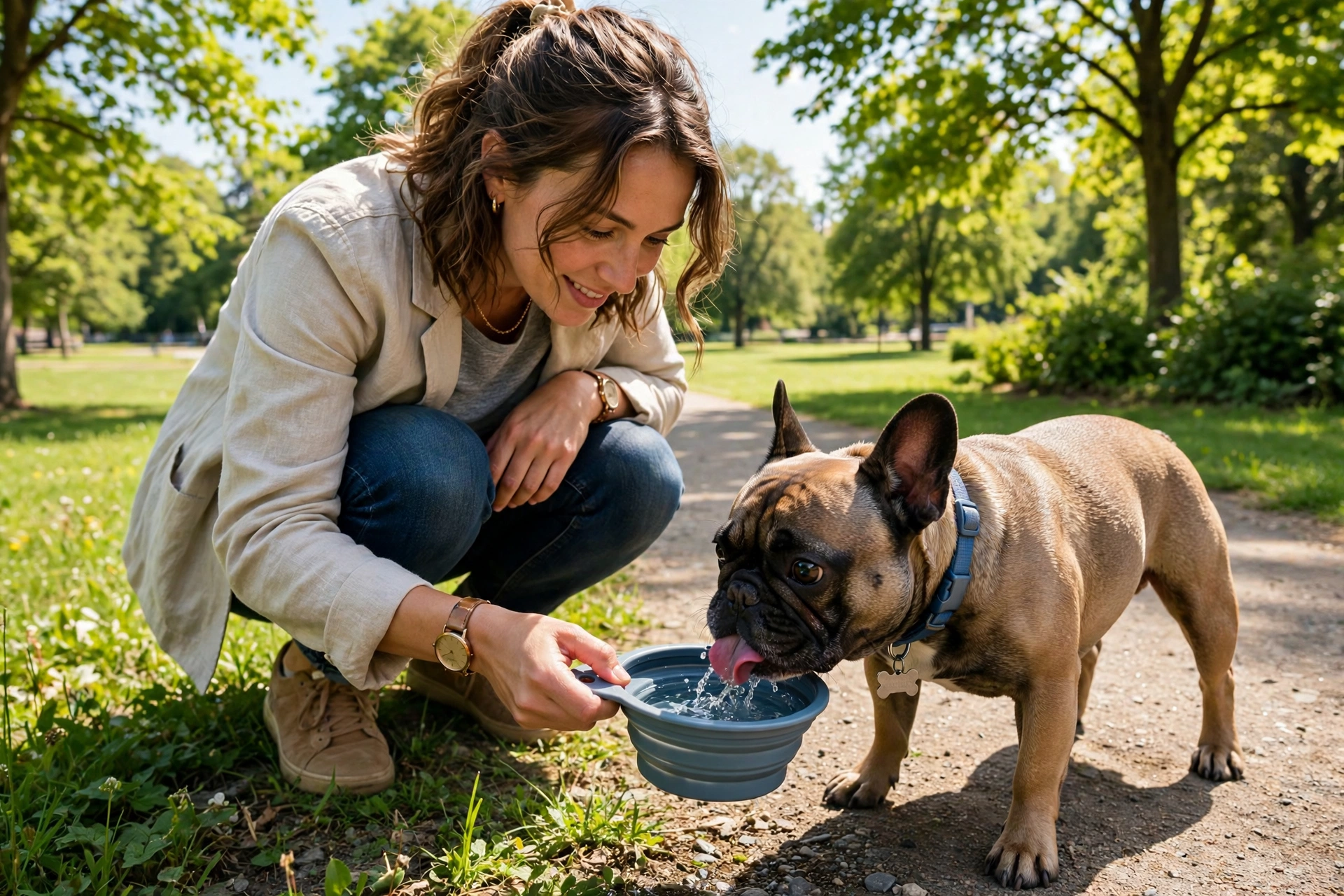
Quick tip: The most common owner method is draping wet towels over the dog, used in over half of cases in one study, but it is also one of the least effective. Towels trap heat against the body. Pour water and add airflow instead, or place towels underneath the dog with air moving.
What NOT to Do
Eight myths, corrected. The first one is the most important, because it is the advice your parents’ generation learned and it is now outdated.
Do this, not that:
– Do cool fast with cold-water immersion or pour-and-fan. Do not wait for tepid water. The old “cool slowly” rule was overturned by RVC research in 2023.
– Do pour water over the body with airflow. Do not drape wet towels over the dog. They trap heat against the body.
– Do treat every warm-weather walk as the risk scenario. Do not assume heatstroke only happens in parked cars. Exercise caused nearly three quarters of cases.
– Do treat frantic, unrelenting panting in heat as a warning sign. Do not file it under “that is just how Frenchies breathe.”
– Do leave the dog home in air conditioning or take them inside with you. Do not “run in for two minutes” with the windows cracked. At 70°F outside, a car hits 89°F in 10 minutes.
– Do get a vet check after every heatstroke episode. Do not assume a dog that cooled down is fine. Organ damage can appear 12 to 48 hours later.
– Do keep the coat intact. Do not shave your Frenchie for summer. The ASPCA notes the coat protects against overheating and sunburn.
– Do stop active cooling at 103°F. Do not pile on ice packs as the whole plan. Pour-and-fan or immersion, then stop and monitor.
The Car: Numbers That Should Scare You
The ASPCA’s position is simple: never leave animals alone in a parked vehicle, a rule now backed by law in several US states. Shade and cracked windows do not change the math enough to matter.
- 72°F outside becomes 117°F inside within an hour (RSPCA)
- 86°F outside pushes the interior past 104°F in under 5 minutes (RSPCA Queensland)
- In one RSPCA Queensland test, a light sedan hit 135°F in 12 minutes
- 70°F outside becomes 89°F in 10 minutes and 104°F in 30 minutes (Heart + Paw veterinary group)
- With windows cracked, the interior still climbs about 20°F in 10 minutes (NBSPCA)
Read that list once more with a Frenchie in mind. A dog whose cooling system is already compromised does not get extra time. The car is the fastest way to turn a warm day into an emergency.
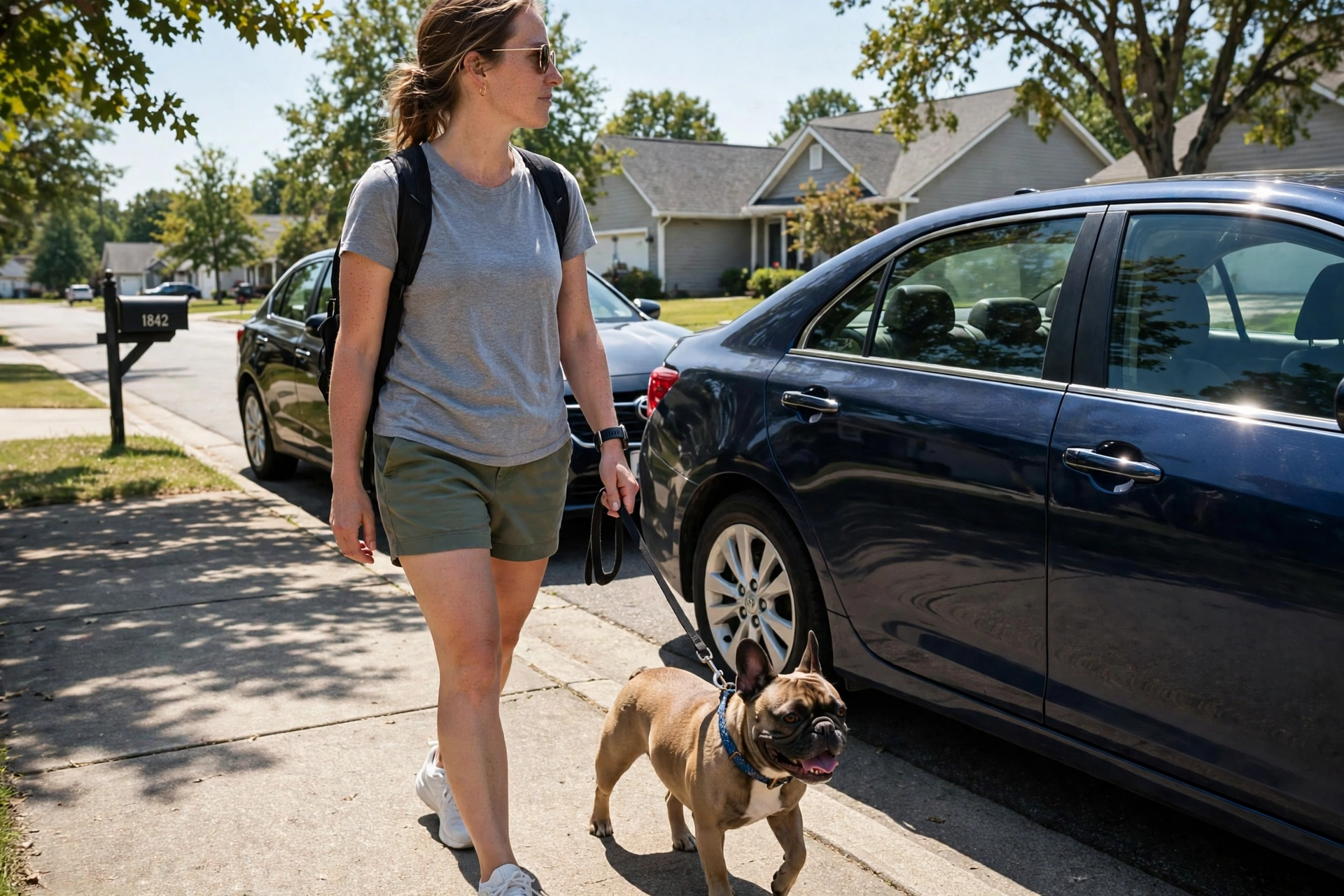
Quick tip: Make it a hard rule with everyone in the household: the dog never waits in the car, not for a minute, not with the AC running while you “just” run in. Rules with exceptions are not rules.
The Summer Rulebook: Preventing French Bulldog Heat Stroke
None of this requires special equipment. It requires habits, kept all summer.
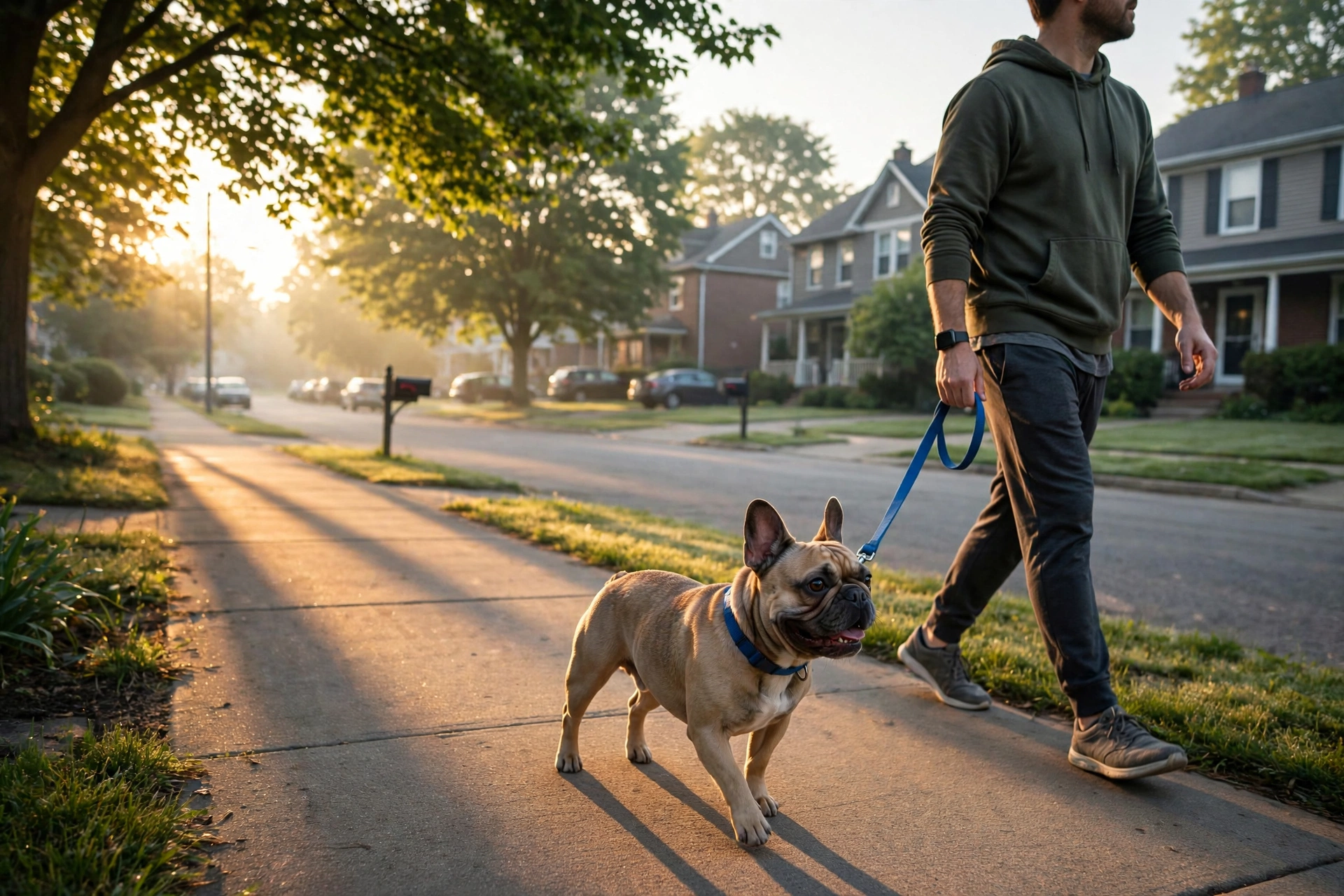
- Walk early morning or late evening. Skip midday entirely in summer. The coolest walk of the day is the safest one.
- Respect the heat caps. A UK pet charity advises no outdoor exercise above 77°F for flat-faced dogs. One US veterinary practice draws the line at 80°F or humidity above 40 to 50 percent for brachycephalic dogs. Treat these as guidance from their sources, not universal law, and remember that humidity cripples panting-based cooling even at moderate temperatures.
- Keep your Frenchie lean. Above-average weight for the breed raises heat-illness risk about 1.4 to 1.5 times, and fat around the neck narrows an already tight airway.
- Use a harness, never a collar. The VCA advises harnesses for BOAS dogs because collars press on the neck and windpipe. In heat, that pressure works against the exact airway your dog needs for cooling.
- Water everywhere. Fresh, cool water available at all times. Water offered on every walk. More than one bowl in case one tips over.
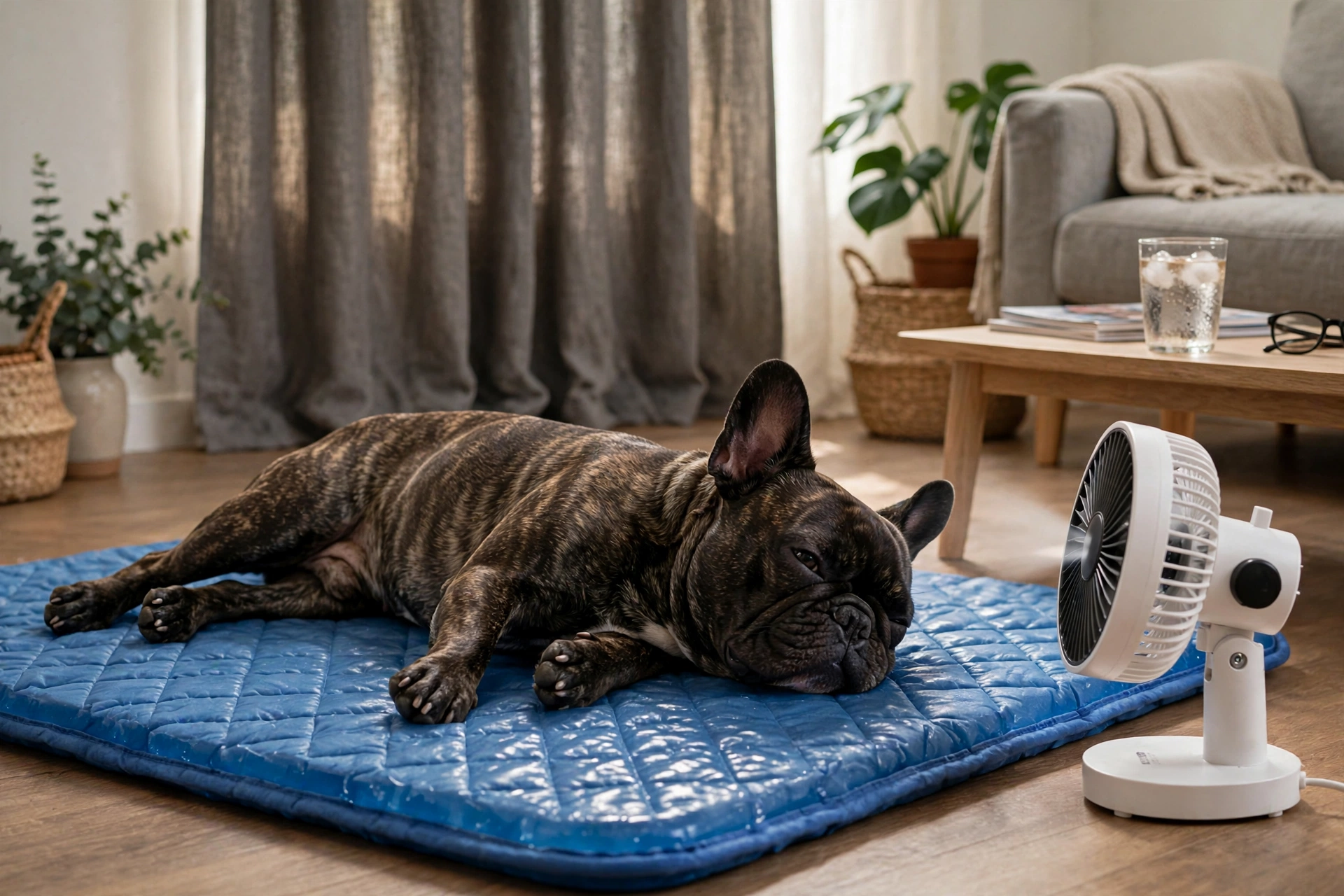
- Cooling aids help at the margins. Evaporative cooling vests showed modest core-temperature reductions in small studies on working dogs, need re-wetting every 20 to 40 minutes, and work worse in humidity. No study shows they prevent heatstroke on their own in pet Frenchies. A cooling mat, shade, and a fan do the quiet daily work. A supervised paddling pool is another option one UK charity lists among its summer lifesavers.
- Watch the calendar. Sudden warm spells are especially dangerous because dogs have not acclimatized. The first hot week of spring deserves more caution than August.
- Never leave your Frenchie in a parked car. Not for a minute, not with windows cracked, not in the shade.
- Keep watching after exercise for 10 to 15 minutes. Exertional heat illness can declare itself after the walk ends.
- Flag it on grooming and vet days. A stressed Frenchie at the vet or groomer on a warm day is a real scenario, and flat-faced breeds account for a large share of heat-illness cases seen under veterinary care. Mention the heat sensitivity when you book.
Checklist: the heat-day kit
– Water bottle and collapsible bowl on every walk
– Harness, never a collar, from spring through fall
– Rectal thermometer and water-based lubricant in the first-aid drawer
– Cooling mat in the dog’s usual resting spot
– Your vet’s number and the nearest emergency clinic saved in your phone
When It’s the Vet, Not “Wait and See”
Any escalating sign means emergency, right now. But the subtler rule matters more: every heatstroke episode, even a mild one that resolves at home, needs a veterinary check. Kidneys, liver, and blood clotting can be damaged silently, with the fallout arriving 12 to 48 hours later. At the clinic the vet will check temperature, run bloodwork, give IV fluids, and monitor. That monitoring is the part you cannot do at home.
If your Frenchie stacks heat sensitivity on top of breathing trouble, allergies, or skin issues, you are looking at the breed’s whole health picture. Our French Bulldog health problems hub lays it out in one place.
Quick tip: After any heat episode, write down what happened while it is fresh: temperature outside, what the dog was doing, which signs you saw, and what cooling you did. Bring the notes to the vet. Timelines beat memory.
Frequently Asked Questions
What temperature is too hot to walk my Frenchie?
There is no single study-backed cutoff. The usable guidance: a UK pet charity says skip outdoor exercise above 77°F for flat-faced dogs, and one US vet practice draws the line at 80°F or humidity above 40 to 50 percent. Humidity matters as much as the thermometer because damp air cripples evaporative cooling. When in doubt, skip the walk. A missed walk never hurt a dog.
Can my Frenchie swim to cool off?
Supervised water play can help. Researchers found even partial immersion to the shoulders in room-temperature water beats passive cooling. Never leave any dog unsupervised near water, rinse off afterward, and stick with the pour-water-plus-airflow method as your at-home emergency plan.
Do cooling vests actually work?
Modestly, with limits. Peer-reviewed studies on working dogs found evaporative vests lowered core temperature somewhat during exercise. They need re-wetting every 20 to 40 minutes, lose effectiveness in humidity, and no study shows they prevent heatstroke on their own in pet Frenchies. A useful aid, not a safety guarantee.
My Frenchie pants heavily on every summer walk. Is that heatstroke?
Not necessarily. Heavy panting is normal exertion. The line is panting that is frantic and relentless and does not settle with rest, especially paired with thick drool, bright red gums, or a dog that sits down and will not continue. And since three quarters of flat-faced-dog owners consider noisy breathing normal, be honest about which side of that line your dog is on.
Should I shave my Frenchie for summer?
No. The ASPCA advises against it. The coat insulates against heat and protects against sunburn. Shorter is not cooler here.
Final Word
French Bulldog heat stroke is one of the few emergencies where the owner’s first five minutes matter more than the vet’s first hour. Cool first, transport second. Learn the early signs, respect the heat caps, and never trust a parked car or a quick errand. The research is clear that most of these cases start on an ordinary walk, which means most of them are preventable on an ordinary walk too.
Bookmark this page before summer, share it with your Frenchie-owning friends, and keep the water bowl full. Your dog cannot tell you he is overheating. You have to notice.