Hip Dysplasia in French Bulldogs: Signs, X-Rays & Management (2026)
TL;DR
- Hip dysplasia in French Bulldogs appears on screening X-rays far more often than as pain. About 33.1 percent of French Bulldogs submitted for OFA hip screening grade as dysplastic, and most of those dogs never need surgery.
- The film and the dog are two different stories. The Merck Veterinary Manual states plainly that clinical signs do not always match the radiographic changes.
- Hind-end trouble in a Frenchie is not automatically hips. IVDD, a slipping kneecap, and spinal malformations compete for the same symptoms, and sudden weakness is a vet-now problem.
- Weight control carries the strongest evidence of any daily step. In a lifetime Labrador study, dogs fed 25 percent less developed hip arthritis years later.
- For supplements, omega-3 fish oil has research support for osteoarthritis pain. Glucosamine and chondroitin do not.
Your Frenchie Hesitates at the Stairs. Are the Hips to Blame?
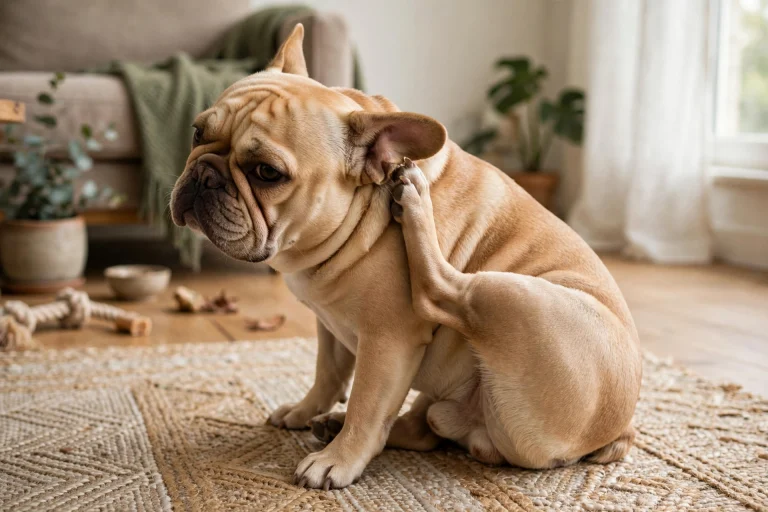
Your French Bulldog rocks his weight onto his front legs to stand, hesitates at the stairs he used to charge, and bunny-hops across the yard instead of running, and now you are asking whether his hips are failing him. Hip dysplasia in French Bulldogs is real, it grades badly on paper, and it is still widely misunderstood, because a loose hip on a film and a sore dog at home are not the same thing.
This article separates the two: what the condition is, how common it actually is, which signs and look-alike conditions matter, how vets diagnose it, and what daily care and surgery cost in the US in 2026. It sits alongside the other conditions in our French Bulldog health problems hub.
Watch the small changes: the pause before a couch jump that used to be automatic, nails clicking on hardwood as he shifts forward to rise. Date your notes. They tell your vet more than a guess does.
Quick tip: Film 20 seconds of your dog walking away from you and trotting back on flat ground before the appointment. A home video catches the hip sway that vanishes on a slick clinic floor.
What Hip Dysplasia in French Bulldogs Actually Is
The hip is a ball-and-socket joint. The ball atop the thigh bone should sit deep and snug in the socket of the pelvis, gliding under a layer of cartilage. In hip dysplasia the joint develops abnormally, the fit stays loose, and the ball shifts inside a socket that is often too shallow. Vets call that looseness laxity, and laxity is where the damage starts.
The Cornell Riney Canine Health Center describes it as multifactorial, shaped by genetics plus growth rate, nutrition, exercise, and weight.
The chain of events runs like this:
- The ball sits loosely in a shallow socket and moves more than it should.
- That extra movement wears the cartilage cushioning the joint.
- The bone remodels and thickens around the socket.
- Osteoarthritis sets in, and arthritis, not the loose fit itself, is what usually hurts.
A young dog can carry a loose hip for months with an odd gait alone, because the painful stage often waits for the arthritis the looseness causes.
How Common Is It in Frenchies, Really?
Start with the screening number. In the Orthopedic Foundation for Animals database, 33.1 percent of French Bulldog hips submitted for evaluation grade as dysplastic. That puts Frenchies among the worst-scoring breeds on that table, at three times the Labrador Retriever rate of 11.3 percent. Only heavy, compact breeds such as Bulldogs and Pugs score clearly worse.
The limits change what the number means. OFA submissions are voluntary and self-selected, so the database is a screened sample, not a count of every pet Frenchie. The clinical picture differs sharply. In VetCompass data covering 2,228 French Bulldogs under UK primary care in 2013, all musculoskeletal disorders combined accounted for 4.7 percent of dogs in a year, and hip dysplasia did not appear among the breed’s most common specific disorders at all. Neither figure is a true breed prevalence. The gap is the story: loose hips on film are common, painful hip disease much less so.
Do this, not that:
- Do quote the 33.1 percent figure as “of French Bulldogs submitted for OFA screening.” Do not repeat it as the share of all Frenchies with painful hips.
Why a Bad X-Ray Does Not Always Mean a Dog in Pain
The Merck Veterinary Manual puts the key sentence plainly: clinical signs of hip dysplasia vary and do not always correlate with radiographic abnormalities. A mild grade attached to a dog who climbs, plays, and settles without a grunt is a monitoring plan, not a crisis.
OFA grades each hip on a seven-step scale:
| OFA grade | What it means |
|---|---|
| Excellent, Good, or Fair | Within normal limits, and the dog is issued an OFA number |
| Borderline | Inconclusive, with no arthritic changes that definitively diagnose dysplasia |
| Mild | Significant subluxation, a usually shallow socket, and usually no arthritis yet |
| Moderate | The ball barely seated in a shallow socket, with arthritic bone changes present |
| Severe | The ball partly or completely out of a shallow socket, with significant arthritic changes |
Mild, Moderate, and Severe count as dysplastic.
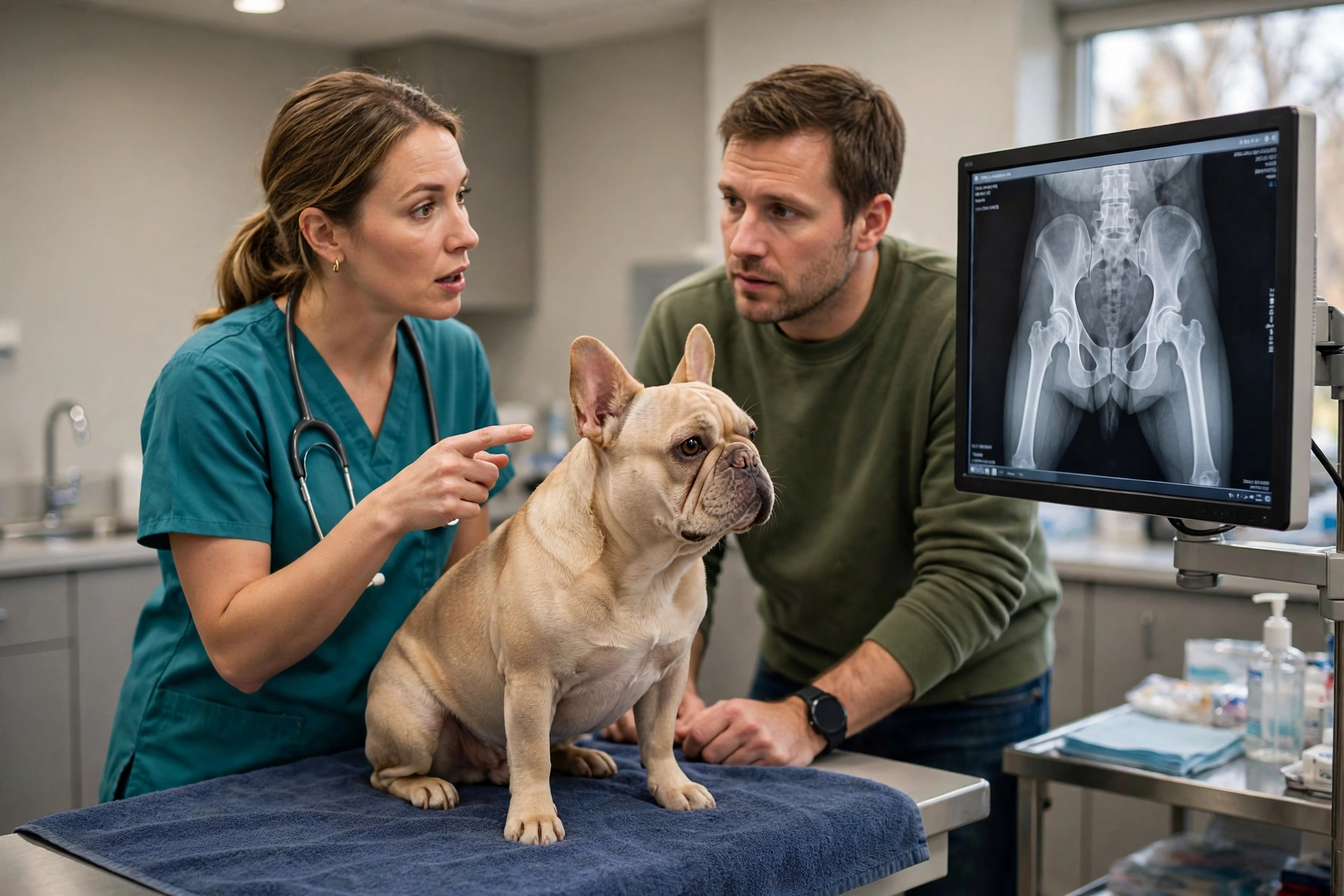
One wrinkle explains many reports. The OFA view stretches the legs back, winding the joint capsule tight and driving the ball into the socket, so a loose hip can look well seated. PennHIP measures the looseness that view hides.
Signs to Watch For
Hip dysplasia arrives gradually, and its early signs overlap with normal Frenchie stubbornness. Cornell, Merck, and VCA guidance agree on the picture: trouble rising, stiffness in the back legs after exercise, swaying hips on a walk, and muscle disappearing from the hind legs while the chest looks heavier, because the dog shifts his weight forward to spare the rear.
Signs worth writing down before the visit:
- Difficulty rising, or rocking forward onto the front legs to stand
- Bunny-hopping when running, with both back legs moving together
- Limping or stiffness worse after exercise, and worse after rest once arthritis develops
- Refusing stairs or jumps he used to take without thinking
Timing runs in two phases: young-dog signs come from the laxity itself, older-dog signs from the osteoarthritis it caused. Signs can appear at a few months old or not until later in life.
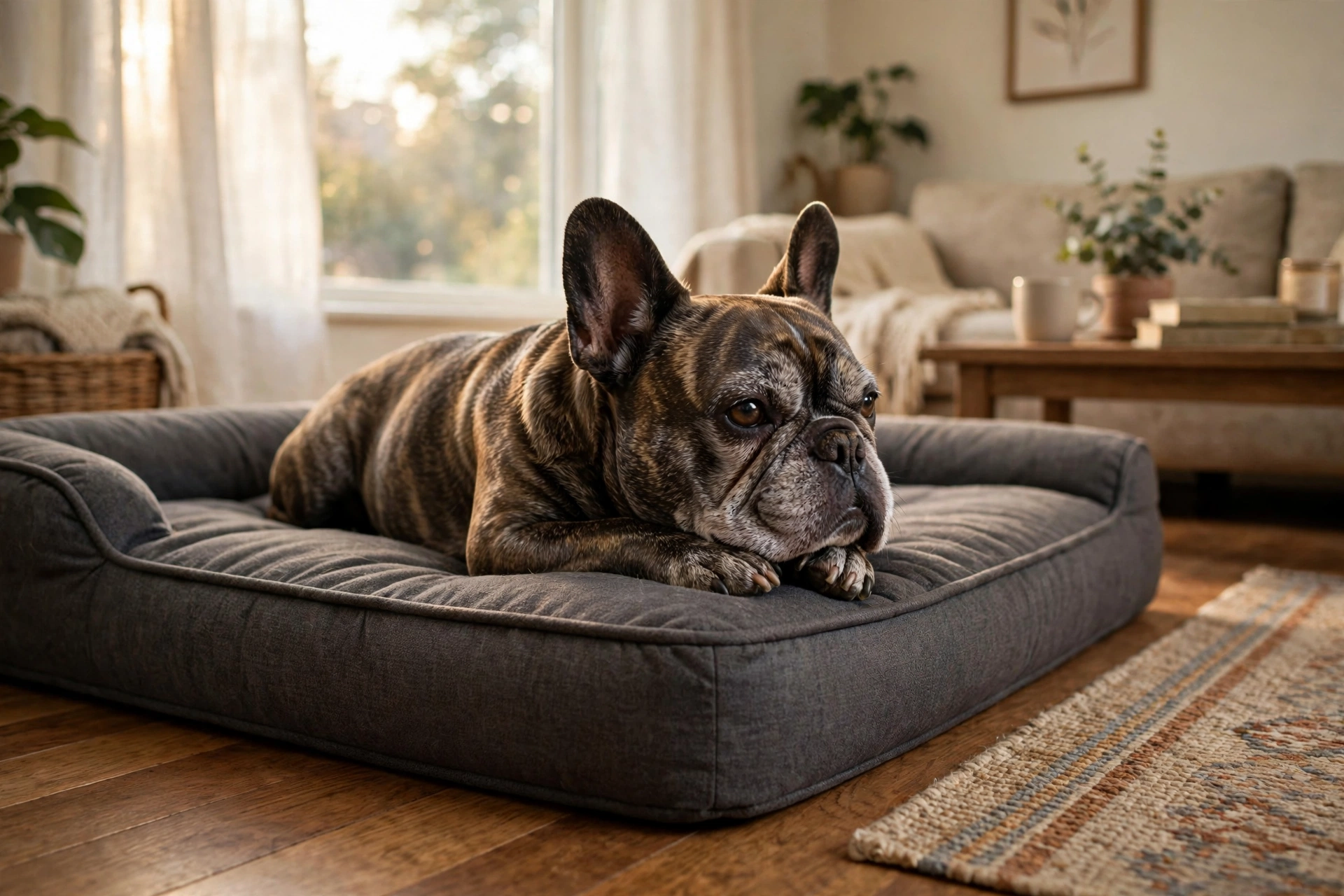
Treat bunny-hopping with care. It is a listed sign of hip dysplasia, and it also appears with a slipping kneecap and with spinal disease. In a Frenchie it earns an exam, never a diagnosis by itself.
Not Every Hind-End Problem Is Hip Dysplasia in French Bulldogs
Frenchies carry a crowded list of hind-end conditions, and the treatments diverge fast. A 2025 German survey of 574 French Bulldogs found IVDD in 105 dogs, about 18 percent, with 61 percent of cases diagnosed between one and four years old, the same age owners start blaming hips. Patellar luxation appeared in 61 dogs, about 11 percent, at a median diagnosis age of three.
| Pattern you see | What it points to first |
|---|---|
| Sudden wobble, yelping when picked up, paws knuckling or dragging, loss of bladder control | IVDD or another spinal problem. Same-day vet care |
| Skipping on one hind leg for a few strides, then walking normally | Patellar luxation, a kneecap slipping in and out |
| Hind-end weakness in a young dog, with no pain when the vet extends the hip | Hemivertebrae or another spinal malformation |
| Gradual stiffness in both back legs, pain on hip extension, thinning rear muscle | Hip dysplasia moves to the top of the list |
Sudden hind-leg weakness in this breed is more often spine than hips, and our IVDD in French Bulldogs guide covers those red flags in full. Hip dysplasia is gradual. It does not cause knuckling, dragging paws, or loss of bladder control.
The conditions travel together too: hemivertebrae were documented in 141 of those 574 dogs, and dogs with hemivertebrae had higher odds of hip dysplasia as well. Hind-end weakness in this breed deserves a full workup, not an assumption.
How Vets Diagnose It: Exam, Sedated Films, and OFA vs. PennHIP
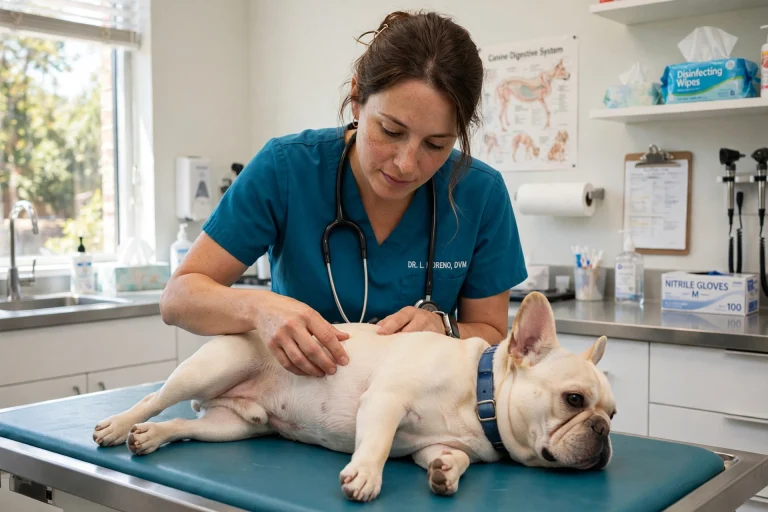
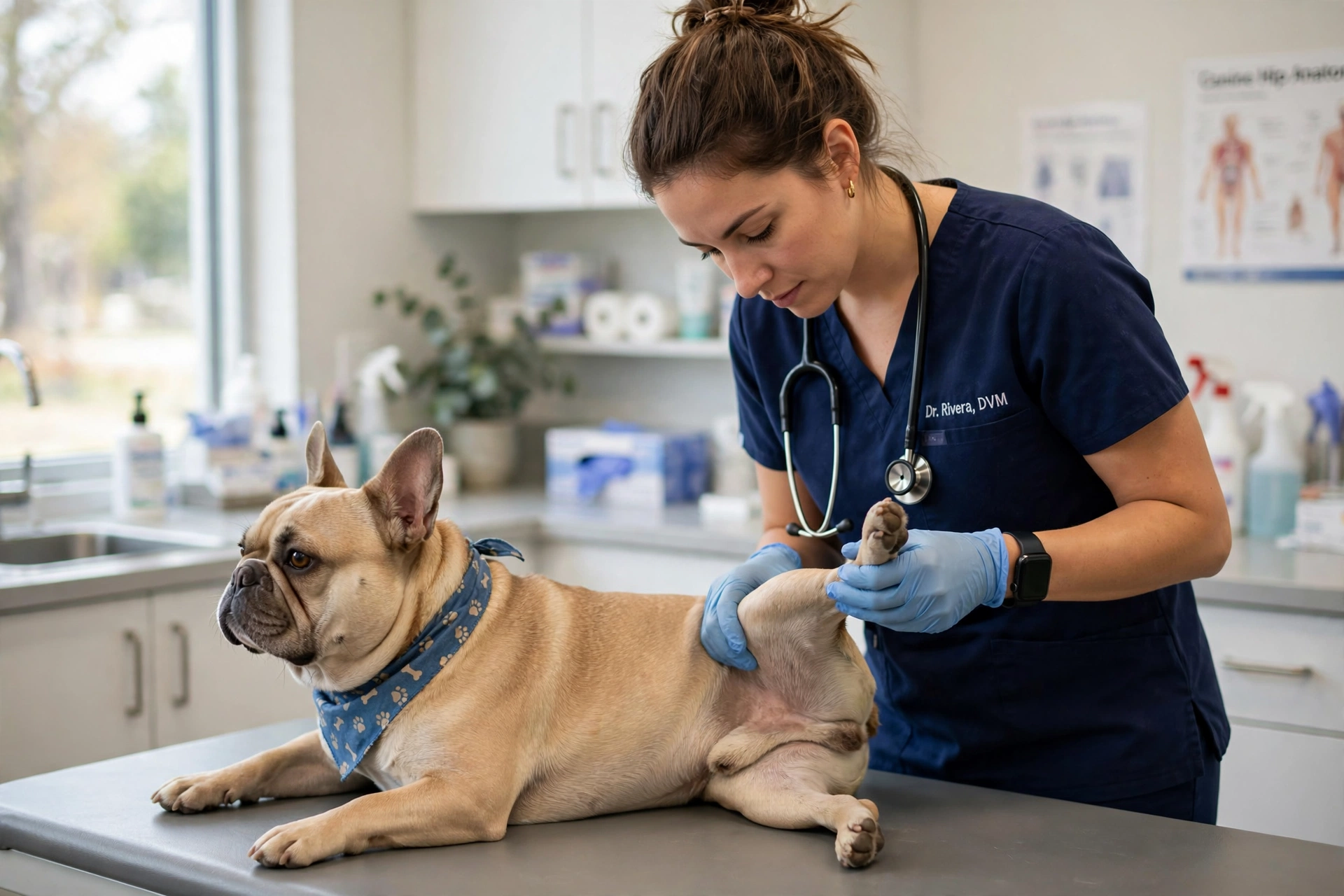
Diagnosis rests on a hands-on exam, palpation, and radiographs. Your vet watches the gait, feels for lost muscle, checks range of motion, and may test for the Ortolani sign, a palpable clunk of laxity. Pain on hip extension, reduced motion, and crepitus, a gritty feeling in the joint, add evidence.
Diagnostic films need precise positioning, so dogs are sedated or anesthetized for them. Awake, tense films risk an erroneous diagnosis, Cornell warns. A lameness workup usually runs about $50 to $80 for the consultation, with standard hip X-rays starting around $150 and commonly landing between $150 and $250 for imaging alone. Raise the airway question at the same visit, because sedation planning matters more in a flat-faced breed.
| OFA | PennHIP | |
|---|---|---|
| What it measures | Fit and shape on a single hip-extended film | Laxity itself, measured in a neutral position |
| Earliest useful age | Final certification at 24 months or older, and younger preliminary grades are less reliable | From 16 weeks |
| Films required | One view, graded by consensus | Three views, by a certified PennHIP vet only |
| Typical 2026 US cost | About $200 to $600 all in | About $400 to $900 |
PennHIP reports laxity as a Distraction Index, running from near 0 for a very tight hip to above 1.0 for a very loose one. Below 0.3, the risk of later osteoarthritis sits near zero, and risk climbs above that line. Unlike voluntary OFA submission, every PennHIP film is submitted, so no one files only the good result.
Living With It: Weight, Exercise, and Home Changes
Most Frenchies with hip dysplasia live here, in daily management, for years. Merck states it plainly: most dogs with hip dysplasia do not need surgery, and surgery is reserved for dogs that stop responding to conservative care.
Weight comes first, and it is not close. In a lifetime study of 48 Labradors in 24 littermate pairs, dogs fed 25 percent less developed hip osteoarthritis far later than their freely fed siblings: median age at the first film showing hip arthritis was 12 years against 6 years. Those were Labradors, not Frenchies, but the load logic applies to any compact frame. The American College of Veterinary Surgeons calls keeping the dog very slim the most effective and least expensive long-term method of keeping a dysplastic dog comfortable.
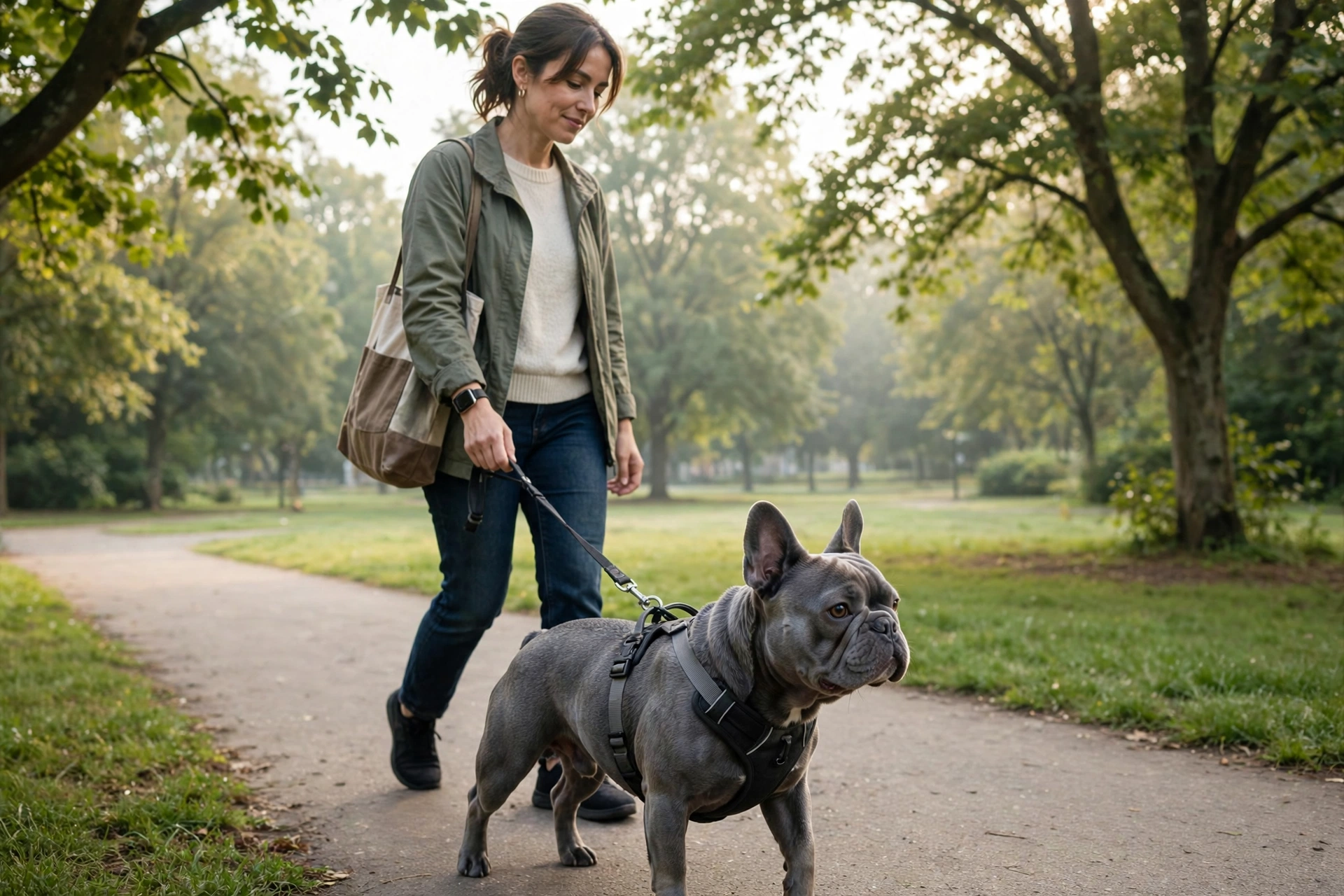
Exercise comes second, steady and low-impact. Take leash walks of a length your dog finishes comfortable, on flat ground, little and often. During a flare, cut back on hard surfaces, jumping, and stairs. Full rest backfires, because inactivity deepens stiffness and strips supporting muscle.
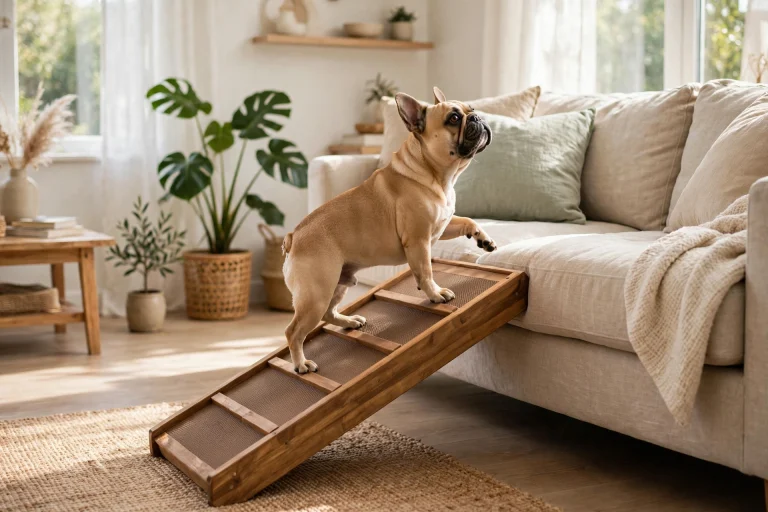
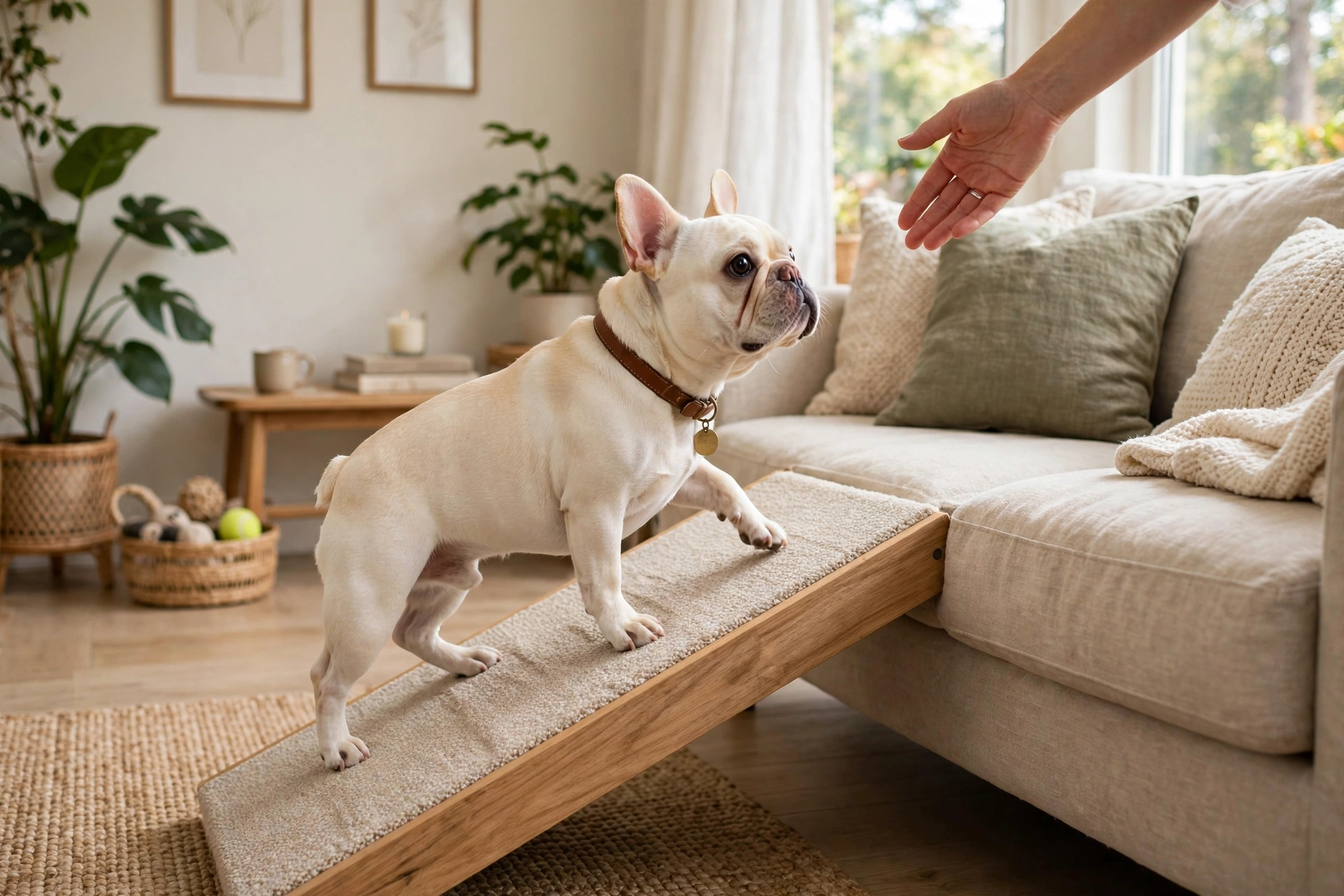
At home, remove the daily collisions. Put a carpeted ramp against the couch and train him onto it with treats placed one step apart, until the ramp is the habit. Lay runner rugs along the hardwood path from bed to back door, so rising and turning happen on grip, not on a slide. Set a thick orthopedic bed where the family actually sits, away from drafts.
Do this, not that:
- Do keep nails short and runners down on slick floors. Do not let him scramble for traction on hardwood at the doorbell.
Pain Relief and Supplements, Honestly
Pain control starts with anti-inflammatory medication. NSAIDs relieve hip pain effectively, daily or on bad days, at the lowest dose that keeps your dog comfortable. Long-term daily use carries a trade: periodic blood work to watch the kidneys and liver. For a Frenchie-sized dog the medication typically runs about $25 to $60 a month. Where pain has a nerve component a vet may add gabapentin, and some vets offer Librela, a monthly anti-NGF injection at about $70 to $150 per injection. Every dose decision belongs to your vet.
Supplements need a colder eye, because this category sells hope by the tub. A 2022 systematic review and meta-analysis covering 57 articles and 72 trials found evident clinical efficacy for omega-3-enriched diets and omega-3 supplements in osteoarthritic dogs and cats, weak efficacy for collagen, and a very marked non-effect for chondroitin-glucosamine, concluding it should no longer be recommended for pain management. Read the review at PMC. ACVS is blunter about cartilage supplements, noting no peer-reviewed evidence that they repair cartilage or protect it from wear. A daily joint product typically costs $25 to $50 a month, and that money does more work as a vet-dosed fish oil than as a glucosamine chew.
Quick tip: Bring every supplement tub to the appointment, labels out. Your vet can check the EPA and DHA content of a fish oil in seconds.
Rehab and Physio: What It Does and What It Costs
Physical rehabilitation is standard medical management, not an optional extra. A rehab vet or certified therapist builds a controlled program around your dog: underwater treadmill sessions, strengthening work, laser therapy, and range-of-motion exercises. Rehab maintains muscle tone and joint movement, supports dogs managed without surgery, and speeds recovery after an operation. It does not change the shape of the joint.
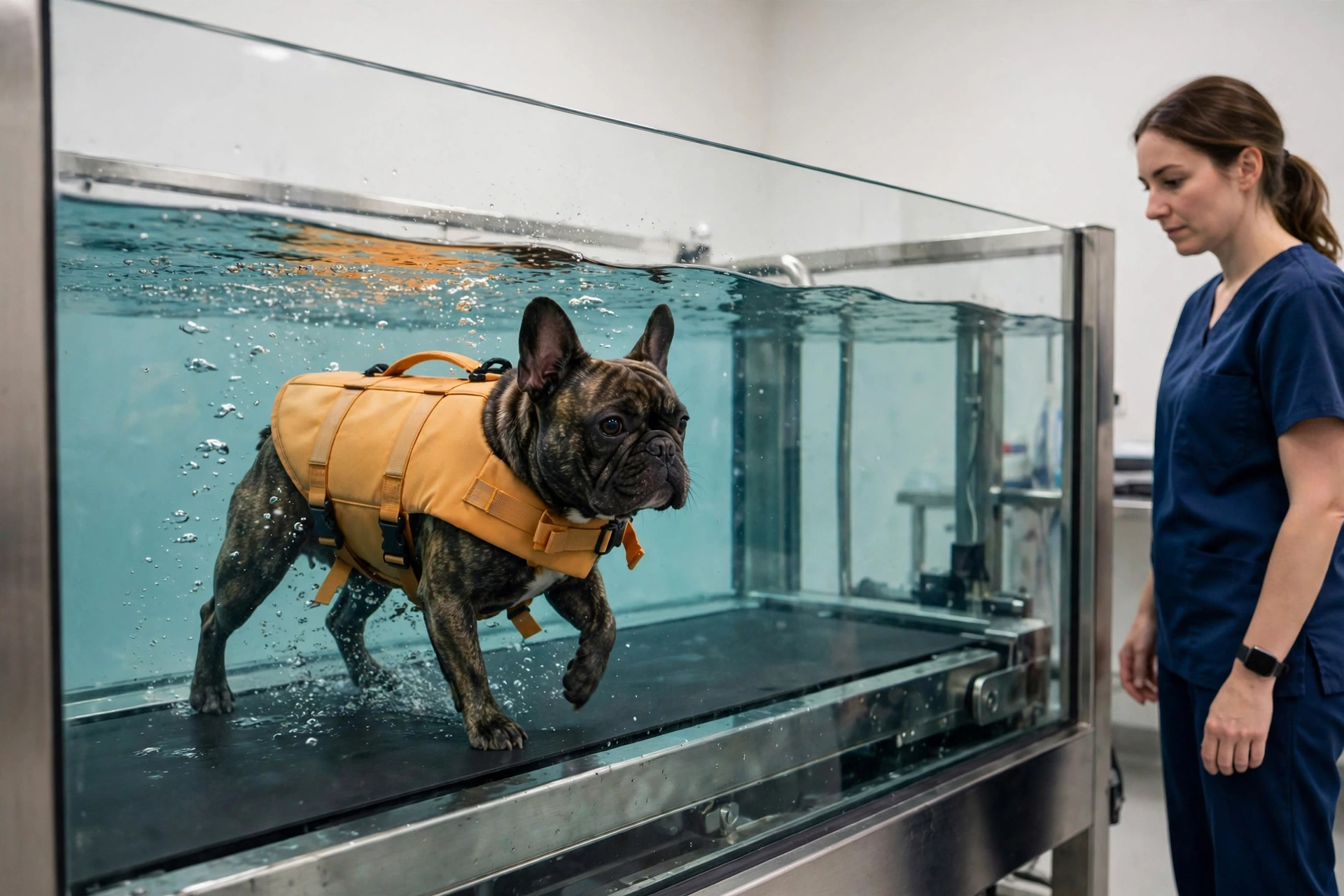
Expect hydrotherapy at about $58 to $98 a session. Blocks usually run two to three sessions a week, so an 8 to 12 week block at twice a week lands around $1,200 to $1,800. Ask for the home program in writing. The daily exercises on your living room rug carry much of the value.
Questions for a rehab consult:
- Will my dog work on an underwater treadmill, in a pool, or both, always with a life vest and a handler in reach?
- How will you coordinate with my regular vet on pain medication?
Surgery, Realistically: FHO, Hip Replacement, and the Puppy Procedures
Surgery enters the conversation when pain stops responding to weight loss, medication, and rehab, or when a joint is severely affected from the start.
FHO, femoral head ostectomy, removes the ball of the joint entirely. The body forms a fibrous false joint in its place, and the goal is pain relief, not normal mechanics. Cornell reports good outcomes particularly in dogs under 40 pounds, and ACVS notes it can keep dogs under 60 to 70 pounds comfortable enough to avoid daily NSAIDs, provided they stay slim and live a limited-exercise life. A 20 to 28 pound Frenchie sits squarely in that range, which is why FHO is the usual Frenchie conversation.
Total hip replacement swaps the ball and socket for metal and polyethylene implants, the only option that restores near-normal mechanics. The dog must be skeletally mature, and ACVS advises managing young dogs medically until at least one year old. Frenchie-sized replacement exists: the BioMedtrix CFX Micro Hip System is made for breeds such as Jack Russells and French Bulldogs, and NC State offers uncemented micro implants for small dogs. Read that as possible, specialist-only, and uncommon in this breed.
Two more procedures belong to puppies. Juvenile pubic symphysiodesis must happen at roughly 12 to 20 weeks. Double or triple pelvic osteotomy works best before 8 to 10 months, and only in hips with no arthritic changes yet.
| Procedure | 2026 US cost, per hip |
|---|---|
| FHO | $1,200 to $3,000+, most Frenchies toward the lower half on size, specialist centers higher |
| Total hip replacement | $3,500 to $7,000+ at many practices, $10,000+ all in at some university and specialty centers |
| DPO or TPO, young dogs only | $3,000 to $6,000 |
| JPS, puppies under 20 weeks only | $800 to $1,000 |
Add the full episode up: diagnostics, surgery, post-operative care, and rehab together run about $4,000 to $14,500 or more. When both hips need work, replacement surgery is usually staged one side at a time rather than done together.
Buying a Puppy or Breeding: CHIC, Grades, and What Passing Means
Hip screening carries the most weight before the dog exists. For French Bulldogs, CHIC, the Canine Health Information Center program, requires four things: a hip evaluation by OFA radiographs or PennHIP with results registered with OFA, a patellar luxation evaluation registered with OFA, a cardiac evaluation, and a CAER eye exam by a board-certified ophthalmologist registered with OFA. The French Bull Dog Club of America lists further tests as recommended rather than required.
Read the fine print on passing. A CHIC number records that testing was done and results entered. A dog can hold one with an abnormal result on file, so the number alone is not a pass. The breed club’s honors set the real bars: Registry of Merit requires an OFA hip certification of Fair or better, or a PennHIP result of average or better for the breed, tested at two years or older. The Ambassador of Health award counts a PennHIP as passing only at a Distraction Index of 0.60 or lower, at 24 months or older, registered with OFA.
Cornell is blunt: dogs with hip dysplasia should never be used for breeding. A normal film is no guarantee either, because a radiograph does not measure the genes a dog passes on, and a clear-hipped dog can still produce dysplastic puppies depending on the mate. Screening still works at population level: across 60 breeds and more than a million dogs, selection on OFA scores reduced prevalence over the long term.
Our complete French Bulldog owner’s guide covers breeder selection in full.
Puppy buyer checks:
- Ask for both parents’ hip records, by registered name or OFA number, not by summary.
- Verify the results yourself in the OFA database before any deposit changes hands.
- Confirm the hip testing happened at 24 months or older for a final grade.
- Check patella, cardiac, and eye testing too, since all four are CHIC requirements.
Frequently Asked Questions
Does a dysplastic X-ray mean my French Bulldog is in pain? Not necessarily. Merck states that clinical signs do not always correlate with radiographic changes, and Cornell notes some dogs show few signs. Judge the dog in front of you, his gait and his willingness to jump and play.
Is bunny-hopping proof of hip dysplasia? No. Bunny-hopping is a sign that earns an examination, not a diagnosis. In French Bulldogs the same gait appears with patellar luxation and with spinal disease. A hop that skips on one leg for a few strides points at the kneecap first.
At what age does hip dysplasia start in Frenchies? There is no single age. Signs can appear at a few months old, or stay absent until arthritis develops years later.
Will my dog need surgery? Most dogs with hip dysplasia do not, in Merck’s assessment. Surgery benefits severely affected dogs and dogs that stop responding to weight control, medication, and rehab. When surgery does come, a Frenchie’s size makes FHO the option most often offered.
Do glucosamine and chondroitin supplements work? The best current evidence says no for pain relief. A 2022 systematic review of 57 articles and 72 trials found a very marked non-effect for chondroitin-glucosamine in osteoarthritic dogs and cats, and evident efficacy for omega-3 instead. Spend on vet-dosed fish oil instead, and put the real effort into weight.
How much does hip dysplasia surgery cost for a French Bulldog in 2026? It depends on the procedure, quoted per hip. FHO typically runs $1,200 to $3,000 or more per hip. Total hip replacement runs $3,500 to $7,000 or more per hip at many practices and past $10,000 all in at some specialty centers.
Final Word
Hip dysplasia in French Bulldogs rewards the owner who watches the dog rather than the film. Keep him slim, keep him moving on flat ground, film the odd gait instead of guessing at it, and push for a full workup when weakness arrives suddenly, because in this breed the spine makes its case loudly. Bring the gait videos and the grades to your next vet visit, and save this guide for the day a screening report lands in your inbox and you need the calm version.