French Bulldog Digestive Issues: Vomiting, Gas & Sensitive Stomachs (2026 Guide)
TL;DR
- French bulldog digestive issues are often tied to the airway. Struggling to breathe creates pressure changes that push stomach acid upward and set off reflux and regurgitation.
- Regurgitation is not vomiting. One is passive and points to the oesophagus. The other is forceful and points to the stomach or the rest of the body. Telling them apart changes the whole workup.
- Most chronic cases are food-responsive. A strict prescription elimination diet, run properly, helps the largest group of dogs with chronic gut inflammation.
- A fecal test and basic bloodwork come before diet roulette. Parasites such as Giardia can copy a food sensitivity almost exactly.
- Vomiting more than twice in 24 hours, blood in stool or vomit, or a swollen tight belly with unproductive retching needs a vet the same day, or faster.
The Puddle on the Rug at 2 a.m.
Your Frenchie just brought up a puddle of undigested kibble on the bedroom rug at 2 a.m. That is the moment most owners meet french bulldog digestive issues up close. On carpet, in the dark, paper towel in hand.
Some of these dogs vomit. Some regurgitate food that looks barely chewed. Some produce loose stool for three days after a single stolen french fry, then eat breakfast as if nothing happened. Sorting out which pattern your dog has, and which pattern needs a vet today, is the job of this guide. It sits inside our broader French Bulldog health problems guide, and pairs with the daily care basics in the complete French Bulldog owner’s guide.
Quick tip: Film one episode on your phone, puddle and all. Thirty seconds showing whether your dog retched or simply lowered his head and let food slide out is worth more to your vet than ten minutes of description.
Why French Bulldog Digestive Issues Start in the Airway
Follow the air first. A French Bulldog with a narrowed airway works hard for every breath, and that effort pulls pressure inside the chest and oesophagus far below normal. Acid and partly digested food get drawn upward, the junction between oesophagus and stomach gets tugged toward the chest, and in some dogs a portion of stomach slides through the diaphragm. Vets call that a sliding hiatal hernia.
The chain runs like this: obstructed airway, then abnormally negative chest pressure, then reflux and regurgitation, then an inflamed oesophagus and a stomach that empties slowly, pooling food and triggering nausea. Reviews of brachycephalic obstructive airway syndrome describe exactly this sequence. Our BOAS guide covers the airway side in full. The gut side starts here.
Swallowed air adds a second load. A dog gulping air around an obstructed airway, or inhaling dinner in forty seconds flat, sends air into the stomach and intestines. Researchers have suggested that continuous air swallowing may contribute to chronic intestinal inflammation over time. A plausible hypothesis, not a proven sole cause.
The referral data show how deep this link runs in the worst affected dogs. In a 2025 Italian study of 176 French Bulldogs referred for airway disease, all scoped in the airways and upper digestive tract, regurgitation was the most common digestive sign at 46.6 percent. Distal oesophagitis appeared in 79 percent, gastric inflammation in 77.3 percent, and hiatal hernia in 26.7 percent. A Bristol fluoroscopy study of 36 brachycephalic dogs found 16 hiatal hernias, all in French Bulldogs. These were referral dogs with breathing problems, not ordinary pets, and that label matters every time these numbers get quoted.
Quick tip: Note whether signs cluster around excitement, exercise, or meals. That clustering tells you the airway and the gut are talking to each other.
How Common Are French Bulldog Digestive Issues, Really?
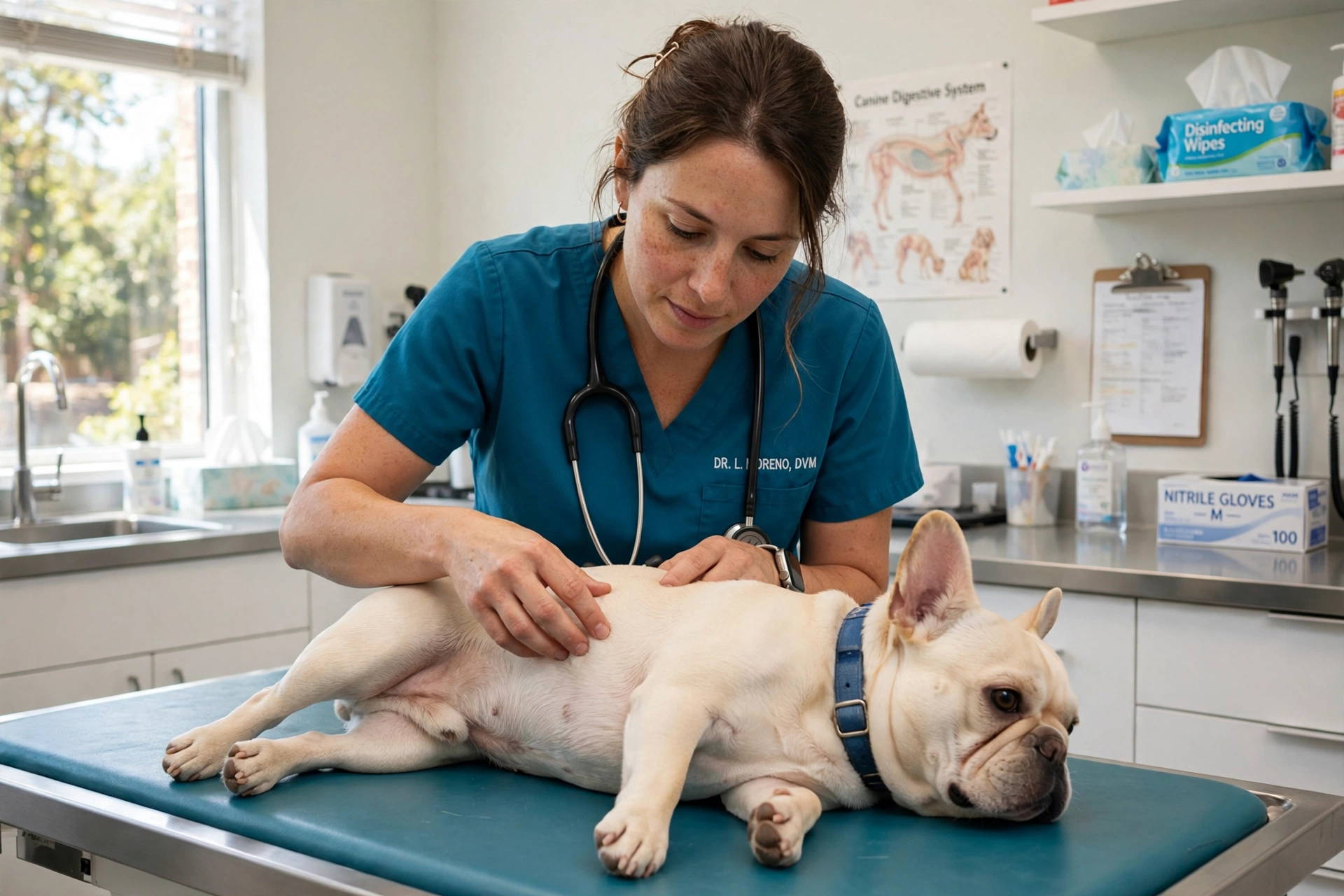
The honest population numbers come from VetCompass, the UK primary care database. In 2013 data covering 2,228 French Bulldogs, enteropathy was the second most common disorder group at 16.7 percent, behind skin disorders at 17.9 percent, and diarrhoea was the second most common specific disorder at 7.5 percent. That cohort was young, median age 1.3 years, so treat the figures as a young-dog snapshot, not a lifetime rate.
A later VetCompass comparison using 2016 data put 2,781 French Bulldogs against 21,850 other dogs. Enteropathy appeared in 14.1 percent of French Bulldogs versus 10.4 percent of the comparison group, an adjusted odds ratio of 1.25. A real increase, and a modest one. Diarrhoea itself was not significantly higher, at 3.8 percent in both groups. The breed excess sits in the broader enteropathy grouping and in airway-linked upper gut disease.
Owner surveys paint a larger but softer picture. In a 2025 German survey of 574 French Bulldogs, owners reported that 67 percent had shown gastrointestinal signs at least once in their lives. Lifetime, owner-reported figures, not vet-confirmed rates.
Quick tip: When a blog quotes a giant percentage, ask one question. Was that all French Bulldogs, or only the sick ones sent to a referral hospital?
Vomiting vs. Regurgitation: The Difference That Changes the Diagnosis
This distinction decides which organ your vet investigates first, so learn it cold. The Merck Veterinary Manual draws the line by effort. Vomiting is forceful. Nausea comes first, with drooling and restlessness, then retching and abdominal contractions push out partly digested material that often smells sour. Regurgitation is passive. No abdominal effort, usually no warning. The dog lowers his head and undigested food slides out, sometimes in a tube shape moulded by the oesophagus.
Coughing or breathing difficulty travelling with the episodes points more toward regurgitation, and in a flat-faced breed that combination carries an extra risk, because material sitting in the oesophagus can slip into the airway. Regurgitation with coughing or laboured breathing is a same-day phone call.
| Feature | Vomiting | Regurgitation |
|---|---|---|
| Effort | Forceful, with retching and belly contractions | Passive, no abdominal effort |
| Warning signs | Drooling, nausea, restlessness first | Usually none |
| What comes up | Partly digested food, fluid, sometimes bile | Undigested food, sometimes tube-shaped |
| Points toward | Stomach, intestines, or a body-wide cause | Oesophagus, reflux, hiatal hernia |
Causes of vomiting reach well beyond the stomach. Merck lists digestive disease, kidney or liver failure, pancreatitis, nervous system disorders, and swallowed irritants or poisons. That wide list is why a vomiting dog gets bloodwork while a regurgitating dog may head toward imaging of the chest and oesophagus. Same puddle. Different map.
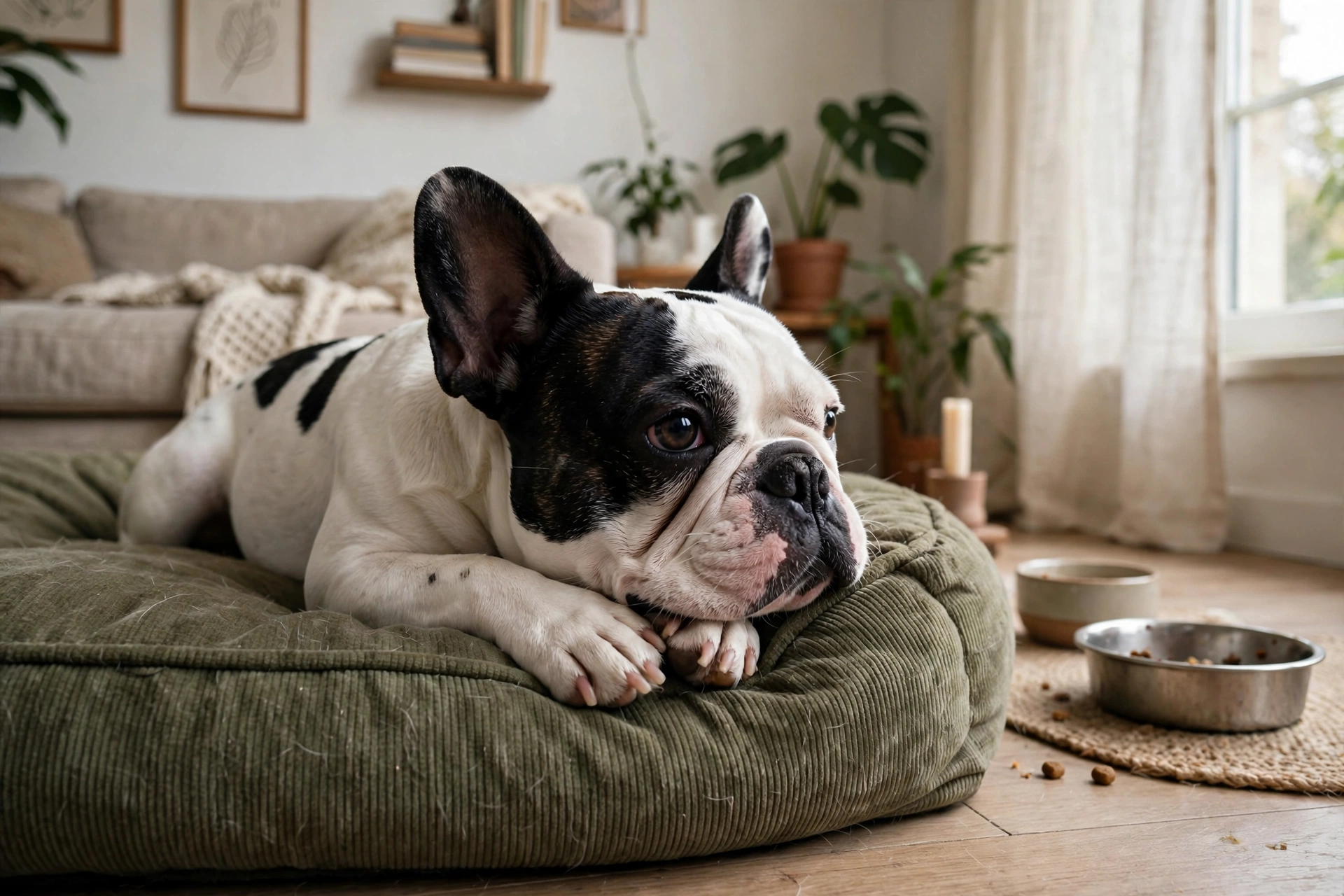
Quick tip: Check for the heave. If the belly pumped before anything came up, write down vomiting. If the food arrived quietly, like a dropped mouthful, write down regurgitation. Your vet will ask.
The Conditions Behind the Signs
Most Frenchie stomach trouble traces back to a short list of conditions, each with its own first test. Chronic signs lasting three weeks or more fall under the umbrella vets now call chronic inflammatory enteropathy, shortened to CIE. A 2026 consensus statement endorsed by the American College of Veterinary Internal Medicine recommends CIE in place of the older term inflammatory bowel disease, because the dog version differs from the human one. CIE is a diagnosis of exclusion: chronic signs, biopsy-confirmed intestinal inflammation, and other causes ruled out first.
Within CIE, the largest group is food-responsive enteropathy, at 50 to 65 percent of CIE dogs, often younger dogs with milder signs who improve within two to four weeks of a proper elimination diet. A smaller group needs glucocorticoids or other immunosuppressants. Drugs are a later step, not the opening move.
Colitis, inflammation of the colon, produces a recognisable pattern. VCA Animal Hospitals describes frequent small stools, straining, mucus, and small amounts of bright red blood near the end. Vomiting appears in fewer than a third of cases, and weight loss is rare. Stress colitis is a leading cause of large-bowel diarrhoea in dogs generally, and simple cases typically settle in three to five days. One type deserves a breed callout. Granulomatous colitis affects French Bulldogs and Boxers, is linked to invasive E. coli in the colon wall, and causes chronic large-bowel diarrhoea with blood and mucus. It needs colonoscopy, biopsy, and culture-guided antibiotics, not a probiotic at home.
Pancreatitis stays on the list with a deliberately limited picture, because no Frenchie-specific incidence was verified for this guide. Think acute vomiting, a hunched prayer posture from abdominal pain, appetite loss, and lethargy. Vets confirm it with exam, a pancreatic lipase test, bloodwork, and often ultrasound, then treat supportively with fluids, anti-nausea medication, and pain control.
Parasites are the impostors. Giardia, whipworms, and Cryptosporidium can mimic food sensitivity so closely that owners swap diets three times while a parasite keeps working. Hence the fecal test first.
| Condition | Typical signs | First test or step |
|---|---|---|
| Colitis | Frequent small stools, mucus, straining, bright red blood | Fecal test, exam, diet history |
| Granulomatous colitis | Chronic large-bowel diarrhoea with blood and mucus | Colonoscopy with biopsy and culture |
| Pancreatitis | Acute vomiting, hunched posture, appetite loss | Lipase test, bloodwork, ultrasound |
| Parasites | Intermittent diarrhoea, weight loss, normal appetite | Fecal exam |
Gas and Flatulence: What Is Normal for a Frenchie
Frenchies have a reputation here, and the mechanism is real even if the legend outruns the data. Air swallowed during obstructed breathing and fast, excited eating moves through the gut and out the back end. Food reaching the colon undigested ferments, and bacteria release more gas. That is the whole honest recipe: swallowed air, fermentation, and diet change.
No study verified for this guide quantified how much gas French Bulldogs produce compared with other breeds. In the 176-dog Italian cohort, flatulence was recorded in only two dogs, almost certainly because owners treat it as background noise. Any site offering a breed gas percentage is guessing.
Gas alone, in a bright dog who eats, drinks, and passes normal stool, is a monitor-at-home sign. It stops being a joke when it arrives with company: straining, blood or mucus in the stool, appetite loss, vomiting, or a tight drum-like belly. Keep a simple two-week log of food, treats, episode times, and stool quality.
Do this, not that:
- Do keep the diet consistent for at least two full weeks before judging it. Do not rotate proteins every few days hunting for a quiet week.
- Do log every treat and chew alongside the kibble. Do not blame the main food while a daily dental chew does the damage.
Red Flags: When Digestive Signs Are an Emergency
Some signs mean the same day. Some mean right now. VCA urgent care guidance sends cases in the same day when a dog has vomited more than twice in 24 hours, is not eating or is lethargic, passes repeated watery stools, or shows blood in the stool. Merck adds the chronic end: vomiting with blood, pain, depression, dehydration, weakness, fever, or weight loss needs a detailed workup.
Emergency now, no waiting:
- Unproductive retching with a swollen, tight abdomen, restlessness, and drooling
- Collapse, trouble standing or walking, pale gums, or severe abdominal pain
- Profuse bloody diarrhoea, or black tarry stool
- A swallowed object or suspected toxin
- Regurgitation paired with coughing or laboured breathing
- A puppy, a senior, or a dog with existing disease who is going downhill
One clarification, stated plainly. French Bulldogs are not a classic bloat breed. Gastric dilatation-volvulus is tied to large, deep-chested breeds, and no source verified for this guide lists the Frenchie as predisposed. But these signs overlap with severe swallowed-air and hernia episodes owners might wave off, and GDV can strike any dog. Unproductive retching plus a tight, swollen belly is never a wait-and-see combination.
Quick tip: Save your emergency hospital’s address in your phone tonight, not during a crisis. An aspirating dog does not leave time for searching.
What the Vet Will Do, and What It Costs in 2026
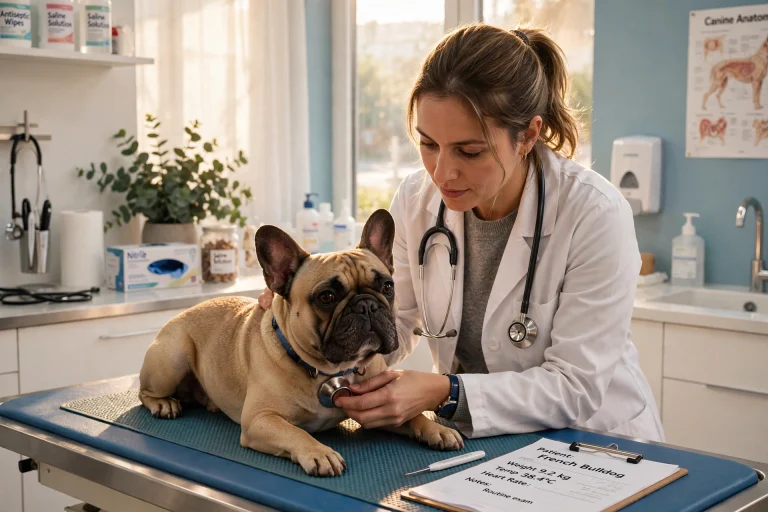
A sensible workup climbs a ladder. History and a hands-on exam first, then a fecal test for parasites and basic bloodwork to screen the organs Merck lists as vomiting causes. For a stable dog with chronic signs, a strict diet trial often comes before advanced imaging. X-rays and ultrasound follow when signs persist. Referral endoscopy with biopsies confirms CIE and granulomatous colitis, and swallowing fluoroscopy finds the sliding hiatal hernia. In the UC Davis study of 11 French Bulldogs with confirmed sliding hernias, chest X-rays alone caught only 3, while fluoroscopy confirmed 10 and showed reflux in all 11. A normal chest X-ray does not close that case.
No breed-specific cost study exists, so these are general US dog ranges for 2026 from published cost compilations. Geography moves them hard.
| Step | Typical 2026 US range |
|---|---|
| Routine vet exam | $70 to $174 |
| Emergency exam fee alone | $100 to $250 |
| Fecal exam | $25 to $55 |
| Basic bloodwork panel | $80 to $200 |
| Abdominal X-rays, 2 to 3 views | $150 to $350 |
| Abdominal ultrasound | $300 to $600 |
| Endoscopy, with or without biopsy collection | $800 to $3,000 |
| Hospitalisation | $200 to $600 per night |
| Full emergency vomiting visit, total bill | $550 to $1,750 |
Read the ladder as a budget map. A first visit that stops at exam, fecal test, and basic bloodwork usually lands in the low hundreds. Endoscopy at a referral centre is the step change, and PetMD’s endoscopy guide notes that biopsy analysis, anaesthesia, and pre-procedure tests may be billed on top.
The Elimination Diet, Done Properly
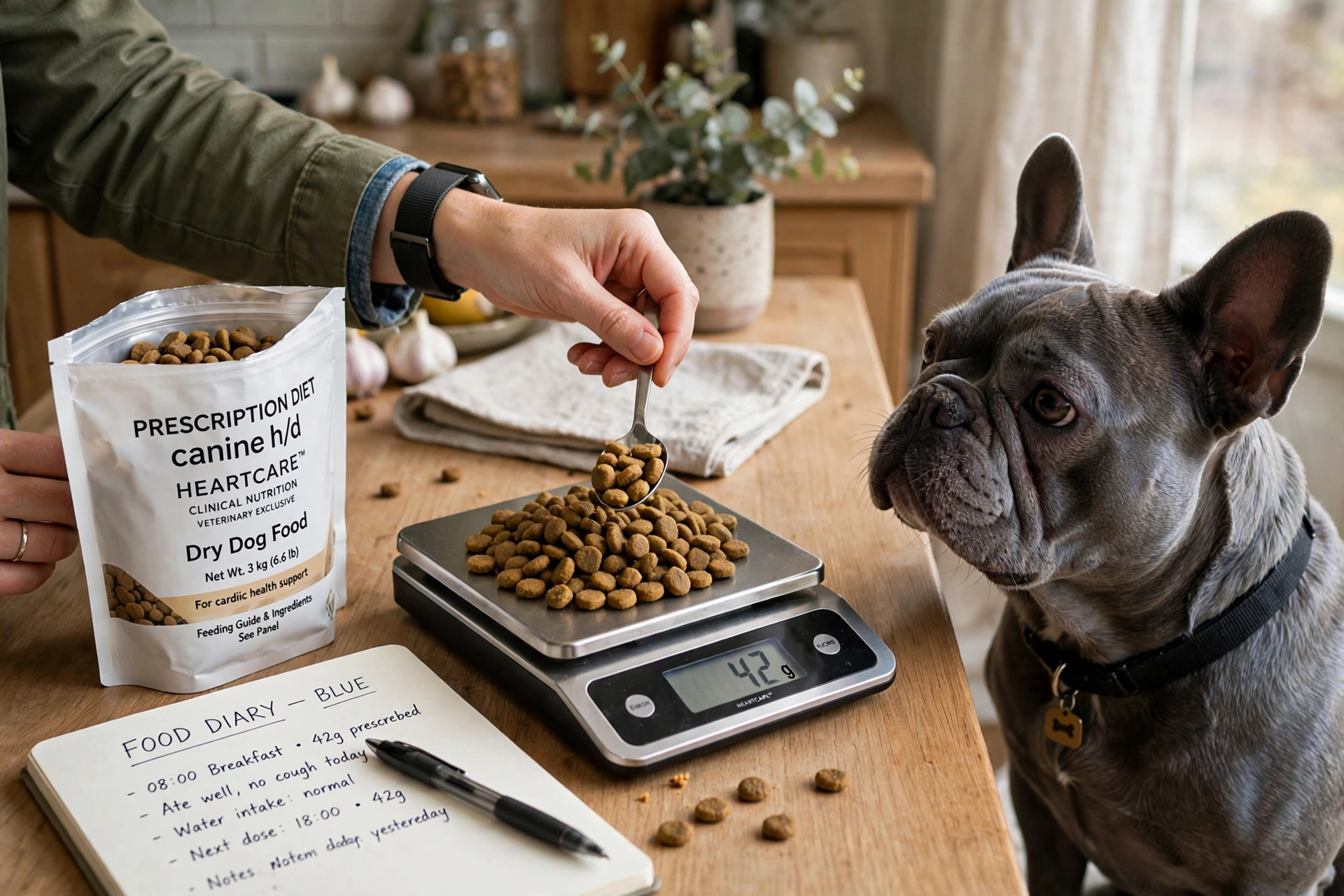
The elimination diet is test and treatment in one, and it only works when it is strict. A proper trial uses a prescription hydrolysed protein diet or a genuinely novel protein and carbohydrate your dog has never eaten, fed exclusively for eight weeks. Nothing else passes the lips. No training treats, no table scraps, no licking the toddler’s plate clean.
The timeline fools people. Gut signs can improve within one to two weeks, yet the allergy trial still runs its full course because skin and ear signs can take eight weeks. After the trial, the original diet goes back in as a challenge. If signs return, allergy to a protein in that diet is confirmed. If a first diet fails, a second trial with a different hydrolysed or novel diet comes before anyone declares the dog non-food-responsive. One failed trial proves very little.
Two shortcuts do not work. Over-the-counter limited ingredient foods lack the cross-contamination controls of prescription diets, so a quiet label is not a clean test. Blood, hair, and saliva allergy panels have not been shown to reliably diagnose food allergy in dogs, which is why specialists do not recommend them. Definitions matter too. A food allergy is an immune reaction to an ingredient, usually a protein, most often shown as itchy skin with gut signs also possible. A food intolerance involves no immune response and typically causes gut signs only. Across all breeds, beef, dairy, and chicken are the most commonly reported food allergens, with no verified Frenchie-specific ranking behind that list. For the skin and ear side, read our guide to French Bulldog allergies.
Elimination trial checklist:
- One prescription diet, agreed with your vet
- A daily ration weighed, not scooped by eye
- Trial-safe treats only, such as pieces of the same kibble
- Every household member briefed, no exceptions
- A daily log of stool quality, episodes, and itch level
- A calendar date circled for the challenge step at week eight
Home Management That Actually Helps
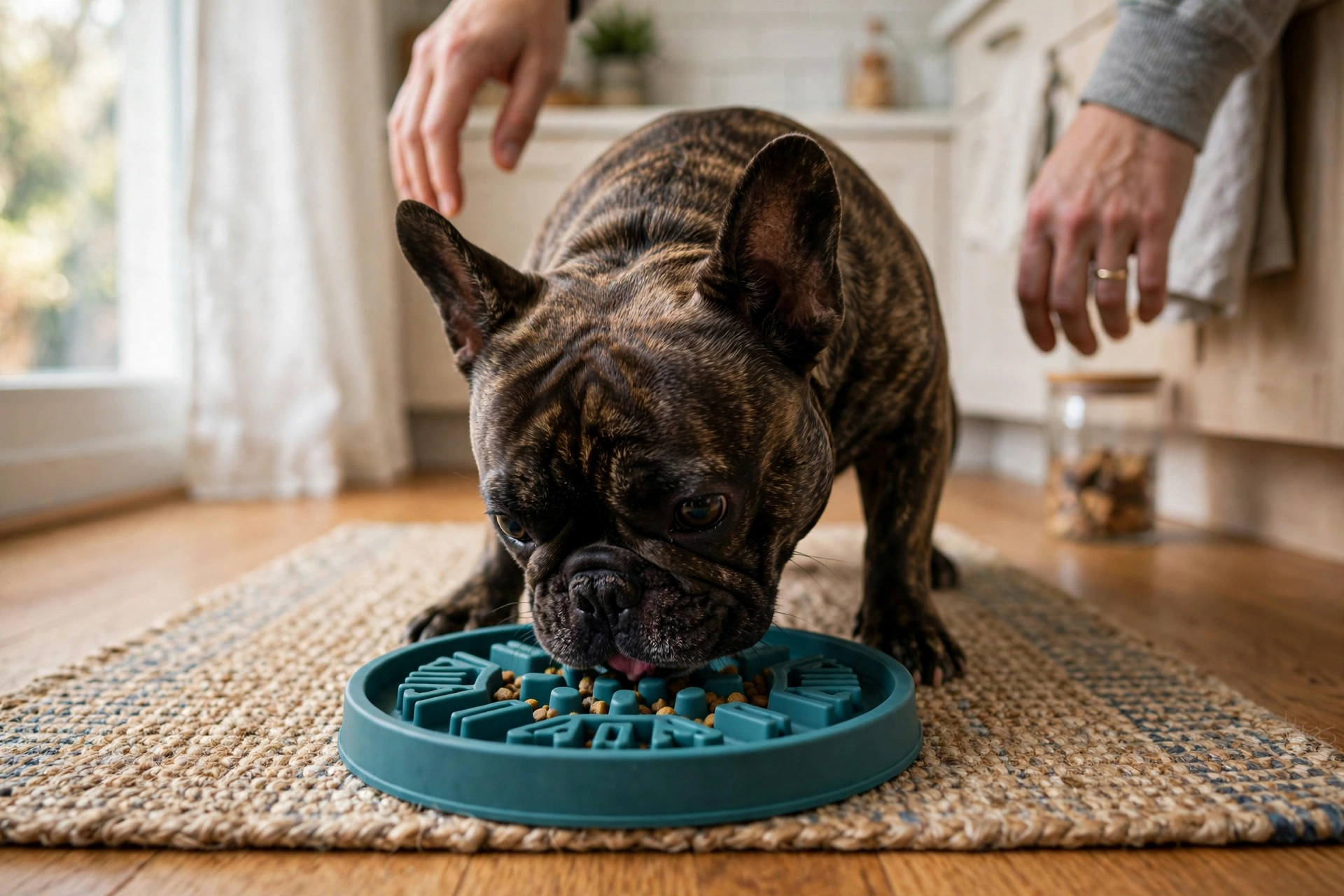
Start with the bowl. Smaller, more frequent meals reduce the load on a stomach that empties slowly and give reflux less material to work with. A slow feeder earns its place for gulpers: it spreads a meal over minutes instead of seconds and cuts the air swallowed along the way. It helps with speed and air. It is not a proven shield against any specific emergency.
Consistency is the unglamorous lever that moves the most. Pick a diet, feed it on a schedule, weigh the portion, and hold treats to a short approved list. Table-scrap roulette undoes careful weekday feeding in a single evening. Weight belongs here too. Heavier French Bulldogs in the older airway studies carried worse digestive sign scores, and extra weight worsens the breathing that drives the whole chain.
Probiotics need a careful sentence, because this is where dog blogs overclaim. The 2026 ACVIM consensus position, as reported on its release, is that one multi-strain formulation, the De Simone Formulation sold as Visbiome Vet, is the only probiotic currently backed by randomised clinical trial data for canine CIE, with evidence strong enough to consider it after diet trials. That narrow endorsement does not extend to every powder or chew on the shelf. Ask your vet whether that formulation fits your dog’s case.
Prescription gut diets become an ongoing line item. One published estimator puts a Royal Canin veterinary gastrointestinal dry diet at roughly $80 a month for a 20 pound adult and $108 for a 30 pound dog. Check the live price before you budget.
Quick tip: Change one thing at a time, and give it two weeks. Swapping food, adding a probiotic, and starting a new chew on the same Monday teaches you nothing.
The Breathing and Gut Loop: Could Airway Treatment Help the Stomach?
For the Frenchie whose regurgitation tracks with snoring and exercise intolerance, the gut and airway workups belong in the same appointment. The strongest treatment data are old but consistent. In the Poncet work summarised by a 2022 review, adding medical therapy aimed at the oesophagus and gut substantially improved prognosis and long-term outcome in over 70 percent of brachycephalic dogs treated for airway disease. The protocol paired surgery with omeprazole and a prokinetic, plus other gut medication graded to inflammation severity. That figure belongs to surgery plus gut medication together. Surgery alone was never the tested claim.
Newer data are smaller. In the UC Davis pH study, four of the 11 French Bulldogs were re-monitored two to four months after airway surgery, and acid exposure improved numerically in all four, without statistical testing. Promising, not proven.
Quick tip: Bring your two-week sign log to any BOAS assessment, and ask for digestive signs to be worked up in parallel. Our surgery decision guide, Does My French Bulldog Need BOAS Surgery?, covers the questions to bring.
Frequently Asked Questions
Why does my French Bulldog throw up white foam? White foam usually means an empty stomach or refluxed fluid, often after a long gap between meals or a reflux episode. A single episode in a bright dog is a log-and-watch event. Foam plus repeated vomiting, blood, or breathing trouble is a same-day vet visit.
Is it normal for a Frenchie to fart all day? Some daily gas fits the breed’s air-swallowing habits. All-day gas paired with loose stool, mucus, straining, or appetite change is not a personality trait. Log food and stool for two weeks, then take the pattern to your vet.
How long should I try a new food before switching again? Give a standard diet change at least two full weeks unless signs worsen sharply. A diagnostic elimination trial runs longer: gut signs often improve in two to four weeks, while a food allergy trial runs eight weeks before the challenge step.
Does my Frenchie need a probiotic? Not automatically. Current consensus supports considering one specific multi-strain formulation for chronic inflammatory enteropathy after diet trials, based on randomised trial data. That backing does not transfer to probiotics in general.
When do gut signs become a CIE workup? At three weeks. Signs lasting three weeks or more, especially with weight loss or blood, meet the working threshold for chronic inflammatory enteropathy, diagnosed by ruling out parasites, infection, and organ disease and confirming intestinal inflammation. That starts with your regular vet, not another bag of food.

Final Word
French bulldog digestive issues reward the owner who slows down and observes. Learn the heave that separates vomiting from regurgitation, keep the two-week log, run the fecal test before the diet swap, and treat the airway and the gut as one system. Most of these dogs improve with a strict diet trial, steady portions, and a vet who sees the whole picture. Save this guide for the next 2 a.m. puddle, and send it to the Frenchie owner currently blaming the kibble.