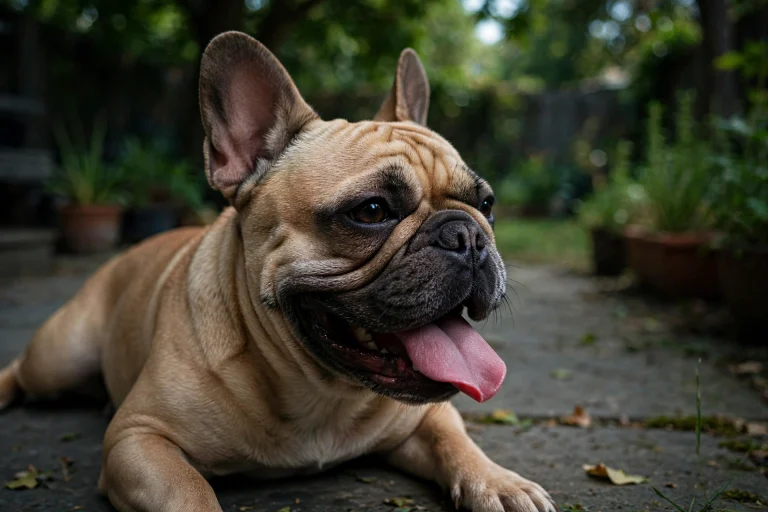
Does My French Bulldog Need BOAS Surgery? (2026 Guide)
TL;DR
- Does my French bulldog need BOAS surgery? Start with a grade, not a guess. Dogs graded 2 or 3 on the 3-minute RFGS breathing test are clinically affected and should have a serious surgery discussion with their vet. Grades 0 to 1 usually mean monitoring, weight control, and re-testing every two years.
- Full airway surgery costs $1,500 to $5,000 in the US in 2026. Widening the nostrils alone runs $500 to $2,500.
- Anesthesia is less frightening than the rumors suggest. A 55,019-case study found crude mortality of 0.82% in flat-faced breeds versus 0.65% in others, a gap that disappeared once researchers accounted for how sick the patients already were.
- Recovery means 2 to 3 weeks back to normal life and 6 weeks for full healing. The first 48 hours need the closest watch.
- Insurance usually covers the surgery, but only if you enrolled before any breathing symptom landed in the vet records. One major insurer, Nationwide, excludes it as a congenital condition.
Not Every Snoring Frenchie Needs Surgery
Your vet just said the words “BOAS surgery” and your brain translated them straight into a $5,000 invoice and your dog under anesthesia. Take a breath. Not every Frenchie who snores needs an operation. The surgeons who do this work every week will tell you the decision is more structured than it feels in that exam room, and this guide walks you through the exact framework they use.
Here is the part nobody says out loud. Some owners rush into surgery their dog did not need yet. Others wait years while their dog quietly struggles, because the snoring got normalized somewhere along the way. Both mistakes come from the same place: deciding on vibes instead of a grade. Let us fix that.
And here is what makes this decision different from most vet decisions. It is not just medical. It is a $1,500 to $5,000 financial call, made under time pressure, about a dog who cannot tell you how bad it feels. That combination is exactly why a framework beats a feeling.
Does My French Bulldog Need BOAS Surgery? The Grade-by-Grade Answer
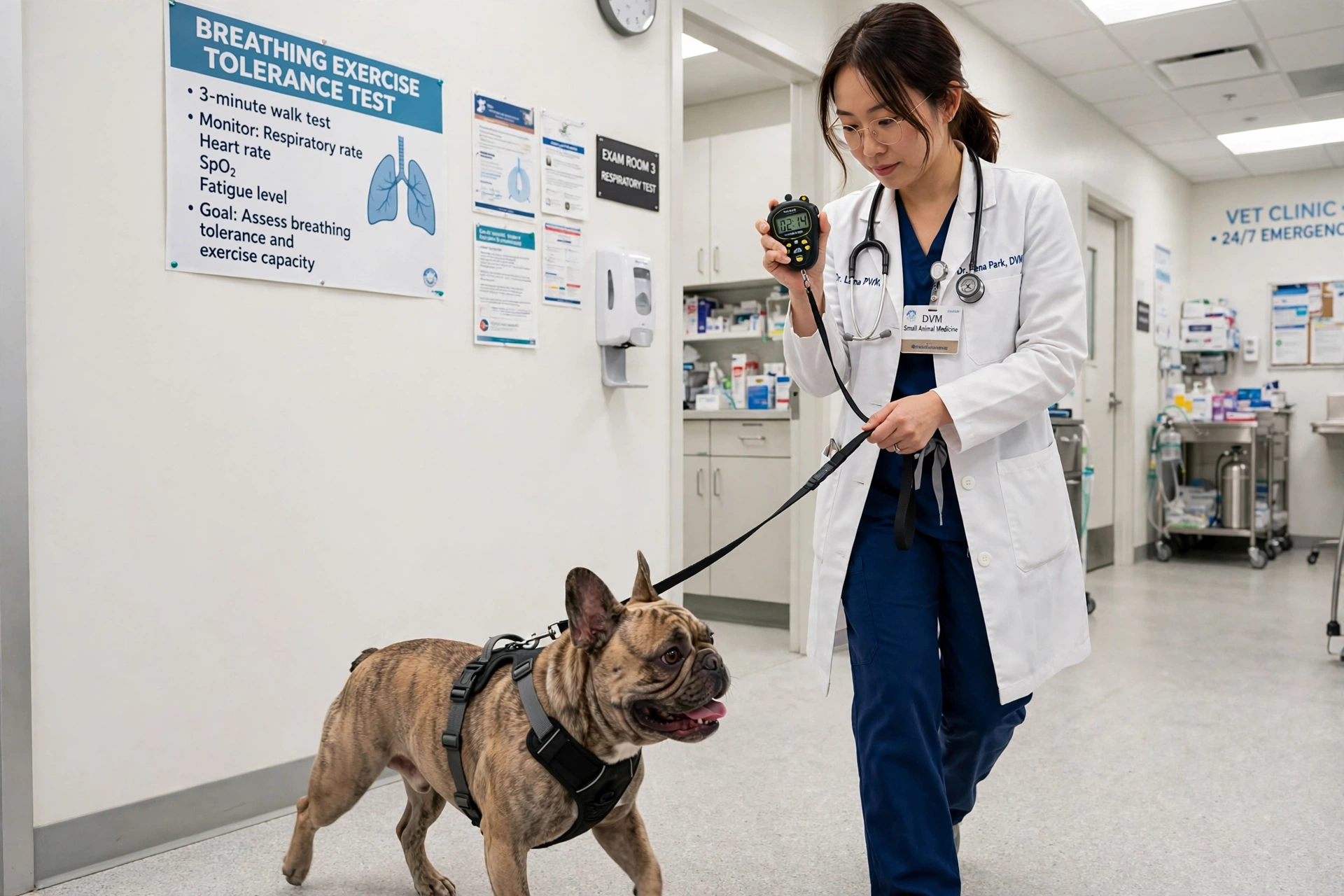
The single most useful step is getting your dog graded. The Respiratory Function Grading Scheme is a 3-minute trot test, available in the US through the OFA, that sorts dogs into grades 0 to 3. Breed-club clinics typically charge $60 to $70 plus a $15 OFA registration fee. Think of it as the lab work before the prescription. No responsible surgeon plans an operation without knowing the grade.
| Grade | What it means | What usually comes next |
|---|---|---|
| 0 | No respiratory signs | Monitor, re-test every 2 years |
| 1 | Mild signs, exercise unaffected | Weight control, monitor, re-test |
| 2 | Clinically affected, moderate | Serious discussion about surgery |
| 3 | Clinically affected, severe | Surgery usually recommended |
A 2026 Kennel Club study of 1,917 French Bulldogs found 15.6% graded 2 or 3 (PLOS ONE). Two honest caveats travel with that number. The dogs were UK Kennel Club registered and tested voluntarily, so the real-world figure is likely higher. And grades describe populations well; whether one grade predicts an individual pet’s future is still debated among vets.
We explain exactly what happens during the 3-minute test in our complete BOAS guide.
Do this, not that:
– Do get the grade before deciding anything. It is a 3-minute test that costs less than a bag of premium kibble.
– Do re-test every two years. BOAS is progressive, and a grade 1 at age two can become a grade 2 at age four.
– Do not decide on snoring volume alone. Some loud snorers grade 1. Some quiet dogs grade 2.
– Do not skip the test because your dog “seems fine.” Most owners of affected dogs never notice the problem.
What Your Vet Is Actually Weighing
The grade is the backbone, but your vet is also reading the dog in front of them. These are the signs that push a grade-2 discussion toward yes and make a grade-3 recommendation firm.
Exercise intolerance. Your Frenchie quits two minutes into a walk, plants their feet, and refuses to continue. That is not stubbornness. The airway cannot keep up with the body.
Fainting or near-fainting. A dog that collapses or goes wobbly with excitement or exertion is in serious territory. This is the sign that ends debates.
Sleep that never looks restful. Gasping awake, sleeping propped upright against the couch arm, or choosing to doze sitting up because lying flat narrows the airway further.
Heat episodes. A Frenchie that struggles on merely warm days is showing you the airway has no reserve left. Flat-faced dogs already run hot. A dog hitting distress at 75 degrees is telling you something.
Regurgitation and gagging. The same suction that strains the airway pulls stomach contents upward. Frequent foam-vomiting or throat-clearing after meals often travels with worse grades.
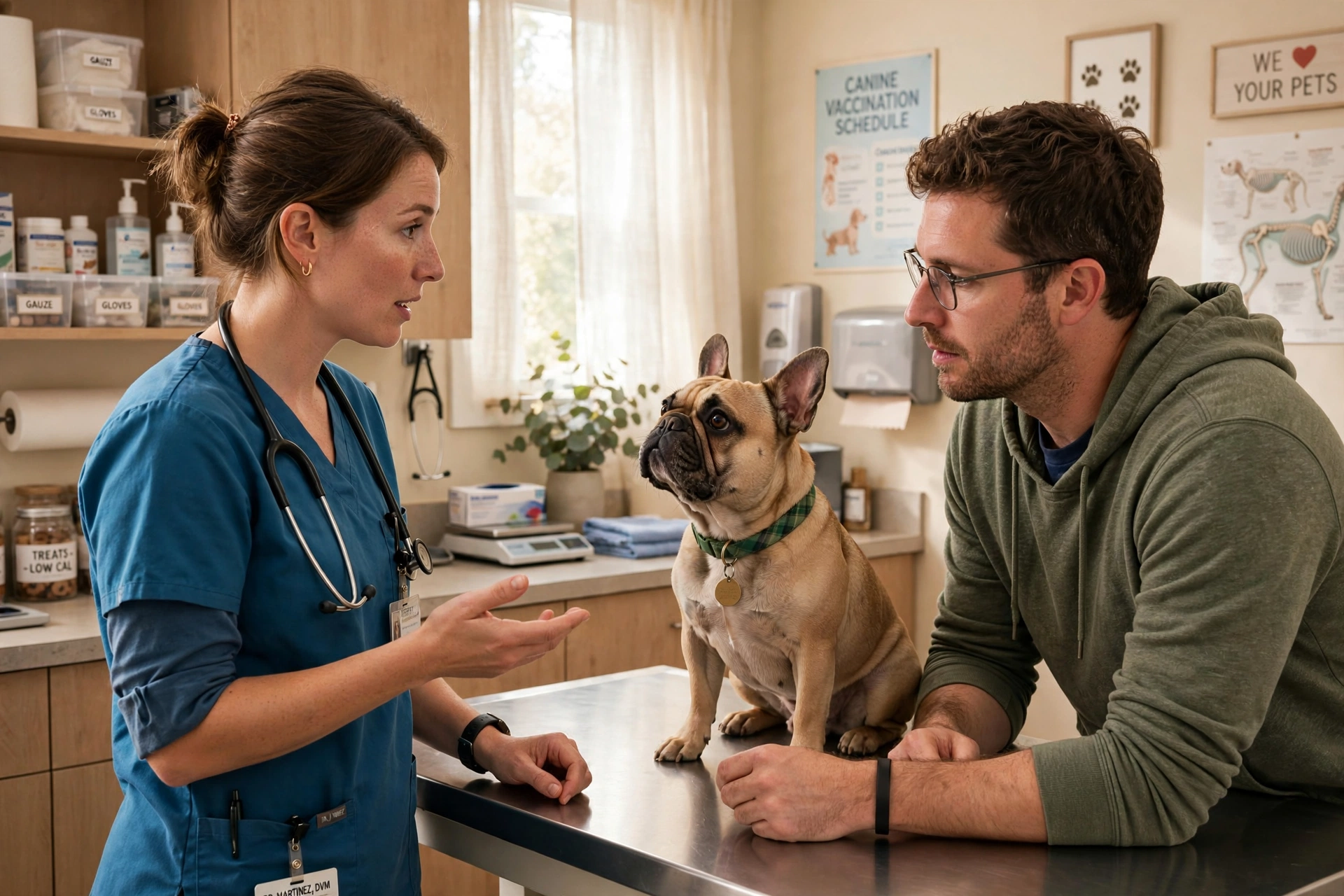
Quick tip: Film 60 seconds of your dog breathing at rest, 60 seconds after a short walk, and 60 seconds asleep. Vets consistently say video beats description. Bring all three clips to the appointment.
What the Surgery Actually Involves
Short version, because the depth lives in our BOAS guide: most operations combine two or three fixes under one anesthesia. The surgeon widens the pinched nostrils, trims the overlong soft palate so it stops draping over the windpipe, and, when needed, removes the everted throat pouches that years of straining pulled inside out. That last step divides surgeons. Only about 40% of cases show clear improvement from it alone, so some do it routinely and others only when the pouches are clearly part of the problem. Your surgeon should explain which combination your dog needs and why.
Surgery day, in sequence:
- Morning drop-off, pre-surgical bloodwork, and a final airway listen.
- Sedation, then full anesthesia with a breathing tube placed.
- The airway procedures themselves, usually 45 to 90 minutes of operating time.
- Wake-up under close watch. This is the highest-attention part of the day.
- Afternoon or next-morning discharge with medications and a recheck schedule.
Most owners describe the same shock in reverse. The dog that comes home breathes quieter than the dog they dropped off. The change is often audible within days.
What BOAS Surgery Costs in 2026
Current US pricing, from 2026 cost data:
| What’s being fixed | Who does it | Typical range |
|---|---|---|
| Nostrils alone | GP or surgeon | $500–$2,500 |
| Nostrils + soft palate | General practice | $1,500–$3,500 |
| Full correction | General practice | $2,000–$3,500 |
| Full correction | Board-certified surgeon | $3,000–$5,000 |
| Complex cases, long hospitalization | Specialist center | $5,000+ |
| Diagnosis + surgery bundle | Teaching hospital | $2,800–$3,500 |
The teaching-hospital row deserves a second look. The University of Florida’s program averages $2,800 to $3,500 for the whole package, with residents operating under board-certified supervision. If you live near a vet school, call them before you sign anything elsewhere.
One real case for calibration: a California Frenchie owner faced a $4,800 bill, and pet insurance covered roughly $4,400 of it. That is the difference timing makes, and it leads directly to the insurance section below.
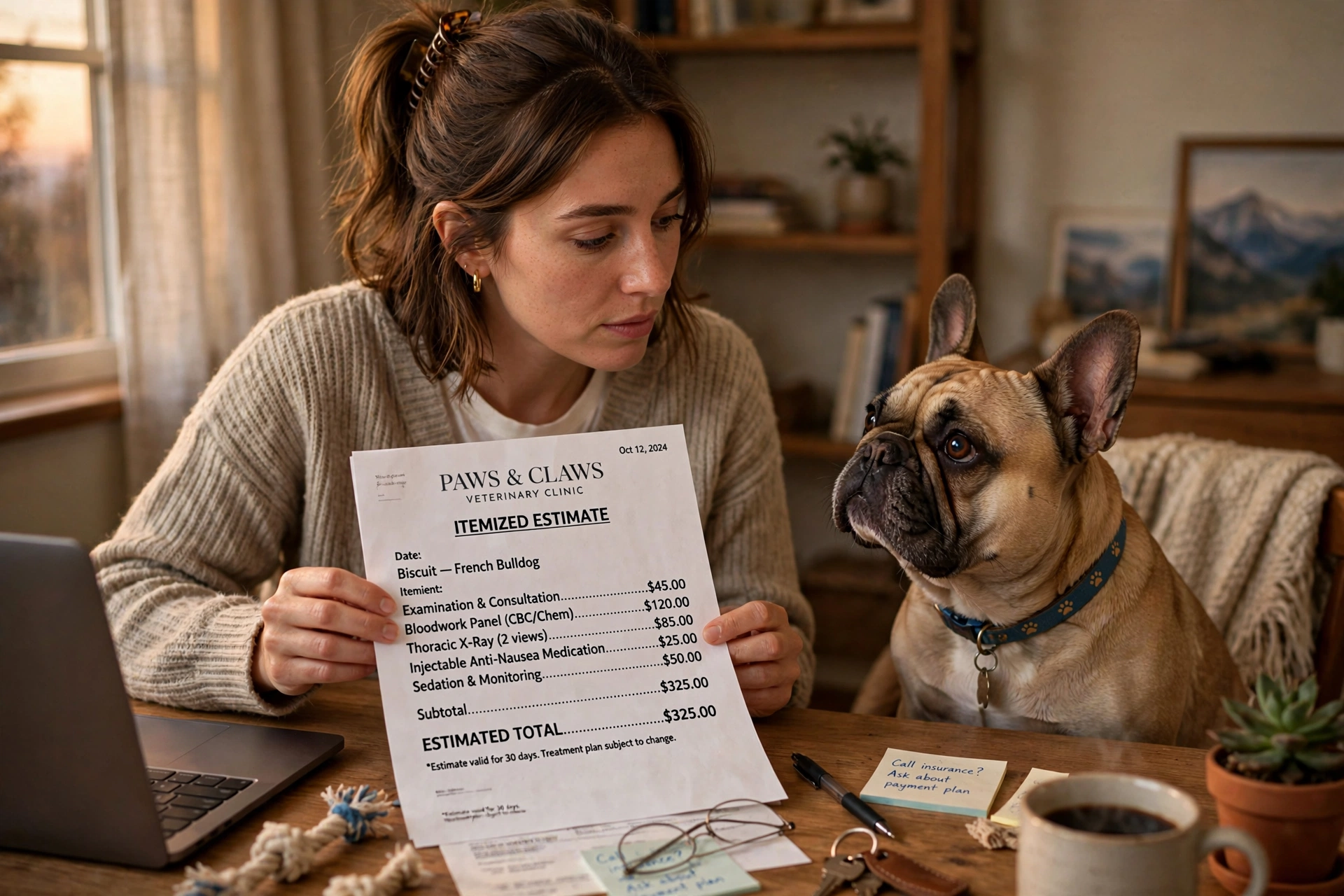
Quick tip: Get the estimate itemized before comparing quotes: anesthesia, monitoring, hospitalization, rechecks. A $2,500 quote without overnight monitoring and a $3,500 quote with it are not the same operation.
The Anesthesia Question, Answered With Numbers
This is the fear that keeps owners up at night, so here are numbers instead of reassurance. A 2025 multicentre study of 55,019 dog anesthetics found crude mortality of 0.82% in brachycephalic breeds versus 0.65% in everyone else (Animals). Then the researchers adjusted for ASA status, which is anesthesia-speak for how sick each patient already was going in. After that adjustment, the extra risk was no longer statistically significant. In plain words: much of the scary headline comes from flat-faced patients arriving sicker, not from the anesthesia being dramatically more dangerous in a well-run case.
Published BOAS surgical mortality sits between 0 and 3.3%, with post-op complications in the 6.5 to 26.2% range. One referral-center study reported 31%, but referral centers receive the hardest cases by definition, so treat that as the ceiling, not the norm.
What separates a safe setup from a frightening one is boring and specific. Pre-oxygenation before induction. Anti-reflux medication around the procedure. Minimal heavy sedation. Recovery with the neck extended and the tongue forward. A nurse stationed cage-side through wake-up with re-intubation gear ready. That is what the specialist’s fee buys, and it is worth asking for by name.

Checklist: ask before you book
– How many BOAS procedures do you perform per year?
– Who monitors my dog during recovery, and where exactly?
– What is your complication rate for this surgery?
– If the airway obstructs overnight, can you place a temporary tracheostomy here?
– Will my dog recover in an ICU or a staffed ward, and who is there at 3 a.m.?
Recovery: The First 48 Hours and the 6-Week Horizon
The first two days carry the highest risk. Swelling peaks, most airway emergencies happen inside this window, and the quality of overnight monitoring matters more than any other single factor. After that the horizon is straightforward: 2 to 3 weeks back to normal life, up to 6 weeks for full tissue healing. Most dogs go home the same day or the next morning, and owners often say the breathing sounds dramatically better within days.
The home routine follows standard nursing protocols. Soft or wet food for about two weeks, rolled into little meatballs that slide down easier than a bowl of mush. Short leash walks of five to ten minutes, twice a day. No running, no rough play, no stairs if you can avoid them. A calm, cool room. Mild throat-clearing and gagging are normal at first. Our BOAS guide lists the red flags that mean calling the vet immediately.
You will measure recovery by sound. The cone clunks against every doorframe for two weeks. Buy the soft kind if you value your shins and your furniture. Then one morning you notice the house went quiet overnight, and you actually check that the dog is still breathing because the snoring stopped. That silence is the payoff. (SustainableVet’s recovery walkthrough is worth bookmarking for the week-by-week detail.)
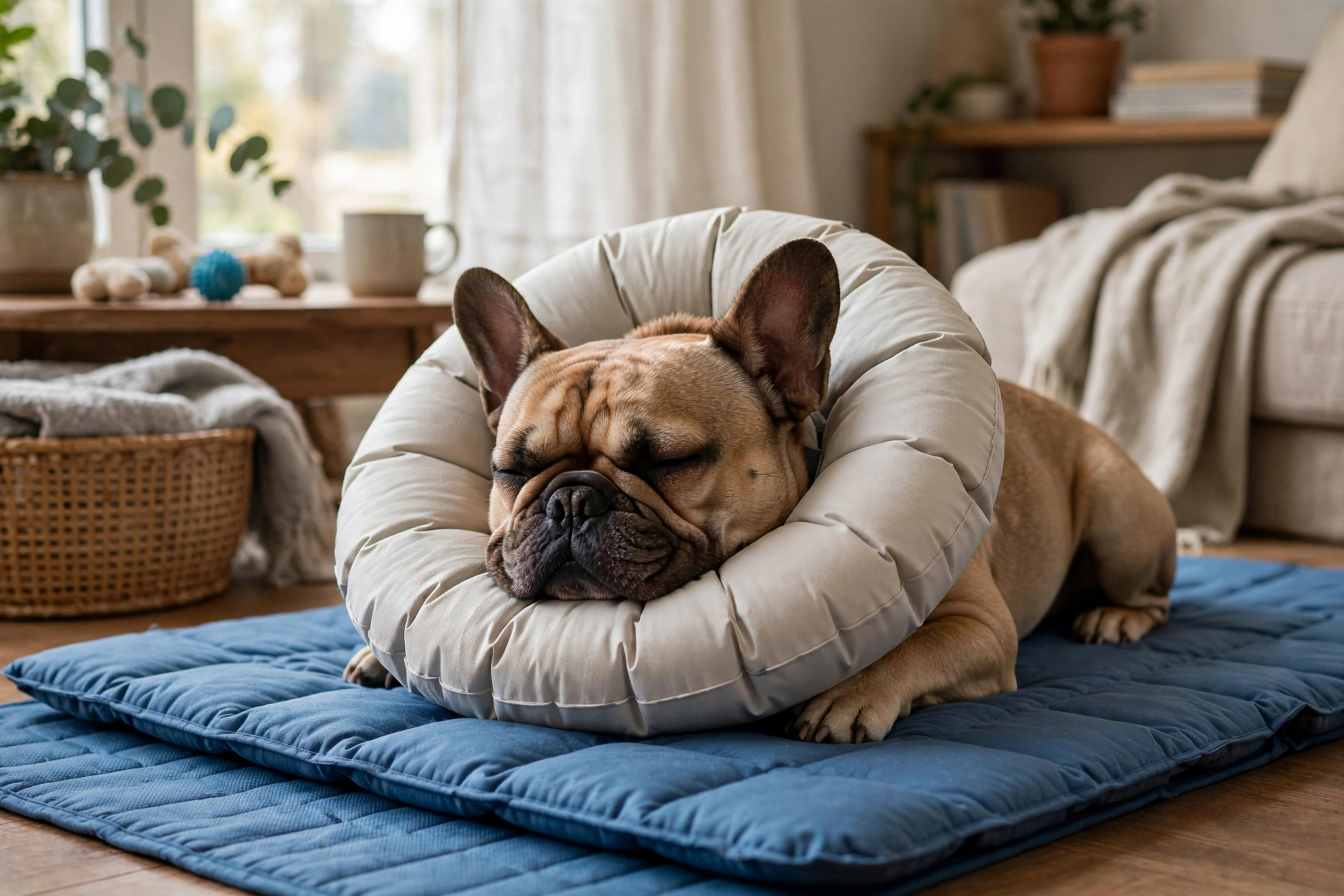
Recovery-kit checklist:
– Soft e-collar or inflatable cone
– Y-front harness (retire the collar for good)
– Cooling mat for warm days
– Wet or soft food, two weeks’ worth
– Rectal thermometer: know your dog’s normal, 100 to 102.5°F
– Your surgeon’s emergency number, on the fridge
When the Answer Is “Not Yet”
Surgery is not always the right call right now. Honest vets say so, and you should know the scenarios where waiting, or doing something else first, is the better medicine.
Grade 1 with mild signs. Monitoring, weight control, and a re-test in two years is the standard path. Operating on a dog that is coping well buys risk without much benefit.
The senior dog with comorbidities. Age, heart disease, or advanced laryngeal collapse tilt the risk side of the scale. Sometimes the kinder plan is management: lean weight, heat discipline, a good harness. A good surgeon will say so out loud.
The overweight dog. This one comes first because it is fixable. Even half a kilo of excess weight measurably narrows the airway, and research puts overweight dogs at roughly 1.8 times the odds of BOAS. Some “surgical candidates” grade back down after a proper diet. Surgery on an overweight Frenchie is surgery with the odds tilted the wrong way.
The recommendation that came too fast. If your gut says the surgery pitch arrived before the workup did, get a second opinion. A board-certified surgeon’s assessment costs a fraction of the operation and either confirms the plan or saves you thousands.
Do this, not that:
– Do treat weight loss as the first intervention, not an afterthought.
– Do get a second opinion when the recommendation feels rushed.
– Do not let “he’s always breathed like this” decide anything. That sentence sits behind most late diagnoses.
– Do not confuse a quiet dog with a comfortable one. Some severely affected dogs simply stop trying.
Choosing the Right Surgeon
This decision matters as much as the surgery decision itself. A board-certified surgeon charges more for full correction, $3,000 to $5,000 versus $2,000 to $3,500 at a general practice, and does this operation weekly instead of occasionally. For airway work, repetition is safety.
The laser-versus-scalpel question comes up constantly, so here is the honest state of play. A 2007 study of 62 cases found no long-term outcome difference between laser and traditional soft-palate surgery. More recent retrospective data found fewer major complications with laser or vessel-sealing devices than with old cut-and-sew. The Animal Medical Center treats laser and vessel-sealing as roughly equivalent, and both preferable to cut-and-suture. Surgeon skill outweighs the tool. But all else equal, ask what they use and why.
If you still need the grading test done, the OFA’s assessor listings show approved examiners by state. Many surgeons want a current grade before they will even schedule.
The 5 questions that matter:
1. How many BOAS surgeries did you perform last year?
2. What is your complication rate, and your mortality rate?
3. Laser, scalpel, or vessel-sealing, and why do you prefer it?
4. What does overnight monitoring look like here, specifically?
5. What would make you tell me *not* to do this surgery?
Frequently Asked Questions
Can BOAS surgery wait? Sometimes. A stable grade-1 dog can be monitored with re-tests. A grade-3 dog with fainting episodes should not wait. Every heat season and every respiratory infection is a roll of the dice. The grade plus the trend, meaning whether it is worsening year over year, is what your vet uses to answer this.
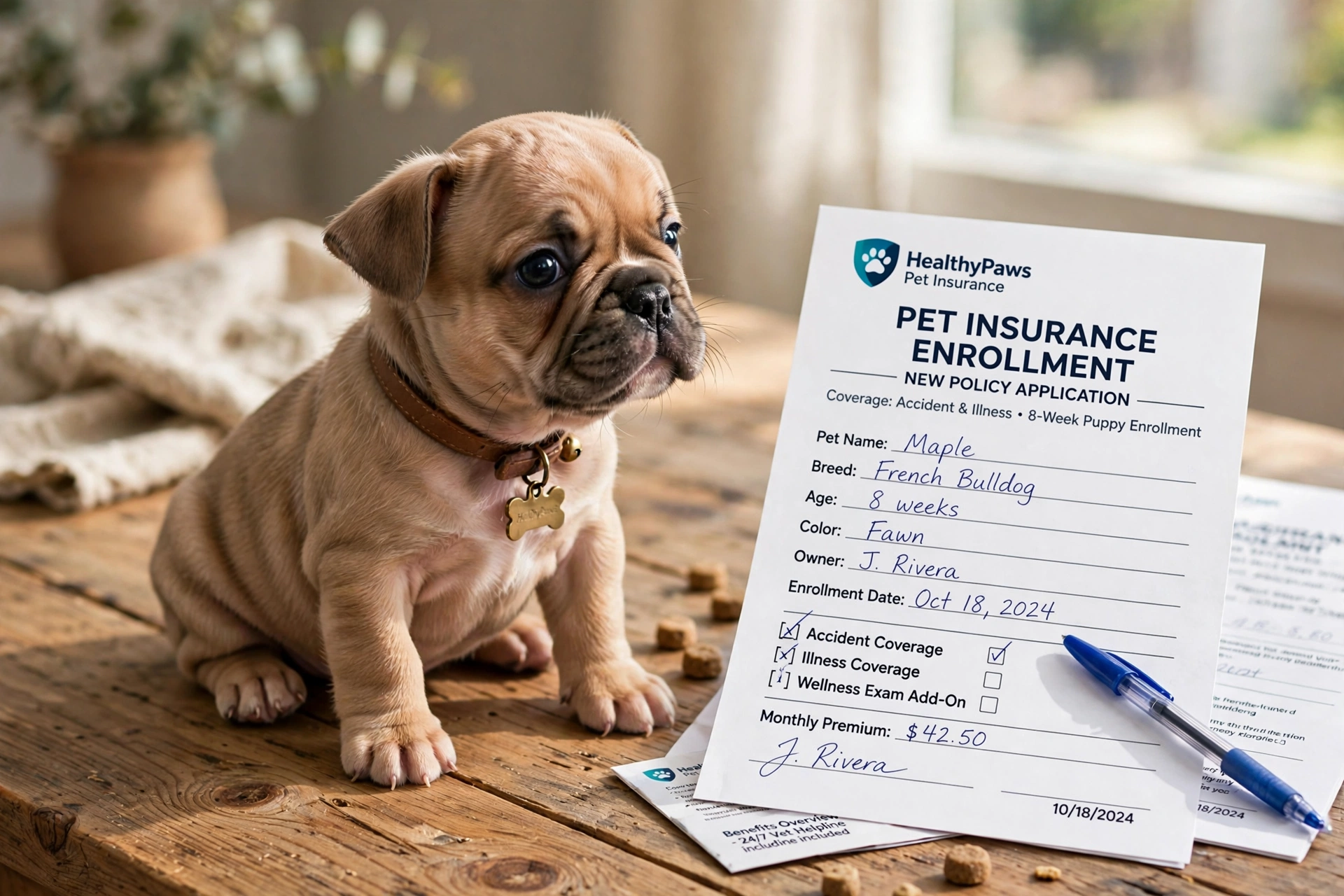
Will insurance cover it? Usually yes, if you enrolled before any breathing symptom appeared in the vet records, and “symptom” can mean a vet once wrote “snoring” in the notes. Frenchie premiums run roughly $70 to $90 a month. The big exception is Nationwide, which treats BOAS as congenital and does not cover the surgery. Enroll puppies at 8 weeks, before any vet has documented a sound.
Does my dog need all three procedures? Not always. Nearly every surgical candidate gets the nostrils widened. Most get the soft palate trimmed. The throat-pouch removal is the debated one. Only about 40% of cases show clear improvement from that step alone, so some surgeons do it routinely and others only when the pouches are clearly part of the problem. Your surgeon should explain which combination your dog needs and why.
What if I can’t afford it? Start with the free interventions: get the weight ideal, switch to a harness, manage heat ruthlessly. Then call the nearest veterinary teaching hospital. Bundled prices are often the lowest available, and they perform this surgery constantly. Some nonprofits and breed-specific rescues maintain emergency medical funds. And if surgery is truly out of reach, excellent management still buys a far more comfortable life than neglect.
Will my Frenchie breathe normally after? Better, not perfect. The narrow windpipe cannot be widened, so expect dramatically easier breathing with some residual noise. Not Labrador lungs. Most owners describe the change as their dog seeming comfortable for the first time.
Does surgery fix snoring completely? Usually it reduces it a lot, sometimes to near silence. But the goal was never silence. It was unlabored breathing. A dog that still snores softly yet plays, sleeps flat, and handles a warm day is a success.
Final Word
So, does my French bulldog need BOAS surgery? If the grade is 2 or 3 and the signs are limiting your dog’s daily life, the honest answer is usually yes, and the real numbers on cost, anesthesia, and recovery are far less frightening than the rumors. If the grade is 0 or 1, the honest answer is usually not yet, with weight control and re-testing doing the heavy lifting.
Save this for the vet visit and bring the videos. Give that snoring frog-dog an extra treat tonight. The fact that you read this far means he landed with the right human.
*Not veterinary advice. If your dog is unwell, please see your veterinarian.*