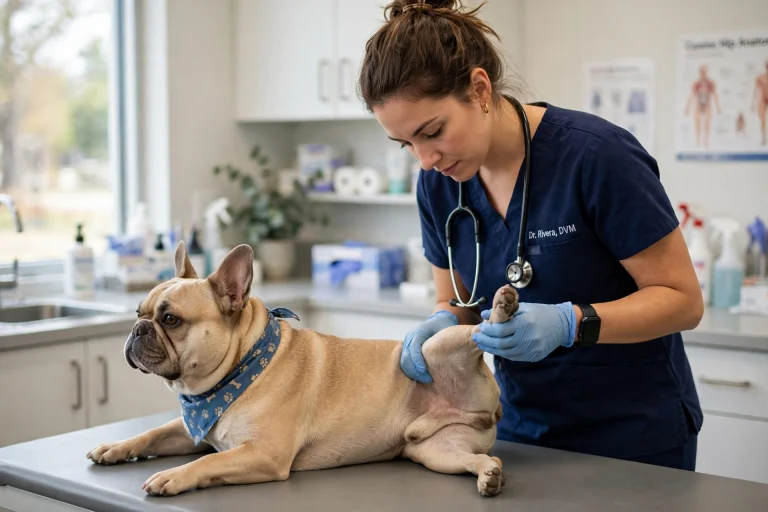
Why Is My French Bulldog Itching So Much?
TL;DR
- If you are asking why is my french bulldog itching, start with the body map, not the allergy shelf. Tail base points to fleas, ear edges and elbows to scabies, bald patches on a young dog to Demodex, belly and paws after something new to contact irritation.
- You cannot rule out fleas by looking. A single bite can itch for several days, and fleas only stay on the dog while they feed.
- In VetCompass data, 19.7 percent of French Bulldogs had a skin disorder recorded in one year. Check ears and folds before you blame food.
- A negative skin scrape does not rule out scabies. Vets may treat on suspicion when the pattern fits.
- Spreading hot spots, skin odor, sores, ear discharge, or a puppy losing hair in patches needs a vet now.
The Scratching Starts at 2 A.M.
It starts small. A hind foot thumps the floorboards at night. Then your Frenchie is chewing a paw on the rug, rubbing his face along the sofa, and scooting his rear across the carpet after dinner. By week’s end there are scabs and a new bald patch.
Itch is a symptom, not a diagnosis. Vets read where it started, what changed in the house, and what the skin looks like, then run cheap tests first. Fleas, mites, contact irritants, and dry skin get the full treatment here. Allergies, fold infections, and ear infections get short sections with links to their full guides.
Scratching also creates its own damage. The American Kennel Club describes hot spots as areas of skin inflammation and bacterial infection that begin as a small red patch and spread fast, because licking and chewing set up a cycle of itching and scratching. Any cause here can end in a hot spot.

Start With the Map: Where the Itch Sits Points to the Cause
Before you buy anything, write down three facts. Where does your dog scratch most. When did it start. What changed in the week before it started. Bring that note to the vet. Distribution is diagnostic information.
| Where it shows | First suspect | The giveaway clue |
|---|---|---|
| Middle of the back, tail base, rear legs | Fleas or flea allergy | Itch out of proportion to any fleas found |
| Ear margins, elbows, hocks, belly, chest | Scabies | Sudden, intense itch after boarding or new dog contact |
| Face and front legs, patchy hair loss, young dog | Demodex | Hair loss first, itch mild or absent |
| Belly, groin, paws, chin, armpits | Contact irritant | Started 24 to 48 hours after something new |
| Inside face, nose, tail, or vulvar folds | Fold infection | Red, moist, sour-smelling skin |
| Ears, with head shaking | Ear infection | Discharge, odor, or one-sided shaking |
| All over, white flakes, little redness | Dry skin | Worse in winter or after frequent baths |
French Bulldogs bring extra skin risk to this map. In O’Neill et al. 2021, a VetCompass study of 2,781 French Bulldogs under UK primary care, grouped skin disorders were recorded in 19.7 percent of the breed in one year, with 2.24 times the adjusted odds of non-French Bulldogs, and demodicosis carried 4.63 times the adjusted odds. Our French Bulldog health problems hub sets those figures alongside the breed’s other common disorders.
Quick tip: Photograph each itchy spot today. Dated photos show the vet whether a patch spread better than any description can.
Why Is My French Bulldog Itching at the Tail Base? Fleas and Flea Allergy
Start here even if you have never seen a flea on your dog. Flea allergy dermatitis is an allergic reaction to proteins in flea saliva. VCA Animal Hospitals is direct about the part owners miss: dogs with this allergy do not have to be infested to be itchy, because a single bite can cause itching for several days. Fleas stay on the dog only while they feed, so a dog can be miserable and still look flea-free.
The body map gives it away. Itching and hair loss show most often from the middle of the back to the tail base and down the rear legs, a pattern vets call the flea triangle. Dogs with other allergies tend to be highly sensitive to flea bites, and the allergy can develop at any age.
Diagnosis is usually clinical. The pattern plus a fast response to strict flea control often settles it, and formal allergy testing is only needed in some cases. Treatment has one core: strict, year-round flea control on every pet in the house, using modern oral or topical prescription products, plus control of fleas in the home. Adult fleas on the dog are only about 5 percent of the total flea population in the house. The rest are eggs, larvae, and pupae in carpets and bedding, which is why new fleas keep appearing for weeks after starting control. For a bad flare, the vet may add a short course of corticosteroids at the lowest effective dose, or use oclacitinib or lokivetmab, with antibiotics if the skin is infected. Desensitisation shots are not considered a successful treatment for flea allergy in dogs and are rarely used. Killing starts fast, within 3 hours for Simparica and 4 hours for NexGard in manufacturer data, but the itch lags: bites already taken itch for days.
Checklist: the flea check at home
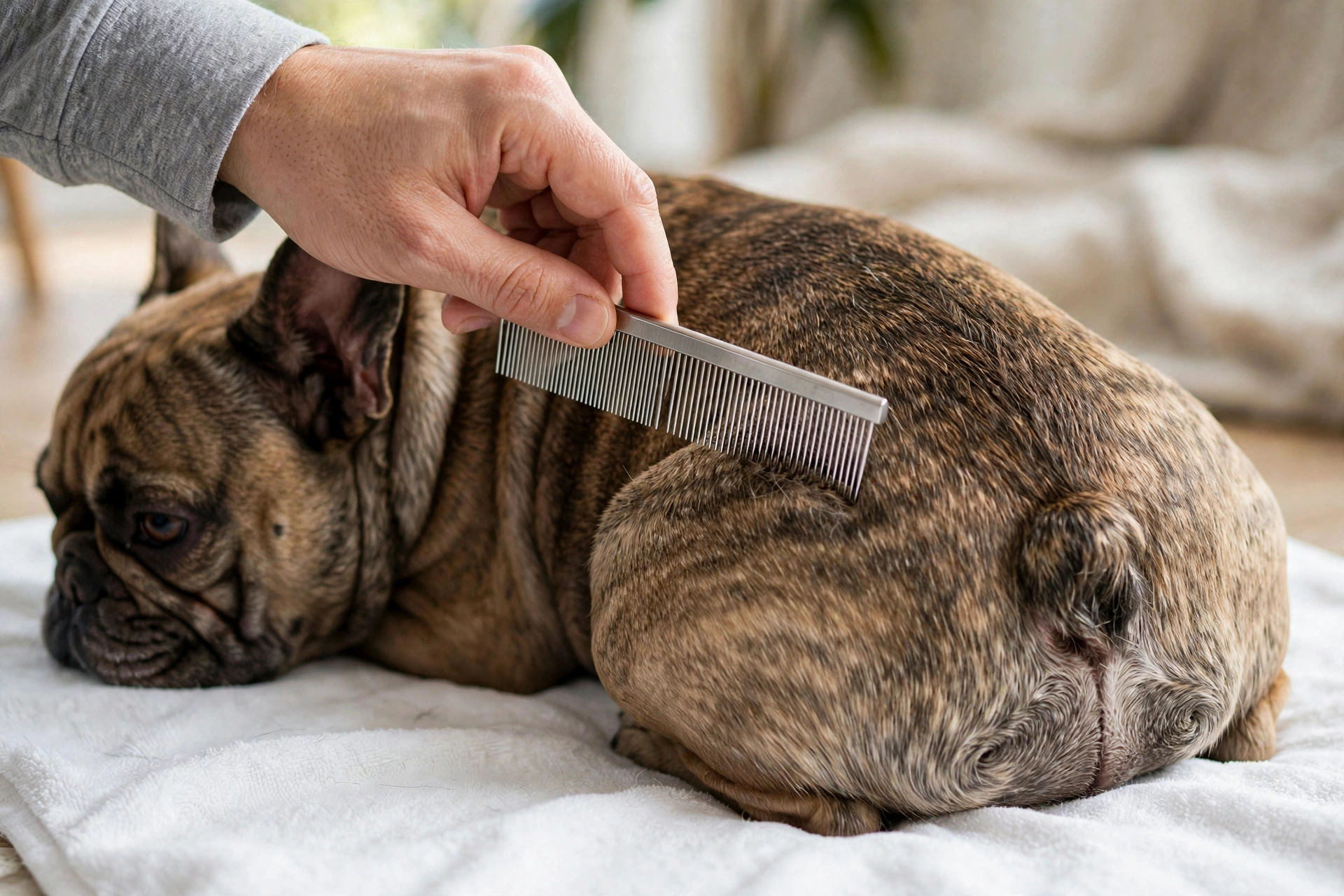
- Part the fur at the tail base under bright light and run a fine flea comb through it
- Tap the debris onto a damp white towel. Red-brown smears point to flea dirt
- Write down the last flea control date for every pet in the house, not just the Frenchie
Two Mites, Two Very Different Itches: Demodex vs Scabies
Demodex first. *Demodex canis* lives in hair follicles, is found on the skin of virtually all dogs, and passes from mother to puppies in the first days of life. It is not contagious. Disease happens when the immune system cannot keep mite numbers down, most often in dogs under 12 to 18 months old. French Bulldogs are genuinely predisposed, with 4.63 times the adjusted odds in the VetCompass breed study. The honest catch: Demodex usually causes patchy hair loss without severe itching. Localised cases show one to five small bald areas, often around the lips, eyes, and front legs. When a Demodex dog itches hard, a secondary skin infection is the usual reason. Generalised cases reach the paws and can add crusts, greasy skin, swollen lymph nodes, lethargy, and fever. In an adult dog, new generalised Demodex needs a search for the underlying illness weakening the immune system.
Scabies is the opposite temperament. *Sarcoptes scabiei* var *canis* spreads readily by contact and through shared combs, brushes, towels, and blankets. Its hallmark is intense itching, likely a hypersensitivity reaction to mite products. Lesions typically start on the belly, chest, ears, elbows, and hocks, with ear margins a classic first site, then generalise if untreated. Expect papules, thick yellow crusts, redness, and hair loss. People in close contact can pick up a transient itchy rash, a detail worth telling the vet.
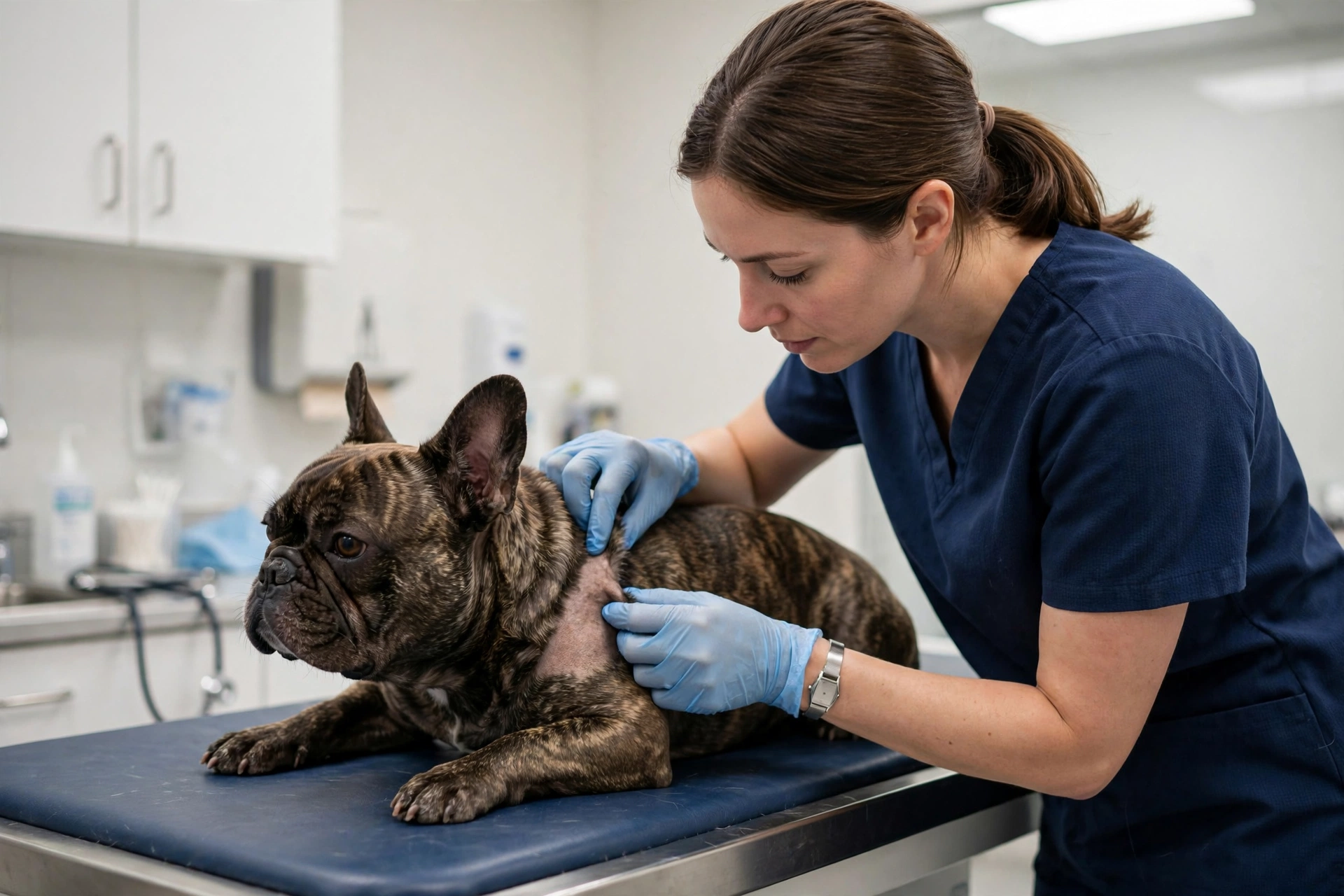
Diagnosis splits the two as well. Demodex is confirmed with deep skin scrapings, and treatment continues until at least two consecutive scrapings, a month apart, come back negative. Scabies scrapings from the ears, elbows, and hocks are often negative even in genuinely infested dogs. The Merck Veterinary Manual warns that suspected scabies with no mites found still warrants a treatment trial. Treatment for both mites now leans on the isoxazoline family, the same drug class sold for flea and tick control. Treat every in-contact dog for scabies, wash bedding and tools, and expect itch to briefly worsen as mites die. One warning matters most: corticosteroids are contraindicated in demodicosis, so a vet will scrape a patchy puppy before reaching for steroid relief. Cheyletiella, called walking dandruff, causes back scaling with itch from none to severe.
Do this, not that:
- Do tell the vet if people in the house are itching too. Do not leave that detail out.
- Do book recheck scrapes for Demodex until two come back negative a month apart. Do not stop treatment when the fur starts growing back, and do not use leftover steroids on a patchy puppy while you wait.
The Itch That Started After Something New: Contact Irritants
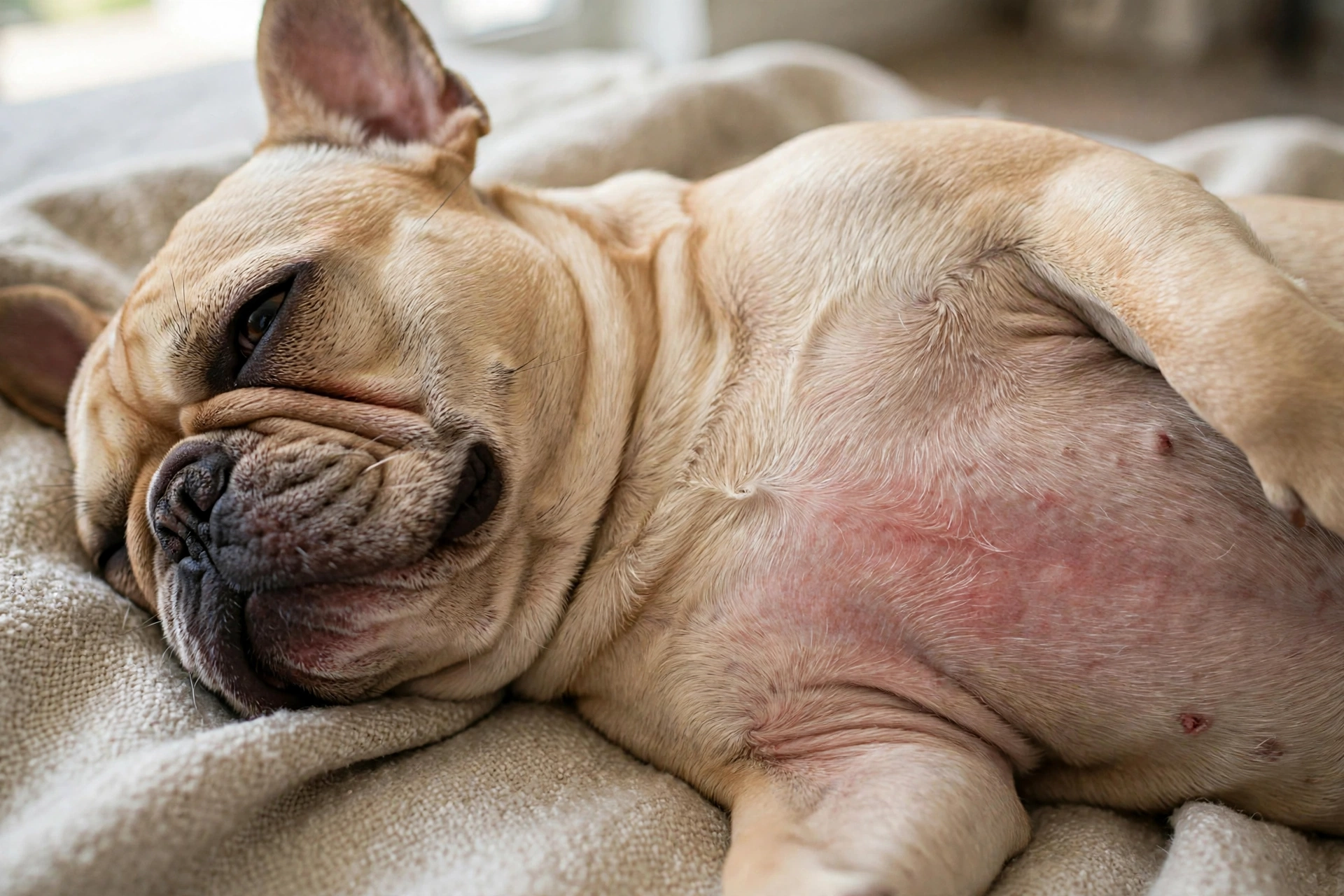
Contact dermatitis is a local reaction where skin touched an irritant or, less often, an allergen. PetMD makes the distinction that matters: unlike environmental allergies that cause generalised itching, contact dermatitis typically appears where the skin made contact with the trigger. It is relatively uncommon in dogs, because fur protects most of the body. In a Frenchie, the exposed sites are the thin-furred ones: between the toes, on the muzzle, the belly, and the groin.
Translate that map into your house. Belly and groin itch after lying on a treated lawn or on bedding washed in a new detergent. Paw itch after walks on a fertilised verge. Triggers named in veterinary sources include plants, detergents, mulch, rugs and carpet, fabrics, plastics, concrete, medications, chemicals, and fertilisers.
Timing is the strongest clue you own. Symptoms usually appear within 24 to 48 hours of contact. Mild cases improve in 3 to 7 days once the trigger is removed, and signs can resolve in about 7 to 10 days if the irritant is avoided. Vets confirm the pattern by withdrawal and rechallenge: remove the suspect item for about a week, and if the skin settles then flares when the item returns, you have your answer. The vet will still run the rule-outs first, cytology, a scraping, and fungal testing when the picture does not fit.
Treatment starts with removal, not medication. Take the trigger out of the dog’s life, then bathe with a hypoallergenic or medicated dog shampoo to lift residue off the skin. Prescription anti-itch medication comes next if the itch stays high, and antibiotics or antifungals only when cytology shows a secondary infection.
Quick tip: Change one thing at a time. Swap the detergent, shampoo, and bed in one weekend and you will never learn which item caused the flare.
Dry Skin, Winter Flakes, and the Over-Bathing Trap
Flakes change the logic. The Merck Veterinary Manual treats flaking, called seborrhea, as a sign rather than a diagnosis: increased scale formation, sometimes with greasiness and secondary infection. Most dogs have the secondary form, meaning an underlying disease is driving the scaling. Merck gives owners a clean fork in the road. A lack of itching helps exclude allergies, scabies, and other itching diseases. Flakes with little itch point toward dryness or hormonal and internal causes. Flakes with significant itch send the vet back to allergies, scabies, and fleas.
The simple dry skin pattern is specific. White flakes in the coat, a dull feel to the fur, mild low-level itch spread evenly, worse in winter when heated indoor air drops humidity. No focal sores. No odor. No bald patches. Grooming habits feed it: frequent bathing, harsh shampoos, and human hair products strip the protective oils and damage the barrier. Merck’s hard rule deserves its own line: never use a shampoo formulated for people without the consent of your veterinarian.
Support for true dryness is plain work. A medicated or antiseborrheic shampoo, used as directed, can reduce bacteria and yeast on the skin surface, the amount of scale and grease, and the level of itching. Emollients after bathing reduce water loss. A gentle bath can be comfort care while you sort the cause, not a treatment for fleas, mites, or infection.
Persistent flakes earn a work-up instead of another moisturiser: skin scraping, fungal and bacterial cultures, flea combing, and, when needed, biopsy and blood and urine tests, per Merck. Intense itch, focal redness, odor, sores, or broken skin has left dry skin territory.
Do this, not that:
- Do book a work-up if flakes persist after you stop over-bathing. Do not keep rotating shampoos for months without one, and do not assume winter is the whole answer if sores or odor appear.

Check the Folds: A Short Stop, Then the Full Guide
Lift the nose rope, part the face folds, and check the tail fold and vulvar fold. Fold dermatitis comes from closely apposing skin surfaces rubbing, trapping moisture, and getting too little ventilation, with microbial overgrowth in the fold. In a VetCompass study of over 900,000 dogs, the one-year prevalence in French Bulldogs was 2.69 percent, the second highest of any breed, and facial folds accounted for 56.9 percent of French Bulldog cases. Recorded signs included reddened skin, moistness, bad odor, and pain.
Treatment removes surface microbes and debris, resolves infection, and controls moisture, usually with topical antimicrobial care. Surgery is rare, used in only 1.54 percent of UK primary care cases. Cleaning technique and the daily routine live in our full guide to French Bulldog skin fold infections.
Checklist: the 60-second fold check
- Part each fold in good light and look for redness, moisture, or debris
- Smell the fold. A sour odor means overgrowth, not just dirt
- Note pawing or scooting that points to the fold
Check the Ears: The Frenchie Disorder Hiding Inside Itching
Now the ears, because owners report this one as itching: the dog scratches at an ear and shakes his head on the rug. In the VetCompass breed study, otitis externa was the single most common specific disorder in French Bulldogs, recorded in 9.4 percent in one year. Signs include head shaking, red and inflamed ears with a bad odor, and black or yellowish discharge.
The vet examines the canal with an otoscope to check the eardrum and look for a foreign body, then examines ear material under the microscope. Cytology is essential to choosing the right medication. VCA warns against over-the-counter drops without a diagnosis: the wrong drug with a ruptured eardrum risks hearing loss. Left untreated, ear disease can damage the eardrum and hearing. Cleaning method and treatment detail live in our guide to French Bulldog ear infections.
Quick tip: Note which ear. Sudden one-sided head shaking after a walk puts a foreign body on the vet’s list and earns a same-day call.
When It Might Actually Be Allergies
If parasites, mites, contact triggers, folds, and ears have been ruled out, or the itch is seasonal and recurrent and centred on the paws, face, ears, armpits, and belly, with paw-licking and repeat skin and ear infections, allergy moves to the top of the list. VCA notes that allergic dogs may scratch all over but especially at the armpits, belly, and ears, that signs usually start between 6 months and 5 years of age, and that food allergy, parasites, and infections need to be eliminated before a diagnosis of atopy can be made. French Bulldogs carry the predisposition, with allergic skin disorder at 7.68 times the adjusted odds in VetCompass data. Allergy is diagnosed last, by exclusion. The full work-up, food trials, and long term management live in our guide to French Bulldog allergies.

What the Vet Will Do, and What It Costs in the US in 2026
Expect pattern first, then targeted cheap tests. The vet examines the skin and records lesion type and distribution, the same map you noted at home. A scraping checks for mites. Cytology, a tape strip, impression smear, or swab under the microscope, checks for bacteria, yeast, and the inflammatory cells that mark true infection, and that result decides antibiotic versus antifungal versus shampoo-only care. Flea combing checks for fleas and flea dirt.
Costs are set by weight band and test, never by breed. CareCredit, using Synchrony data, puts a routine or sick exam at $56 to $129 nationally, and flea and tick prevention at $29 to $66 per month. One real clinic list, Cane Bay Veterinary Clinic in South Carolina, effective March 2026, lists a sick exam at $74 and skin or ear cytology at $80. Read those as anchors, not a national quote: no authoritative national price for a skin scrape was found for this guide.
For the Frenchie weight band, Simparica for dogs 22.1 to 44 pounds was $27.93 for one chew and $139.63 for six at HardyPaw. NexGard for dogs 24.1 to 60 pounds was $167.89 for six chews at Chewy. Apoquel 16 mg tablets ran $3.07 to $3.25 per tablet, with monthly cost set by the prescribed dose, and Apoquel is not for dogs under 12 months.
Mite treatment is usually the same isoxazoline flea product your dog may already take, so the extra costs are the exam, scrapes, cytology, and any antibiotics. Routine care that keeps flea control current sits inside the wider routine in our complete French Bulldog owner’s guide.
Quick tip: Bring the map note, dated photos, and a list of every product that touched your dog in the last month. That context can save a second visit.
Which Vet Visit Does This Itch Need?
Watch at home, with a stop rule. Mild itch with dry flakes only, no redness, no odor, no sores, and no hair loss patches, with your dog eating and sleeping normally, can be watched for a few days. Reverse the suspected change and keep folds clean and dry. A contact flare already fading once the trigger is removed fits here too. The stop rule is plain: any itch that intensifies, spreads, breaks skin, or is still present after one to two weeks is no longer a watch-at-home problem.
Book a routine appointment this week. Itch persisting beyond one to two weeks, itch that keeps returning, or patchy hair loss on the face and front legs of a young dog belongs here. So does flaking that does not respond when you stop over-bathing, flaking with greasiness or odor, recurrent ear scratching without discharge, and any itch after flea control has lapsed.
Same-day or urgent care. A hot spot that is spreading, oozing, painful, or enlarging needs care today. So do foul odor from the skin or folds, pus, yellow crusts, sores, or swelling. Put hair loss with sores or thickened skin in this tier, along with sudden severe itch with crusting at the ear margins, elbows, and hocks, especially after boarding or new dog contact, or when people in the house are itching too. Ear discharge, a painful ear, or sudden one-sided head shaking also earns a same-day call. Any itch with lethargy, fever, appetite loss, or swollen lymph nodes goes today. Facial swelling, hives with breathing difficulty, vomiting, or collapse is an emergency.
Checklist: before you call
- Where the itch started, and where it is worst now
- The date it started, and what changed in the house that week
- Flea control product and last dose date for every pet
Frequently Asked Questions
Why is my Frenchie itching but I cannot find any fleas? That pattern fits flea allergy well. Fleas stay on the dog only while feeding, and a single bite can itch for several days. Absence of visible fleas does not rule fleas out. Comb the tail base over a damp white towel, and check whether prevention has lapsed on any pet in the house.
Can scabies spread to me or my other dogs? Yes. Scabies spreads between dogs by contact and through shared brushes, towels, and bedding, and people in close contact can develop a transient itchy rash. Treat every in-contact dog, wash bedding and tools, and mention any human itching when you book.
How long until flea control stops the itch? Killing starts within hours, within 3 hours for Simparica and with over 99 percent effectiveness at 8 hours for NexGard in manufacturer studies. The itch lags behind. Bites already taken itch for days, and fleas hatching indoors keep emerging for weeks, so strict control on every pet has to run without gaps while the home cycle breaks.
Can I use my own shampoo on my dog? No. Merck’s rule is to never use a shampoo formulated for people without your veterinarian’s consent. Human products strip protective oils and damage the skin barrier.
When is itching an emergency? Facial or muzzle swelling, hives with breathing difficulty, vomiting, or collapse is an emergency. A spreading, painful hot spot, a foul smell from the skin, ear discharge with pain, or itching with fever and lethargy needs same-day care.
Final Word
Most itchy Frenchies are not a mystery once you read the map, check the tail base, lift the folds, and look in the ears before blaming food. If you are still asking why is my french bulldog itching after a week of honest checks, take the notes and dated photos to your vet and let a scrape and a cytology slide settle it. Save this page for the next 2 A.M. scratching session. Your dog gets sleep. So do you.