IVDD in French Bulldogs: Spine Problems, Signs & Prevention
TL;DR
IVDD in French Bulldogs (intervertebral disc disease) is the breed’s most common neurological disorder, accounting for 45.5% of neurological cases seen in Frenchies. A spinal disc degenerates and presses on the cord, causing pain, wobbliness, and in severe cases paralysis. More than half of surgical Frenchies have another episode, usually at a different disc. Mild cases get strict crate rest; dogs that cannot walk or keep worsening need surgery. Paralysis with loss of deep pain is a surgical emergency with a 48-hour clock.
Fine at Breakfast, Dragging His Legs by Dinner
Your Frenchie was fine at breakfast. By dinner he is dragging his back legs across the kitchen floor. That is the nightmare version of IVDD in French Bulldogs, and for this breed it is not rare: Frenchies are among the highest-risk breeds on the planet, and they get it young.
This guide covers what the disease is, the grade-by-grade signs, the crate rest versus surgery decision, 2026 costs, and the honest truth about prevention. It sits alongside our French Bulldog health problems hub. Read the red flags section now, while your dog is healthy. At 11 p.m., you will not have time to research.
IVDD in French Bulldogs: What the Disease Actually Is
Think of each spinal disc as a jelly donut between two vertebrae: a tough outer ring (the annulus fibrosus) and a gel center (the nucleus pulposus) that absorbs shock every time your dog jumps or lands. IVDD is what happens when that donut fails and disc material presses on the spinal cord or nerve roots. PetMD’s neurology guide describes the result plainly: pain, weakness, and in severe cases paralysis. Vets split disc failure into two types.
| Hansen Type I | Hansen Type II | |
|---|---|---|
| What happens | The gel center bursts through a torn outer ring | The outer ring itself slowly bulges over months or years |
| Onset | Sudden, often after a jump or impact | Gradual |
| Which dogs | Young chondrodystrophic breeds: Dachshunds, French Bulldogs, Beagles, Corgis | Older, larger breeds: Labradors, German Shepherds, Dobermans, usually age 5 to 12 |
| The mechanism | The gel center calcifies early, then ruptures | The ring protrudes without rupturing |
French Bulldogs get Type I. In chondrodystrophic breeds the gel center undergoes “chondroid metaplasia”: the soft core turns into dense, dehydrated cartilage, often calcified, typically by one year of age (Frontiers in Veterinary Science, 2020). Southeast Veterinary Neurology explains that the calcified disc then bursts through the ring into the canal, which is why a calcified disc on X-ray marks higher extrusion risk.
Owners say slipped disc, herniated disc, ruptured disc, or bulging disc. All four mean the same thing: disc material pressing where it should not.
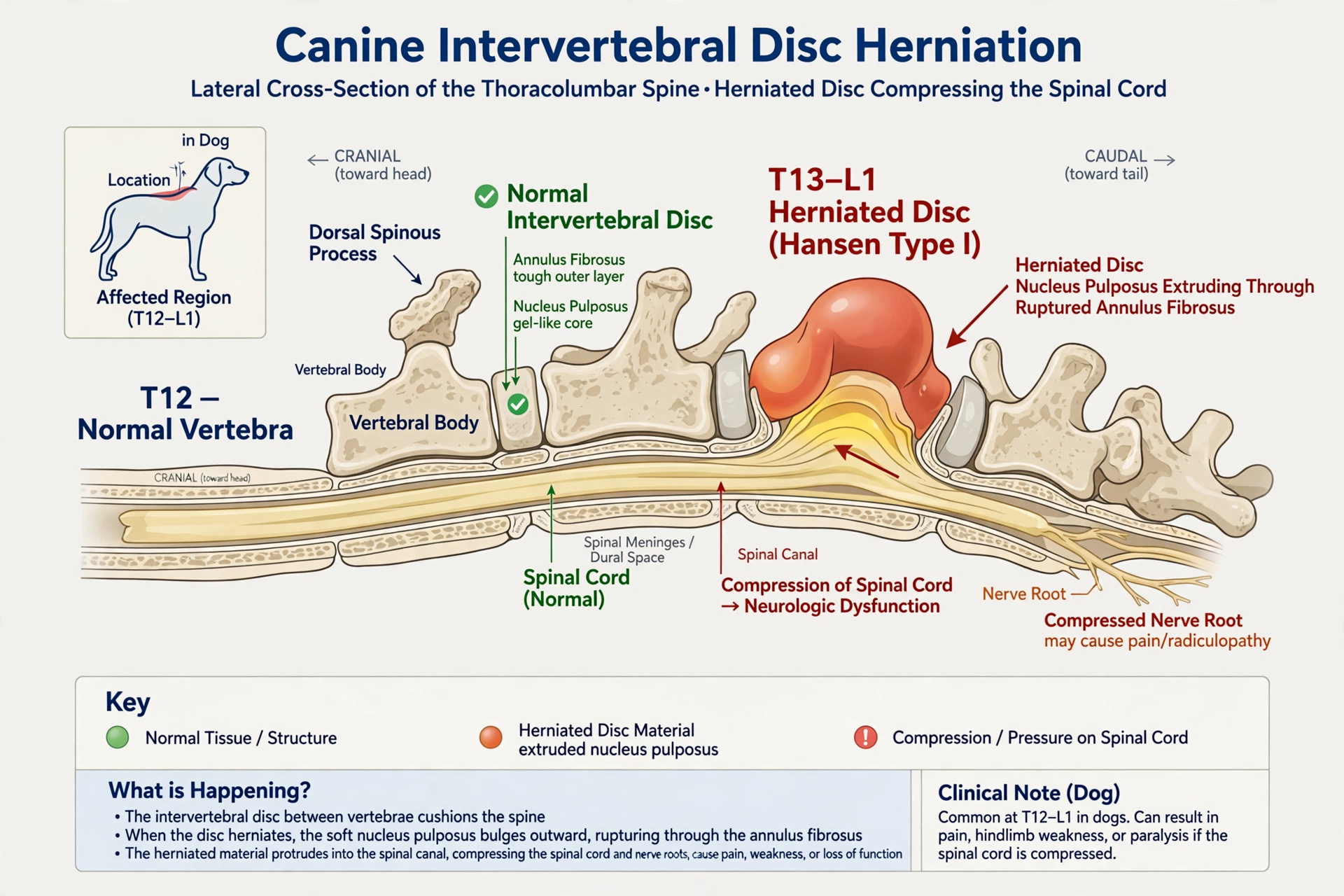
Quick tip: A calcified disc on an X-ray is not a diagnosis of IVDD, but it is a warning. It means that disc has already degenerated, and vets watch those discs more closely.
Why French Bulldogs Are Built for This
IVDD is the most common neurological disorder in French Bulldogs, accounting for 45.5% of neurological cases in the breed (Leu et al., University of Bern, 2023). Not a minor predisposition. The breed’s signature disease.
The driver is genetic: an FGF4 retrogene insertion on chromosome 12, carried at allele frequency 0.85, so the vast majority of Frenchies have at least one copy. Each copy increases calcified disc count, and 41% of screened Frenchies aged two to four already had severe disc calcification (Reunanen et al., 2025).
The timeline shocks most owners. In chondrodystrophic breeds, the disc’s gel center starts turning to cartilage-like tissue at two to three months of age. The jump off the couch at age three was the trigger, not the cause. That disc had been failing for years.
Two more things make Frenchies unusual. They suffer first episodes younger than other breeds, and dogs three or younger at the first episode face the highest recurrence risk. And the neck is a bigger target than in most breeds: about 30% of French Bulldog extrusions are cervical, versus 2% in Dachshunds (Animals, MDPI, 2025). Neck pain, a stiff head, or front-leg lameness can be IVDD here, not just back trouble.
Do this, not that:
– Do take neck stiffness seriously in a Frenchie. Do not assume IVDD only affects the back.
– Do remember that a young dog is not “too young” for a slipped disc. Do not let age talk you out of a vet visit.
The Grades: From “Just Pain” to Paralysis
Vets grade thoracolumbar IVDD on a five-point scale that drives every treatment decision. Learn it; you will hear these numbers in the exam room.
| Grade | What the vet sees | What you see at home |
|---|---|---|
| 1 | Spinal pain only, no nerve deficits | Yelping when touched or lifted, reluctance to move, hunched back, shivering |
| 2 | Weak but still walking | Wobbly hind legs, scuffing toenails on the pavement, crossing legs when turning |
| 3 | Cannot walk but can still move the legs | Legs paddle when you hold him up, but he collapses without support |
| 4 | Paralysis with deep pain intact | Hind legs still, but he reacts when you pinch a toe |
| 5 | Paralysis with loss of deep pain | No reaction to a toe pinch at all |
Grade 5 is the line that matters most. “Deep pain,” feeling a hard pinch to the toe, is the single most important prognostic sign in IVDD. Losing it marks the worst grade and starts a clock. More in the surgery section.
Neck cases follow a parallel scale: neck pain only, then coordination trouble or front-leg lameness, then wobbliness, weakness, and inability to walk. Watch for a Frenchie who will not turn his head for a treat, or who screams when lifted under the chest.
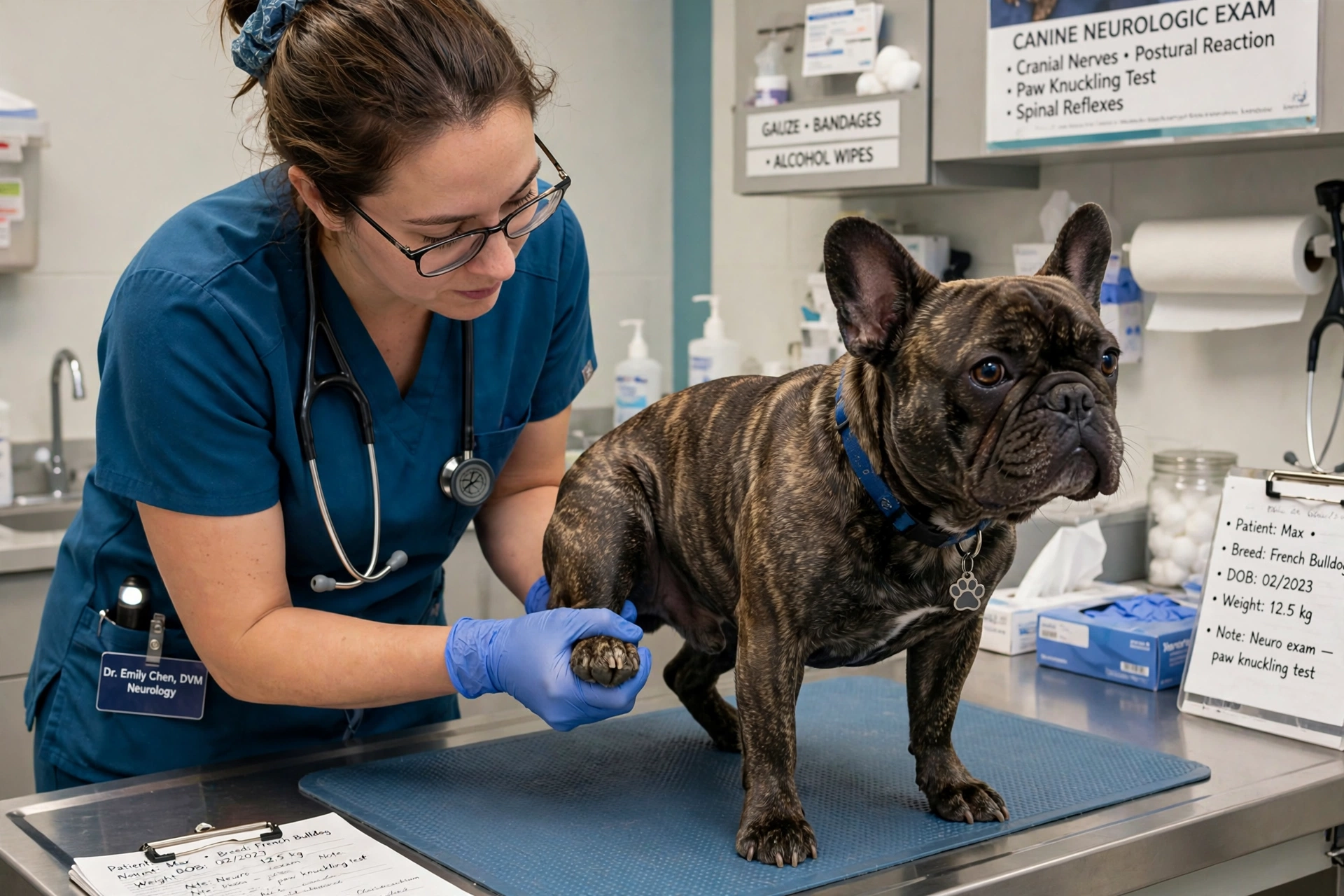
Quick tip: The knuckling test is the first thing your vet will do: flip a paw so the knuckles touch the ground and watch how fast the dog corrects it. Note what you see at home so you can describe it accurately, but leave the diagnosing to the vet.
How Vets Diagnose It
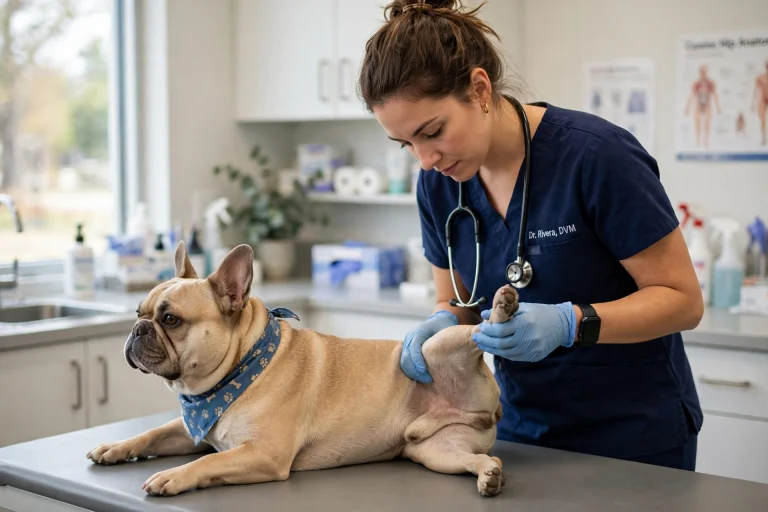
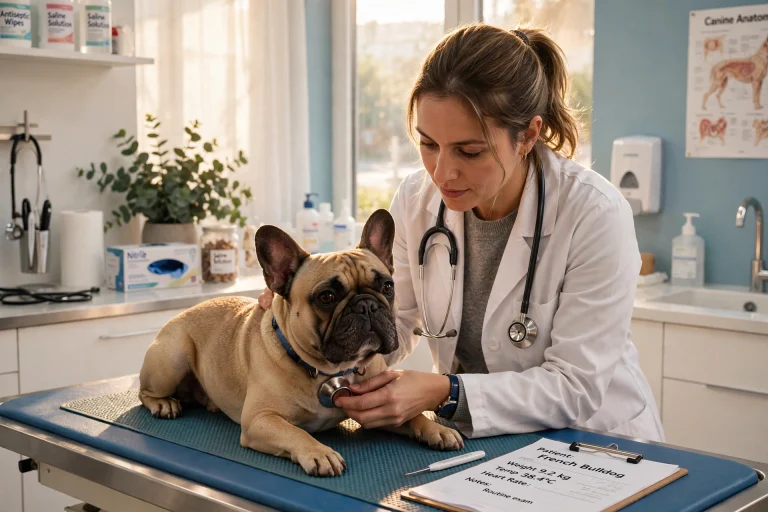
Diagnosis starts with hands, not machines: a full physical and neurological exam covering gait, reflexes, paw responses, and exactly where it hurts. That localizes the lesion and tells the vet what to image.
Then comes the part owners get wrong: X-rays cannot diagnose a slipped disc. They show calcified discs or narrowed disc spaces, but not cord compression. As Cornell’s veterinary neurologists put it, “We can’t diagnose disc issues just on X-ray.” Surgery proposed on X-rays alone deserves a second opinion.
MRI is the gold standard, especially for surgical planning. It shows the disc material, the cord compression, and surrounding swelling. CT with contrast dye is the main alternative; published summaries report both locating the compression with roughly 94 to 97% accuracy. The catch is cost: the MRI alone runs $1,500 to $3,500 under anesthesia, usually the biggest line item on the bill. The neuro consult itself is $100 to $300.
Checklist: what to bring to the neurology appointment
– Video of the wobbliness or dragging, filmed from the side
– When it started, and whether it is getting worse hour by hour
– Any recent jumps, falls, or rough play
– List of current medications
– Your pet insurance details, if you have them
Crate Rest: The Conservative Path
Strict crate rest treats Grade 1 and Grade 2 cases: pain only, or mild wobbliness with the dog still walking. It is also the usual first step before anyone talks surgery.
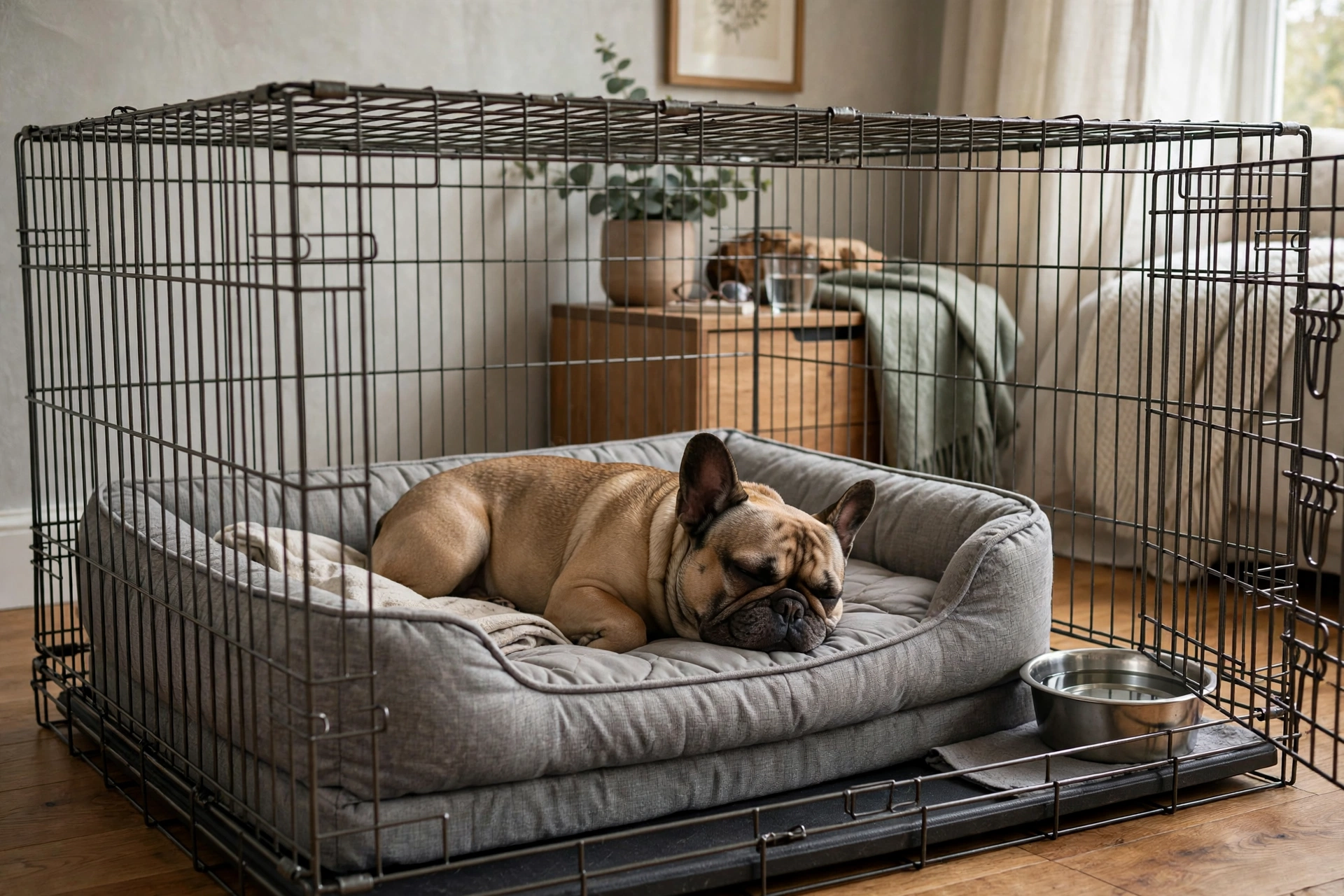
“Strict” means stricter than most owners expect: four to six weeks in a crate or small pen, out only on a leash to urinate and defecate. No couch, no bed, no “just for a minute” roaming. The disc needs stillness to stabilize, and one sprint to the front door can undo two weeks of healing. Set the crate up once: a wall-to-wall orthopedic bed, a clip-on water bowl, and a chew rotation for boredom.
Medication rides alongside: anti-inflammatories (an NSAID or steroid course), pain relief such as gabapentin, sometimes a muscle relaxant, tapered over a couple of weeks as pain settles.
Be honest about the odds. In a large evidence review, conservative care recovered 72.5% of weak-but-walking dogs, 79.8% of non-walking dogs, 56% of paralyzed dogs with deep pain intact, and 22.4% of paralyzed dogs without deep pain (Frontiers in Veterinary Science, 2020). Recovery is slower too: a mean of 84 days to walk again with rest versus 15 days with surgery, and medically managed dogs face higher recurrence risk at the same grade. One 2024 study found 96% of non-ambulatory small dogs walking within 12 weeks on rest alone, but it excluded brachycephalic breeds, so treat it as context, not a Frenchie promise.
Do this, not that:
– Do leash-walk to the same boring patch of grass every time. Do not let “he seems better” end the confinement early.
– Do ask your vet about a mild sedative for a restless Frenchie. Do not white-knuckle six weeks of a frantic dog.
Surgery: What the Operation Actually Does
Surgery enters at Grade 3 and above, when signs worsen despite rest or pain will not settle with medication. The goal is decompression: removing the disc material pressing on the cord.
The operations map to the spine region: hemilaminectomy opens the vertebra’s side to clear the mid-back, ventral slot approaches through the underside of the neck, dorsal laminectomy covers the lower spine. Today’s Veterinary Practice details each approach; your neurologist will match one to your dog’s MRI.
Grade 5 has a clock on it: about 50 to 60% recover when operated within 48 hours of losing deep pain. One specialist practice reports 80 to 85% if surgery comes within 24 hours of deep pain loss, 50 to 75% after 48 hours, and under 20% with rest alone past 48 hours. Those are practice-reported figures, not trial data, but the message is unanimous: do not wait out a paralyzed dog.
One more surgical decision: prophylactic fenestration. While the surgeon is in there, they can clear disc material from neighboring at-risk discs through small windows. A 207-dog randomized trial cut recurrence to 7.45% with multi-site fenestration versus 17.89% single-site, and a 2025 cervical study of 55 small dogs put every recurrence in the non-fenestrated group with no added complications. Across 1,100-plus reported cases, complications appeared in only about 15. Ask your surgeon whether they fenestrate and how many sites.
From the evidence review: 98.4% of weak-but-walking dogs recovered with surgery, 93% of non-walking dogs, 93% of paralyzed dogs with deep pain, and 61% without it. Overall, about 90% of cases with intact pain perception succeed.
Because Frenchies are flat-faced, anesthesia planning deserves its own conversation. Our BOAS guide covers what a 55,000-case study found about anesthesia risk in brachycephalic breeds. Same questions apply: who monitors recovery, and what happens at 3 a.m.
Checklist: questions for the surgeon
– Which procedure, and why this one for my dog’s MRI?
– Will you fenestrate neighboring discs, and how many?
– Who monitors my dog overnight, and where?
– What is your complication rate for this surgery?
– What does the all-in estimate include, from MRI to discharge?
What It Costs in 2026
The all-in surgical course at a US referral hospital runs $5,000 to $14,000, typically around $9,000 (TrueVetCost, 2026). Where it goes:
| Line item | Typical range |
|---|---|
| Neurological exam and consult | $100 to $300 |
| MRI or CT under anesthesia | $1,500 to $3,500 |
| Hemilaminectomy (the surgery itself) | $2,000 to $5,000 |
| Extended anesthesia, 2 to 4 hours | $800 to $1,200 |
| Hospitalization, 2 to 5 nights | $400 to $3,000 |
| Conservative route instead (rest, meds, rechecks) | $500 to $2,500 |
Region moves the needle: California metros run $2,500 to $4,500 for MRI and $5,000 to $10,000-plus for surgery; the Midwest $1,600 to $2,800 and $3,500 to $7,000; the Southeast $1,500 to $2,600 and $3,000 to $6,500 (InsuranceGuidances, 2026). Frenchie-specific estimates land at $4,000 to $12,000, with rehab adding $300 to $1,000-plus. One San Francisco specialty hospital lists an all-inclusive package at $10,000 to $12,000, priced through end of 2026.
Three money traps. First, get an itemized all-in estimate, since some quotes exclude the MRI or hospitalization. Second, after-hours emergency surgery adds roughly $1,000 or more, and the worst cases arrive at midnight. Third, the insurance trap: a typical $8,000-plus bill blows past common $5,000 annual caps. Enroll before any back-pain sign reaches the vet records. Teaching hospitals are often cheapest, though no verified 2026 Frenchie-specific teaching-hospital bundle was found.
Quick tip: Ask for the estimate in writing with every line item named, then ask which items could grow. “What is the worst-case total if he needs two extra hospital nights?” is the question that prevents the 2 a.m. phone call about money.
Recovery and Rehab
Expect about a week in the hospital, then four to six more weeks of strict crate rest at home, the same protocol as the conservative path. No jumping, no stairs, no running. Bladder care surprises most owners: many paralyzed dogs cannot urinate alone, and you may need to express the bladder manually several times a day until control returns, which can take weeks. Your vet or rehab nurse teaches you before discharge (VeterianKey, 2026). Awkward the first time, routine by day three.
Rehab has real evidence: a 2012 study found it shortened time to walking in post-op dogs. Cornell’s neurology service uses electroacupuncture alongside conventional care, and standard menus include laser therapy, underwater treadmill sessions, and at-home range-of-motion exercises. The gap is stark: a mean of 15 days to walk again after surgery versus 84 with rest alone.
Quick tip: Keep a one-line daily log: date, appetite, bladder status, leg movement. Thirty seconds a day turns “I think he’s better” into something your vet can use.
The Recurrence Problem Nobody Warns You About
The number every Frenchie owner should know: 52.7% of surgically treated French Bulldogs in the Bern study had another episode. Cervical cases recurred at 47%, thoracolumbar at 56.6%, with median 12 months to recurrence, more than half within the first year. A separate Frenchie-only study reported 51% after decompressive surgery.
The hardest detail: most recurrences are new episodes at other discs, not failure at the operated site. The ruptured disc got fixed. The rest are still French Bulldog discs, still degenerating.
Young dogs get hit hardest: dogs three or younger at the first episode were significantly more likely to recur than dogs six and older. If your two-year-old just had surgery, the honest framing is not “we fixed it” but “we bought time, and the other discs are on a watch list.”
This is where fenestration earns its keep and insurance timing becomes financial planning: the dog most likely to have another episode is the dog who already had one, and the second bill looks like the first. The Bern researchers’ full paper has the primary data.
Do this, not that:
– Do ask about fenestration at the first surgery, when it is cheapest to add. Do not assume one operation ends the story.
– Do keep the weight lean and the exercise moderate after recovery. Do not “make up for lost time” with a month of wild play.
Preventing IVDD in French Bulldogs: The Honest Version
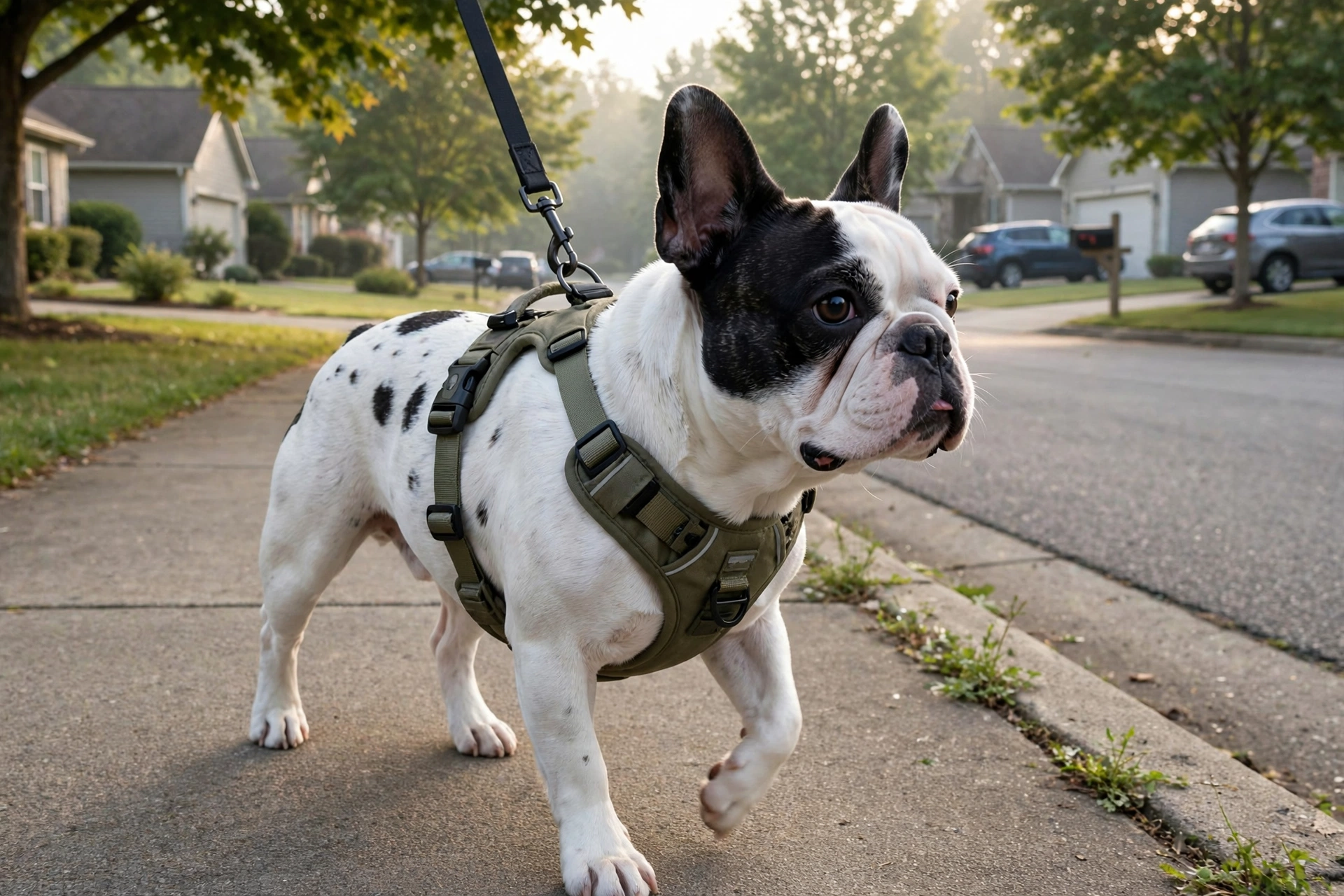
Veterinary consensus backs a short list: keep the dog lean, use ramps or steps instead of couch launches, limit repeated stair running, walk on a harness rather than a neck collar (collar pressure stresses the cervical spine, the region Frenchies are prone to), and keep up moderate exercise for the supporting muscles (Cornell). For breeders, radiographic screening for calcified discs at two to four years is an established selection tool in some countries.
Now the honest part: the evidence is thinner than most blogs admit. The DachsLife 2015 study followed 2,000-plus Dachshunds and found dogs barred from furniture had increased IVDD odds, moderate stair climbing was linked to reduced risk, and body condition was not a risk factor. The likely explanations: regular activity builds protective spinal muscle, or dogs with prior episodes get restricted afterward, skewing the data. Nobody has proven ramps prevent a single episode. Treat the consensus advice as sensible risk reduction, not a guarantee.
Supplements sit in the same honest category: Cornell notes omega-3s and glucosamine-chondroitin “may offer some benefits, although no specific clinical trials have been performed.” And total inactivity is not prevention. A Frenchie bubble-wrapped on the couch is not a protected Frenchie.

Quick tip: The single most defensible prevention habit is also the cheapest: keep him lean enough that you can feel the ribs under a thin layer of fat, and keep him moving every day. Everything else is sensible hedging.
Red Flags: When It Is Today, Not Tomorrow
Most back pain is a “call the vet this week” problem. These are “go now” problems.
Checklist: same-day emergency signs
- Sudden inability to walk or stand, or dragging hind legs
- Loss of bladder or bowel control, or straining without producing urine
- Complete paralysis, especially if he cannot feel a toe pinch
- Signs worsening over hours: sore in the morning, down by afternoon
- Uncontrollable trembling or yelping when touched or moved
- Hind legs going floppy and limp rather than stiff, the skin-twitch reflex rippling forward up the back, loss of anal tone, front-leg weakness, or labored breathing
That last cluster describes progressive myelomalacia, a fatal spinal cord softening that can follow severe extrusion. It affects roughly 11 to 17.5% of dogs with complete paralysis and no deep pain, with one paper reporting up to 33% in French Bulldogs. Nothing on this list has a home treatment. If paralysis came with lost deep pain, the 48-hour clock is already running.
Quick tip: Save your nearest 24-hour emergency vet’s number tonight, before you need it. IVDD emergencies do not respect business hours.
Frequently Asked Questions
Can IVDD heal on its own? Mild cases can. A Grade 1 dog on strict rest and medication often recovers without surgery. But rest does not fix the degenerated disc, and medically managed dogs face higher recurrence risk and slower recovery at the same grade. “Healed” means the episode resolved, not that the disc is young again.
Will my dog walk again? It depends on grade and speed: 93% of paralyzed dogs with intact deep pain walked again after surgery. Without deep pain, about 61% recovered with surgery and 22% with rest alone. Dogs treated within 48 hours of losing deep pain do far better than those who wait.
Is an X-ray enough, or does my dog need an MRI? For diagnosis and surgical planning, MRI. X-rays show bone and calcified discs but not cord compression. An MRI under anesthesia costs $1,500 to $3,500, and it is what turns a guess into a surgical plan.
How do I carry a dog with suspected IVDD? Keep the spine straight: one hand under the chest, one under the hindquarters, lifting the whole body level like a plank. Do not let the back sag or twist. Then crate him and drive to the vet.
Is a second surgery fair to the dog? Recurrence usually strikes a different disc, so the second surgery is a new problem, not a failed fix, and dogs that recovered well the first time often do well again. The real questions are quality of life between episodes and your capacity for another $5,000 to $14,000 bill. Have that talk with your neurologist.
What about a wheelchair or cart? Dogs that do not walk again can live full lives in carts, and many adapt within days. Carts suit hind-leg paralysis with good front-end strength and a pain-free spine. They are a quality-of-life tool, not a consolation prize.
Final Word
IVDD in French Bulldogs is the diagnosis every owner of this breed should understand before they need it. The discs start aging at two months old, the episodes strike young, and more than half of surgical dogs see another one. None of that is in your control. What is: knowing the grades, recognizing the red flags early, getting to a neurologist fast when paralysis hits, and keeping him lean and moving in the years between. Bookmark the emergency checklist above, save your ER vet’s number, and talk to your vet about insurance before any back pain is recorded. Your Frenchie’s spine was decided by genetics. The outcome is decided by how fast you act.