French Bulldog Dental Care: Crowded Teeth, Gum Disease, Cleaning Costs & Daily Brushing
TL;DR
- French bulldog dental care starts with one fact: 42 adult teeth have to fit into a shortened jaw, so crowding, trapped plaque and gum disease are built into the breed.
- The AVMA says periodontal disease affects nearly 80 percent of dogs by the age of three. Daily brushing is the gold standard for slowing it down.
- Gingivitis is the only reversible stage. Once disease moves below the gumline, only a professional cleaning under anaesthesia can reach it.
- A routine cleaning typically runs $350 to $500 before extractions. Anaesthesia-free cleaning is cosmetic only, according to the AVDC.
- Frenchies look protected in one large records study. Researchers suspect under-diagnosis.
The Breath That Gives It Away
Your Frenchie’s breath hits you before his greeting does, a sour, stale smell that lingers after he licks your chin. That smell rarely means he ate something odd. In a crowded Frenchie mouth, odour usually means plaque, tartar and inflamed gums have been building for months.
This guide covers why the breed mouth causes trouble, what a real cleaning involves, what it costs in 2026, and the home routine that holds disease back. Dental trouble also belongs on the wider list in our French Bulldog health problems hub.
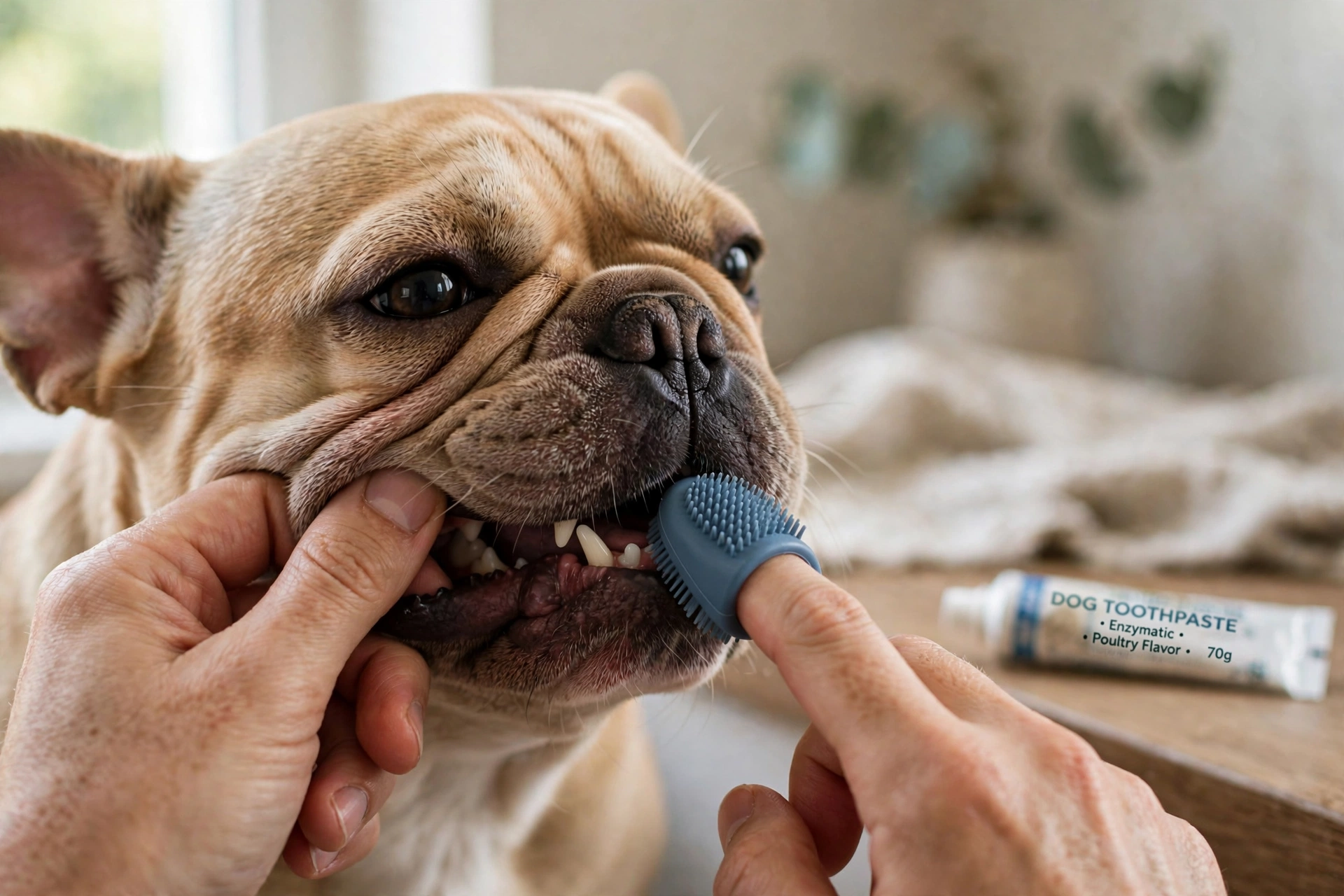
Quick tip: Lift the lip weekly under good light. Look for a red rim at the gumline and a brown band near it, and note what you see so change is easy to spot.
Why French Bulldog Teeth Are a Problem by Design
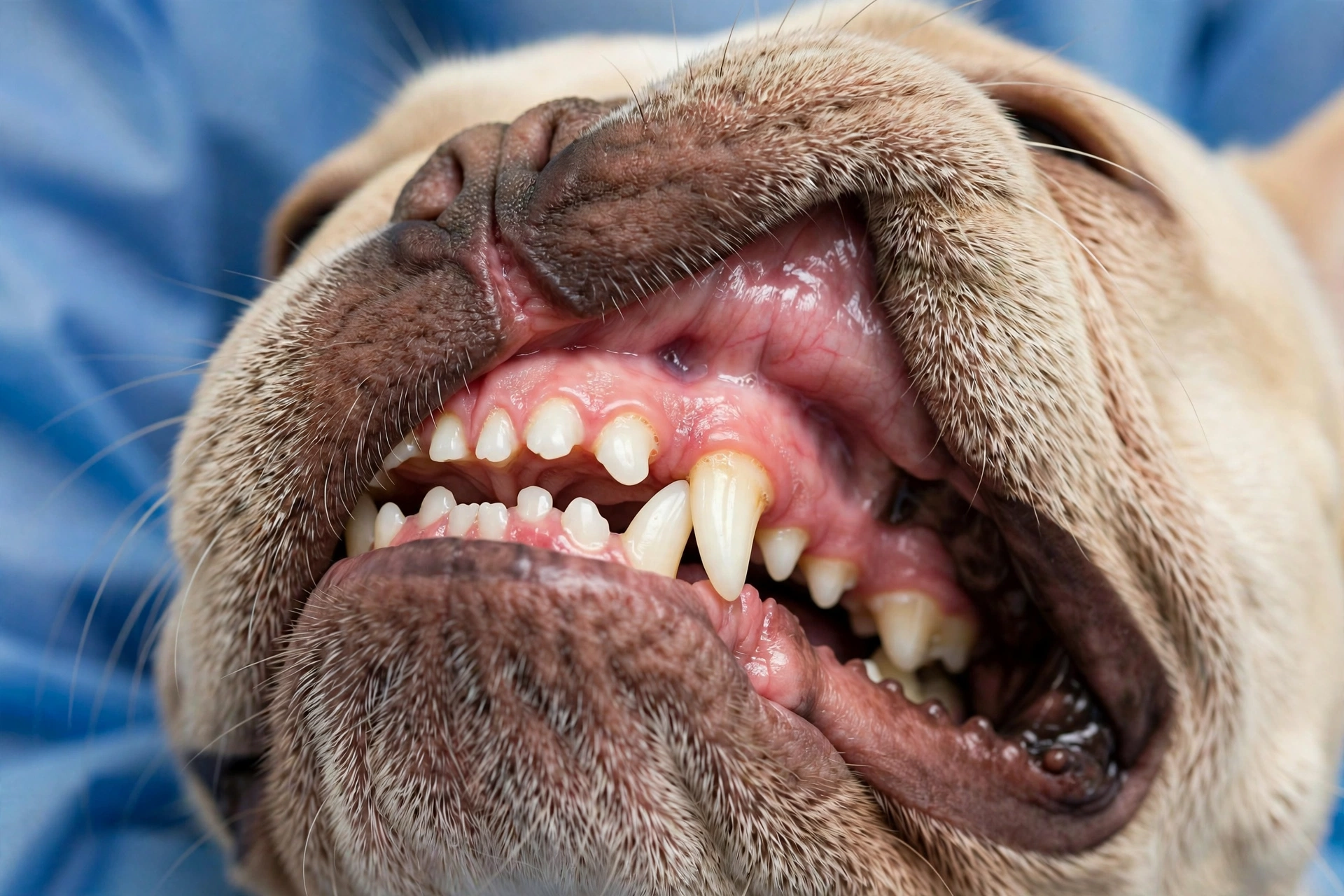
A Frenchie carries the standard dog tooth count in a nonstandard jaw. Adult dogs have 42 permanent teeth, puppies have 28 baby teeth, and the AKC French Bulldog puppy timeline puts the swap at around four to six months. Nothing shrinks except the space.
VCA Animal Hospitals states the consequence directly: small breeds and brachycephalic dogs are more prone to periodontal disease due to the small size of their jaw and crowding of the teeth. Crowded teeth create tight corners where food packs in and plaque sticks.
The anatomy in short:
- 42 adult teeth: 12 incisors, 4 canines, 16 premolars and 10 molars. Puppies have no molars.
- A shortened upper jaw produces the underbite, called a Class III malocclusion by vets. In some dogs a tooth presses into the roof of the mouth.
- Crowding changes how a Frenchie chews, so some surfaces get scraped while others never get touched.
Quick tip: Run a clean fingertip along the outer gumline. Healthy teeth feel smooth like a kitchen tile. A gritty edge usually means tartar.
The Dental Problems Frenchies Actually Get
Most Frenchie dental trouble follows one chain. Bacteria form plaque, and plaque left in place hardens into tartar. Cornell University College of Veterinary Medicine stresses that plaque, especially plaque under the gumline, is the main culprit.
Gingivitis comes first, with red, swollen gums. VCA calls it the only truly reversible stage of periodontal disease. Past that point, infection destroys the ligament and bone holding the tooth. Periodontitis can be stopped. It cannot be undone.
| Stage | What is happening | Reversible | Usual response |
|---|---|---|---|
| Stage 1, gingivitis | Inflammation and plaque, no attachment loss | Yes | Brushing and professional cleaning |
| Stage 2, early periodontitis | Up to 25 percent attachment loss | No | Cleaning above and below gumline |
| Stage 3, moderate periodontitis | 25 to 50 percent attachment loss | No | Deep cleaning, possible extraction |
| Stage 4, advanced periodontitis | More than 50 percent attachment loss | No | Most affected teeth extracted |
Four other problems round out the list. Fractured teeth usually follow chewing objects that are too hard, including ice cubes, bones, hard nylon chews, antlers and hooves. If the pulp is exposed, the options are extraction or referral for a root canal. A baby tooth still in place when the adult tooth erupts creates a double row that traps debris, and small and brachycephalic breeds are more prone. A tooth that never erupts by about seven months can form a fluid-filled dentigerous cyst. Brachycephalic breeds including French Bulldogs are among the most commonly affected, with the lower first premolar most often involved. A missing tooth should be X-rayed, not assumed absent.
In dogs X-rayed for dental work, roughly half showed some tooth resorption in one dental-patient study, often starting below the gumline with no outward sign. Gum lumps called epulides can also occur where a tooth rubs the gum. Most are benign, one type is locally invasive, and no one can tell which by looking, so every lump needs an exam and a biopsy. Tooth decay accounts for less than 10 percent of dental problems in dogs according to VCA.
Quick tip: Count teeth at seven months. If a spot looks empty, ask for a dental X-ray instead of waiting for a lump or swelling.
The Frenchie Dental Paradox: Why the Statistics Look Better Than Their Mouths
The AVMA says nearly 80 percent of dogs have periodontal disease by age three, and Cornell describes 80 to 90 percent of dogs over the age of three as having some component of it. Yet a VetCompass study of 22,333 dogs under primary care in the UK recorded a one year diagnosed prevalence of just 12.52 percent.
In that study, French Bulldogs looked oddly protected. Their recorded prevalence was 2.01 percent, with 0.43 times the adjusted odds compared with crossbred dogs, while brachycephalic breeds overall had 1.25 times the odds compared with medium-nosed breeds. An earlier breed study did not list periodontal disease among the breed’s 26 most common disorders at all.
The authors do not believe Frenchies are truly protected. O’Neill and colleagues wrote that the apparent protection could be an artefact, pointing to concern about anaesthetic risk reducing the focus on dental examination, competing health priorities, and a Frenchie population that was unusually young in 2016. A later risk study put it directly: cases may be under-diagnosed in these breeds, because in-depth diagnosis is typically made under general anaesthesia, and brachycephalic dogs are more likely to have anaesthesia related complications.
Do and do not:
- Do read the low Frenchie figure as recorded diagnoses, not as proof of healthy mouths.
- Do not skip brushing or cleanings because a chart made the breed look safe. The crowding in the mouth argues the opposite.
Signs of Dental Pain Most Owners Miss
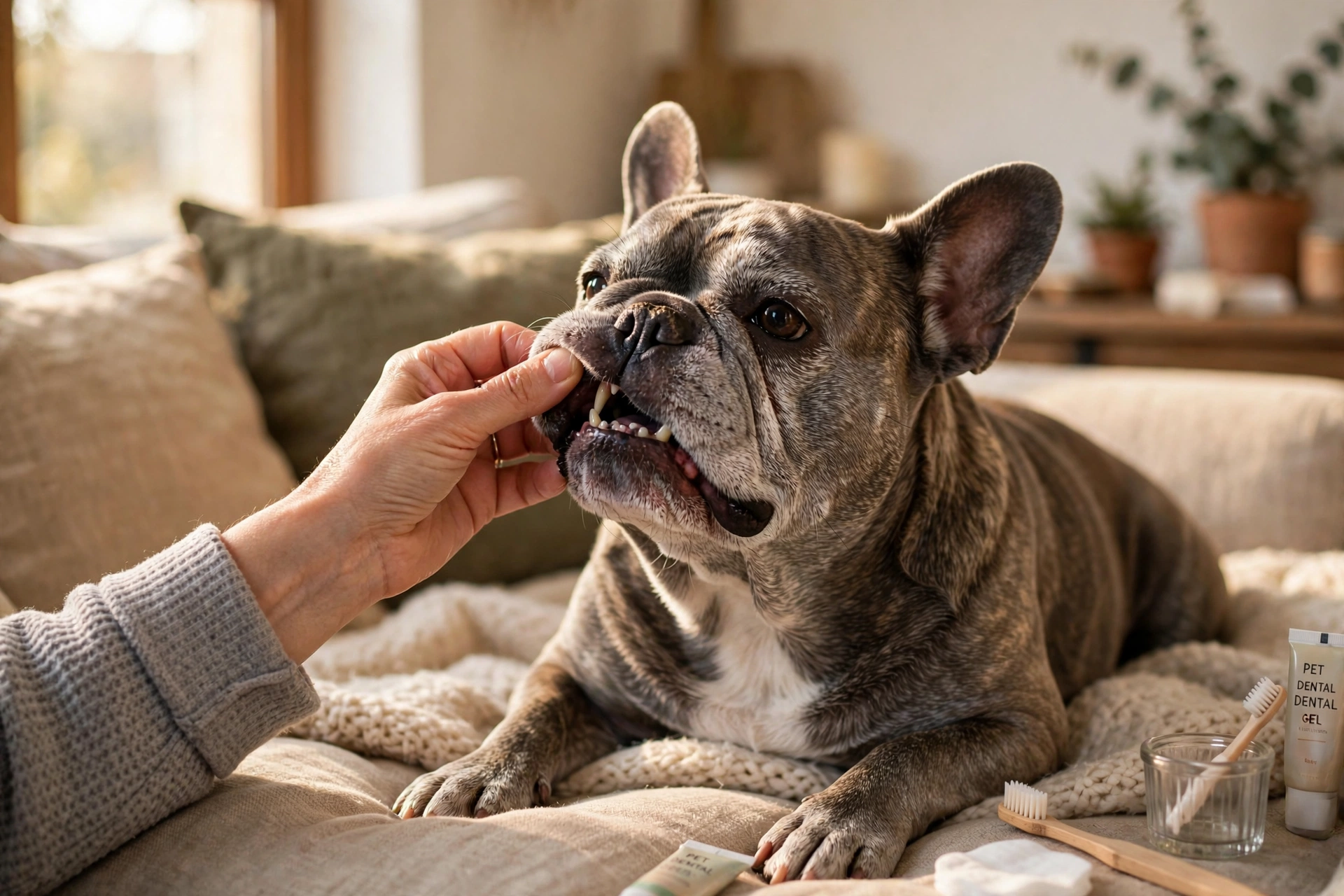
VCA puts it plainly: few dogs show obvious signs of dental disease, so families and vets have to uncover a hidden and often painful condition together. The AVMA list of reasons to have teeth checked covers bad breath, broken or loose teeth, retained baby teeth, tartar covered teeth, abnormal chewing, drooling, dropping food, reduced appetite, mouth pain, bleeding and swelling around the mouth.
Weekly mouth check:
- Chewing on one side only, or tilting the head to chew
- Kibble dropped, or meals eaten more slowly than last month
- A sudden preference for soft food, or chew toys left untouched
- Pawing at the mouth, head shaking, or jaw chattering
- Blood on a chew toy, or drool with a pink tinge
- A bump in the mouth or below the eye, sneezing, or nasal discharge
- Head shyness or less interest in play
Quick tip: Film one normal meal this week. If eating slows later, you have a dated comparison to show your vet.
Does Bad Dental Health Affect the Heart, Kidneys and Liver?
Here is the careful version the sources support. VCA states that some studies indicate bacteria from severe oral disease, which gets into the bloodstream, may also be associated with pathological changes in major organs such as the heart, liver and kidney. The Animal Medical Center in New York adds that periodontal disease can make dogs more likely to develop diseases of other organs, including the heart, lungs, kidneys and liver, and can make diabetes harder to control.
Associated with is the honest wording. The evidence supports a link, with bacteria entering the blood through inflamed gums. It does not prove that bad teeth alone cause kidney failure or heart disease in an individual dog.
Quick tip: If your Frenchie has heart, kidney or liver disease, tell the dental team before the cleaning. That history shapes bloodwork and monitoring.
Professional Dental Cleaning: What Actually Happens
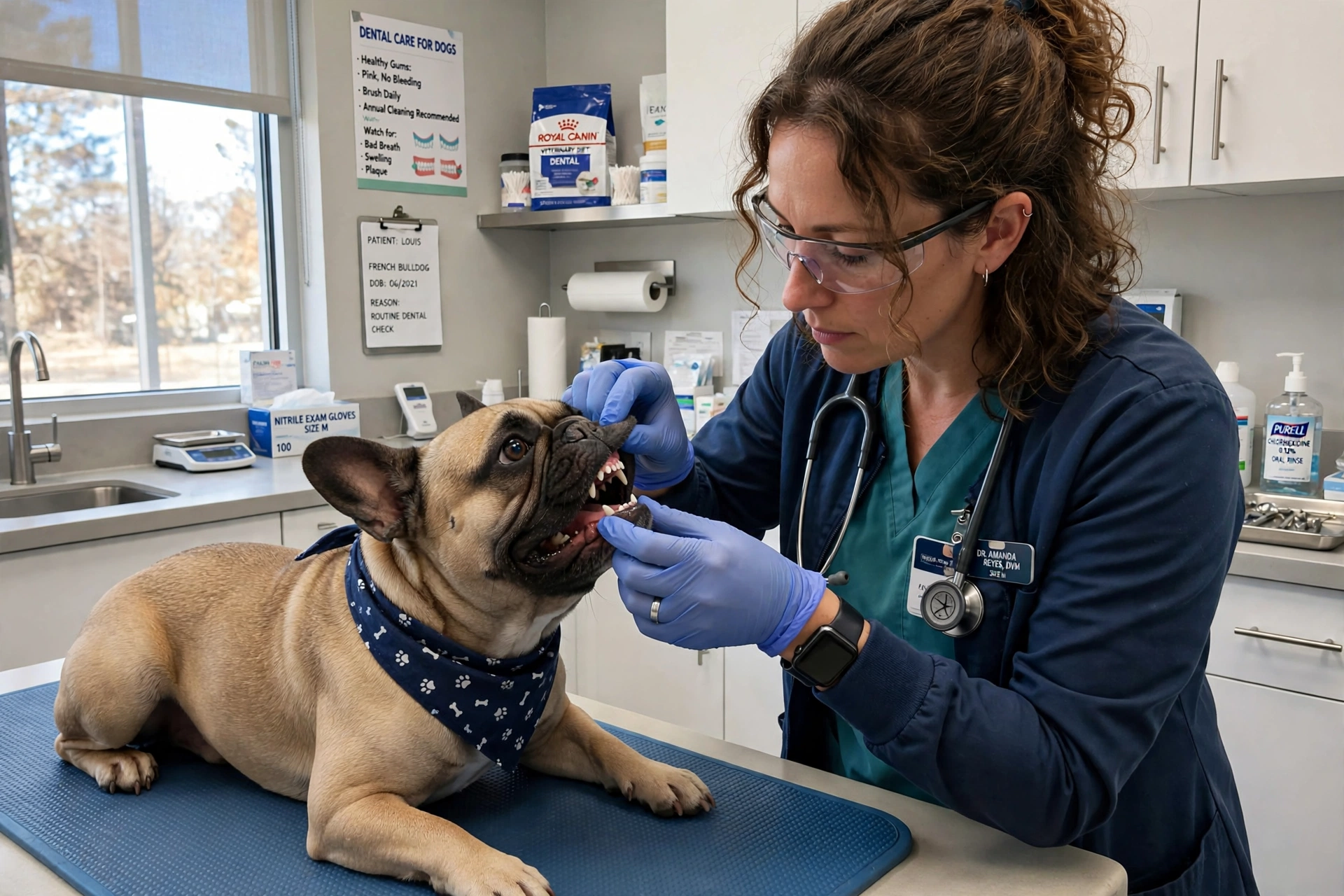
A real cleaning is a medical procedure. VCA describes the standard sequence, and the AVMA picture matches it. Most pets go home the same day.
What a complete cleaning includes:
- A thorough oral exam of each tooth and the gums.
- Pre-anaesthetic blood tests to check kidney and liver function.
- Dental X-rays under anaesthesia, to assess roots and bone.
- Scaling above and below the gumline.
- Polishing, which smooths the surface so plaque reattaches more slowly.
- Extraction of any tooth too diseased to save.
Anaesthesia is part of the procedure for reasons the AVMA states clearly. Pets do not understand the benefit of dental work and will move, try to escape or bite. Stillness allows cleaning below the gumline where most disease occurs, and clear X-rays. Once healed, VCA notes, dogs enjoy easier and pain free eating once diseased teeth are removed.
Quick tip: Ask the clinic to write an extraction limit into your estimate, with a dollar ceiling and a phone call rule.
Anaesthesia and the Frenchie Airway: Real Risks, Real Management
In a 2018 study published in JAVMA, brachycephalic dogs were 1.57 times as likely to have complications during anaesthesia and 4.33 times as likely to have complications after it, compared with other dogs. Post-anaesthetic risk rose 18 percent for each additional 30 minutes of anaesthesia. The most common complication after surgery was aspiration pneumonia, and recovery is the window vets watch most closely, because airway obstruction can happen after the breathing tube comes out.
Balance matters. A large Royal Veterinary College VetCompass study of anaesthetic related death found no additional risk for brachycephalic breeds compared with medium-nosed dogs, and the authors suggested extra vigilance may be helping. Complication risk is not death risk. Choose a team that plans for a flat face, rather than leaving infected teeth in place. That planning sits inside the wider care picture in our Complete French Bulldog Owner’s Guide.
Questions to ask the clinic:
- Will you run bloodwork and pre-oxygenate before anaesthesia?
- Will the breathing tube stay in until my dog is fully awake?
- Who monitors recovery, and for how long?
- What do you give to reduce reflux and nausea?
- How will you keep the procedure as short as safely possible?
Quick tip: Book dentals early in the day. A morning slot gives the clinic the longest staffed window to watch a Frenchie wake up.
How Much Does Dog Dental Cleaning Cost in the US in 2026
No clinic prices a cleaning by breed. The bill follows procedure time, X-rays, bloodwork and disease found. Extra cost for a Frenchie comes from anaesthesia planning and monitoring, not a breed surcharge. Urban and coastal clinics sit at the high end.
| Item | Typical US range in 2026 |
|---|---|
| Routine cleaning under anaesthesia, general practice | $350 to $500 |
| Average cleaning reported in a 2025 owner survey | About $388 |
| Check-ups and cleanings, wider reported range | $300 to $687 |
| Specialist cleaning | Up to about $1,500 |
| Pre-anaesthetic bloodwork | $75 to $200 |
| Full mouth dental X-rays, when billed separately | About $100 to $300 |
| Simple extraction, per tooth | About $50 to $150 |
| Surgical extraction, per tooth | About $150 to $350 |
| Cleaning that uncovers disease, total bill | Commonly $800 to $1,500 or more |
Ask what an estimate includes before comparing clinics, because bloodwork, X-rays and extractions are bundled at some practices and billed line by line at others. In a 2013 analysis cited by the AVMA, preventive care cost about one third as much as treating preventable disease later. That figure is dated, so treat it as direction, not a quote.
Quick tip: Photograph the itemised estimate. Circle every line you do not understand and call back about those lines only.
Why Anaesthesia-Free Cleaning Does Not Count
Anaesthesia-free cleaning sounds kinder. The American Veterinary Dental College takes the opposite position. It calls the service Non-Professional Dental Scaling and says performing it on an unanaesthetised pet is inappropriate.
- Removing tartar from visible surfaces has little effect on health. The effect is purely cosmetic.
- Access below the gumline is impossible in an awake patient, and that is where periodontal disease is active.
- A complete oral exam is not possible either, so disease and pain are likely to be missed.
- Sharp instruments plus slight head movement risk injury, and scaling without polishing leaves the surface ready for plaque.
The AVDC owner page on periodontal disease adds the key warning: an anaesthesia-free dental provides a false sense of security, leaving disease undetected and untreated. For a Frenchie, restraint and stress around a narrow airway make the awake version a worse idea, not a safer one. The teeth look white. The infection stays under the gum.
Do this, not that:
- Do put the money toward a staged plan with your vet if the cleaning has to wait. Do not spend it on a surface scale.
- Do ask a groomer to skip any dental add-on. Do not let anyone scrape an awake Frenchie’s teeth.
French Bulldog Dental Care at Home: The Routine That Actually Works
Daily brushing is the home habit every major source ranks first. The AVDC states it plainly: daily brushing remains the gold standard to prevent plaque and calculus and slow periodontal disease. Cornell ranks everything else as an add-on that works best alongside brushing, advises that plaque builds up within 12 hours of cleaning, and a peer reviewed study found it takes more than 48 hours for plaque to become calculus in dogs. Brushing within a day or two removes the soft film before it hardens. Daily and every other day brushing beat weekly brushing in one frequency study. VCA gives three times a week as its minimum.
The AVMA, citing a Journal of Veterinary Dentistry study, says only 2 percent of dog owners brush daily. Build the habit in steps:
- Days one to three: let your dog lick dog toothpaste off your finger after dinner. The paste is formulated to be swallowed, and the poultry or malt smell does the persuading.
- Days four to six: lift the lip and rub paste along the outer gumline with your finger, ten seconds a side.
- Week two: switch to a finger brush or small soft brush. Brush the outer surfaces in small circles, including the gumline, for about 60 seconds total.
- Keep the time and place fixed. Same couch corner, same order, calm praise after.
Never use human toothpaste. And if gums are already red, sore or bleeding, book the vet first. Brushing an inflamed mouth hurts, so clean and treat first, then start the habit on a comfortable mouth.
Quick tip: Miss a day and resume the next evening. Every other day still beats weekly by a wide margin in the research.
VOHC Products, Dental Diets, Chews and Water Additives
VOHC, the Veterinary Oral Health Council, helps you sort claim from evidence. The Council does not test products itself. It reviews manufacturer trial data and awards its Seal of Acceptance for a specific claim: helps control plaque, helps control tartar, or both, for that exact product and size, used as directed.
Acceptance is product specific, not brand wide, so one accepted chew does not vouch for the rest of the range. A seal proves a measurable reduction in plaque or tartar in trials. It does not prove the product replaces brushing, treats existing disease, or reaches below the gumline. Check any product on the live VOHC accepted products list for dogs before you buy, because the list changes. Dental diets on that list include options from Hill’s, Purina and Royal Canin. Ordinary dry kibble is not a dental diet, and once tartar has formed, only professional scaling removes it.
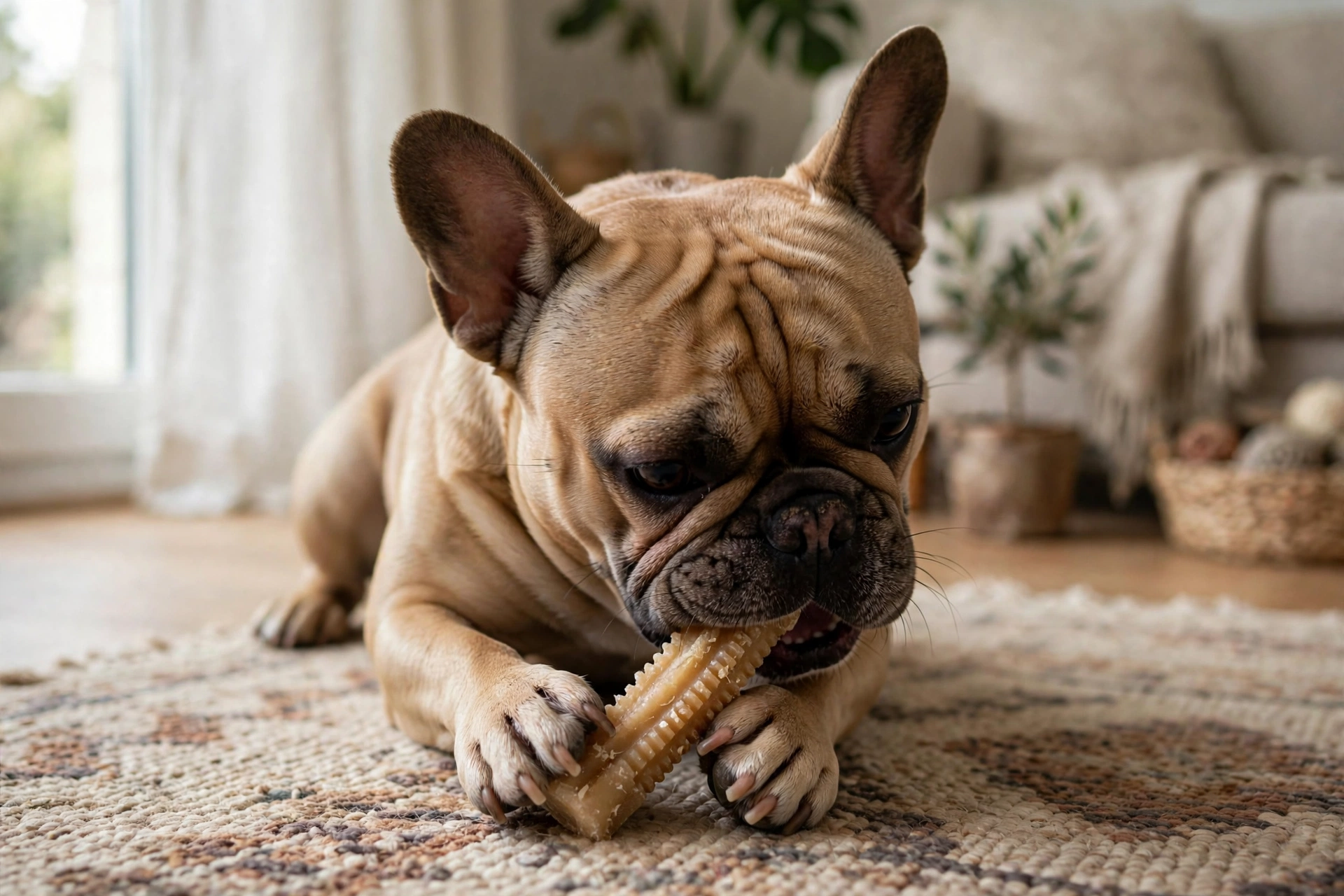
Chew safety has one practical test. VCA advises that a chew should bend and give under pressure. If you cannot dent it with a thumbnail, treat it as too hard. That rules out bones, antlers, hooves, hard nylon and ice. Water additives, gels, sprays and wipes are fine as a daily extra if the exact product carries the seal, and weak as a plan on their own.
Do this, not that:
- Do pick one VOHC accepted extra daily, and keep brushing as the base. Do not stack unsealed products and call it a routine.
- Do supervise every chew where you can hear a crack or a gulp. Do not leave a Frenchie alone with any chew.
A Dental Timeline for Your Frenchie
Puppy, up to seven months:
- Expect the swap from 28 baby teeth to 42 adult teeth at around four to six months.
- Start the paste licking steps now, while mouth handling still feels like a game.
- At seven months, confirm every adult tooth has erupted. Ask for an X-ray of any missing tooth and removal of any baby tooth still in place.
Adult, one to seven years:
- Brush daily, or every other day, for about 60 seconds.
- Lift the lip weekly and run the sign checklist above.
- Book an oral exam every year, and a cleaning under anaesthesia when your vet recommends one.
Senior, seven years and up:
- Resorption, loose teeth and gum growths hide below the gumline and show up on X-rays, so checks matter more, not less.
- Keep brushing gently, and report soft food preference or dropped kibble promptly. Pain free eating is the goal at every age.
Quick tip: Tape the timeline inside the food cupboard. The teeth count and weekly lip lift survive longer as kitchen habits than as phone reminders.
Frequently Asked Questions
How many teeth do French Bulldogs have? Adult French Bulldogs have 42 permanent teeth, the same count as other dogs. Puppies have 28 baby teeth. The breed problem is space, not number.
How often should a Frenchie get a professional dental cleaning? There is no breed calendar. Book an oral exam every year, with a cleaning under anaesthesia when the vet finds tartar brushing cannot remove, progressing gingivitis, or pockets below the gumline.
Can I use human toothpaste on my French Bulldog? No. Use toothpaste formulated for dogs and designed to be swallowed, with a finger brush or small soft brush. Skip any product made for people.
My Frenchie’s breath smells bad. Is that normal? A sour, stale odour that greets you across the room is on the AVMA list of reasons to have teeth checked, alongside tartar, bleeding gums and dropping food. In this breed it usually signals plaque and gum inflammation, not dinner.
Are dental chews enough without brushing? No. Cornell ranks chews and additives as strategies that work best alongside brushing, and the AVDC calls daily brushing the gold standard. A VOHC accepted chew is a useful extra. It does not clean below the gumline.
Is anaesthesia too risky for a Frenchie dental? It needs planning, not avoidance. Brachycephalic dogs had higher complication odds in the 2018 JAVMA study, mostly after the procedure, while a large VetCompass death study found no extra anaesthetic death risk for flat-faced breeds. The safer path is a vet who plans for the airway, with bloodwork, oxygen, careful tube management and watched recovery.
Final Word
Good french bulldog dental care is unglamorous work: a finger brush by the couch, a weekly lip lift under the kitchen light, and cleanings booked before the breath turns sour. None of it takes long. All of it spares your dog the quiet ache of a loose tooth at dinner. Start tonight with paste on a fingertip and thirty patient seconds. Save this guide for the seven month teeth count and your next estimate, and share it with the Frenchie owner who still thinks bad breath is just a breed trait.